- BPM
- 84
- Key
- F Major
- Camelot
- 7B
Variations on an Original Theme: Thema by Johannes Brahms, David Wilde Song Details
"Variations on an Original Theme: Thema" by Johannes Brahms, David Wilde had its release date on March 2, 2009. With This song being less than two minutes long, at 1:33, we are fairly confident that this song is not explicit and is safe for all ages. Based on the duration of this song, this song duration is much smaller than the average song duration. This song is part of Wilde Plays Brahms: Two Rhapsodies, Variations on an Original Theme, Three Intermezzi by Johannes Brahms, David Wilde. The song's track number on the album is #3 out of 44 tracks. Based on our data, United Kingdom was the country where this track was produced or recorded. Variations on an Original Theme: Thema is unknown right now. In our opinion, the overall tone is not very danceable and projects negative sounds, such as being sad, depressed, or angry.
BPM and Tempo
Since Variations on an Original Theme: Thema by Johannes Brahms, David Wilde has a tempo of 84 beats per a minute, the tempo markings of this song would be Andante (at a walking pace). With Variations on an Original Theme: Thema being at 84 BPM, the half-time would be 42 BPM with a double-time of 168 BPM.In addition, we consider the tempo speed to be pretty slow for this song. The time signature for this track is 4/4.
Music Key
This song is in the music key of F Major. Or for those who are familiar with the camelot wheel, this song has a camelot key of 7B. So, the perfect camelot match for 7B would be either 7B or 8A. While, 8B can give you a low energy boost. For moderate energy boost, you would use 4B and a high energy boost can either be 9B or 2B. Though, if you want a low energy drop, you should looking for songs with either a camelot key of 7A or 6B will give you a low energy drop, 10B would be a moderate one, and 5B or 12B would be a high energy drop. Lastly, 4A allows you to change the mood.
Want to find the BPM and music key for other songs? Check out our BPM and Key Finder page!
- Popularity
- 0%
- Loudness
- -20.581 dB
- Acousticness
- 99%
- Danceability
- 25%
- Energy
- 9%
- Instrumentalness
- 4%
- Liveness
- 9%
- Loudness
- 66%
- Speechiness
- 5%
- Valence
- 4%
Recommendations
| Track | Artist | Key | Energy | Camelot | BPM | ||
|---|---|---|---|---|---|---|---|
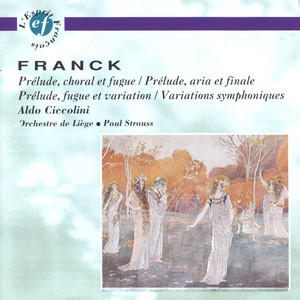 | Franck: Prélude, fugue et variation, Op. 18, FWV 30: Prélude | César Franck, Aldo Ciccolini | B Minor | 0 | 10A | 127 BPM | |
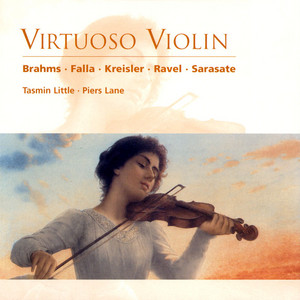 | Fibich: Moods, Impressions and Souvenirs, Op. 41: No. 4, Poème (Arr. for Violin and Piano by Jan Kubelik) | Zdeněk Fibich, Tasmin Little, Piers Lane | D♭ Major | 0 | 3B | 85 BPM | |
 | 7 Variations on the Air Vien qua, Dorina bella by Bianchi, Op. 7, J. 53: Andante | Carl Maria von Weber, Michael Endres | E Major | 1 | 12B | 87 BPM | |
 | Waltz in G-Flat Major, D. 1/14 "Kupelwieser-Walzer" | Franz Schubert, Michael Endres | D Minor | 1 | 7A | 113 BPM | |
 | Saint-Saëns: Le carnaval des animaux, R 125: XIII. Le cygne | Camille Saint-Saëns, Güher Pekinel, Éric Levionnais, Süher Pekinel | E♭ Major | 1 | 5B | 82 BPM | |
 | Romeo and Juliette, Op. 64 (Arr. for Viola and Piano by Vadim Borisovsky, Orchestration for Viola and String Orchestra by François Vallières): Introduction | Sergei Prokofiev, Elvira Misbakhova, I Musici de Montréal, Jean-François Rivest | D Major | 1 | 10B | 99 BPM | |
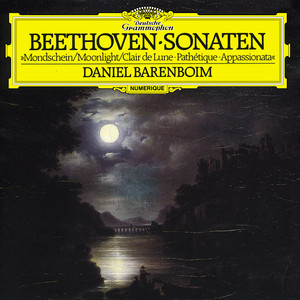 | Piano Sonata No.8 In C Minor, Op.13 -"Pathétique": 2. Adagio cantabile | Ludwig van Beethoven, Daniel Barenboim | A♭ Major | 0 | 4B | 179 BPM | |
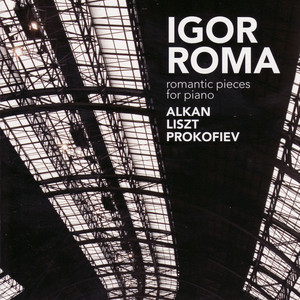 | Le Festin D'Esope Op. 39 No. 12 | Charles-Valentin Alkan, Igor Roma | E Minor | 2 | 9A | 138 BPM | |
 | Gottes Zeit ist die allerbeste Zeit, BWV 106 "Actus tragicus": I. Sonatina | Johann Sebastian Bach, Márta Kurtág, György Kurtág | F Major | 3 | 7B | 102 BPM | |
 | Melody from « Orfeo » | Christoph Willibald Gluck, Roberto Giordano | G Minor | 2 | 6A | 115 BPM | |
 | Bruch: Violin Concerto No. 1 in G Minor, Op. 26: I. Prelude. Allegro moderato | Max Bruch, Maxim Vengerov, Kurt Masur, Gewandhausorchester | E♭ Major | 1 | 5B | 113 BPM | |
 | Kinderszenen, Op. 15: XII. Kind im Einschlummern | Robert Schumann, Martha Argerich | E Minor | 0 | 9A | 123 BPM | |
 | Après un rêve, Op. 7: No. 1 | Gabriel Fauré, Joshua Bell, Frederic Chiu | G Minor | 2 | 6A | 91 BPM | |
 | 3 Romances, Op. 11: I. Andante | Clara Schumann, Yoshiko Iwai | C Major | 0 | 8B | 66 BPM | |
 | Tchaikovsky - Op.37 Carnival | ダニエル・ルブラン | D Major | 3 | 10B | 136 BPM | |
 | Violin Concerto In D, Op.35, TH. 59: 2. Canzonetta (Andante) | Pyotr Ilyich Tchaikovsky, Janine Jansen, Mahler Chamber Orchestra, Daniel Harding | E♭ Major | 0 | 5B | 103 BPM | |
 | Etude in D-Sharp Minor, Op. 8, No. 12: Patetico - Remastered | Alexander Scriabin, Vladimir Horowitz | D♭ Minor | 3 | 12A | 72 BPM | |
 | Haydn: Cello Concerto No. 1 in C Major, Hob. VIIb, 1: I. Moderato (Cadenza by Britten) | Franz Joseph Haydn, Mstislav Rostropovich, Academy of St. Martin in the Fields | C Major | 1 | 8B | 68 BPM | |
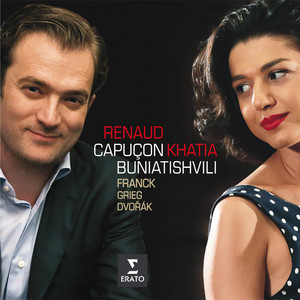 | Dvořák: 4 Romantic Pieces, Op. 75, B. 150: No. 1, Allegro moderato | Antonín Dvořák, Renaud Capuçon | B♭ Major | 1 | 6B | 91 BPM | |
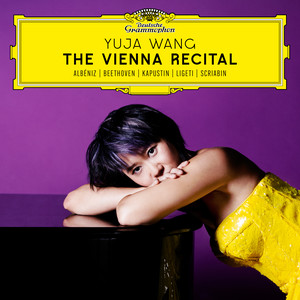 | Orfeo ed Euridice, Wq. 30: Melodie dell'Orfeo (Arr. Sgambati for Piano) | Yuja Wang | D♭ Minor | 1 | 12A | 80 BPM | |
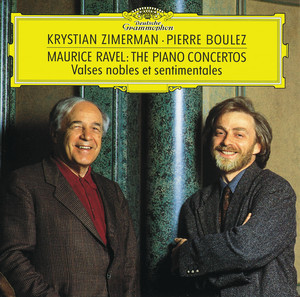 | Piano Concerto in G Major, M. 83: II. Adagio assai | Maurice Ravel, Krystian Zimerman, Cleveland Orchestra, Pierre Boulez | E Major | 0 | 12B | 74 BPM | |
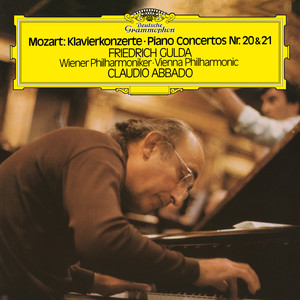 | Piano Concerto No. 20 in D Minor, K. 466: II. Romance | Wolfgang Amadeus Mozart, Friedrich Gulda, Wiener Philharmoniker, Claudio Abbado | E Major | 0 | 12B | 101 BPM | |
 | Violin Concerto in D Major, Op. 77: II. Adagio | Johannes Brahms, Takako Nishizaki, Slovak Philharmonic, Stephen Gunzenhauser | C Major | 1 | 8B | 136 BPM | |
 | Humoresque No. 7 in G-flat Major, Op. 101 | Boston Symphony Orchestra, Yo-Yo Ma, Seiji Ozawa, Itzhak Perlman | F♯ Major | 1 | 2B | 83 BPM | |
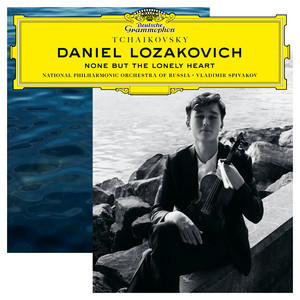 | Six Pieces, Op. 51, TH 143: VI. Valse sentimentale. Tempo di Valse | Pyotr Ilyich Tchaikovsky, Daniel Lozakovich, Stanislav Soloviev | D♭ Major | 1 | 3B | 108 BPM |
- ISRC
- GBEBL0904003
- Label
- L-M Records/RCA Records