- BPM
- 117
- Key
- B♭ Minor
- Camelot
- 3A
Quatuor No. 4 in B Minor: V. Triste by Christophe Rousset, Masahiro Arita, Ryo Terakado, Kaori Uemura Song Details
"Quatuor No. 4 in B Minor: V. Triste" by Christophe Rousset, Masahiro Arita, Ryo Terakado, Kaori Uemura had its release date on January 1, 2010. The duration of This song is about 3 minutes long, at 3:08. Based on our data, This song appears to be safe for all ages and is not considered explicit. This track is about the average length of a typical track. There are a total of 37 in the song's album "Telemann: Quatuors Parisiens". In this album, this song's track order is #5. In terms of popularity, Quatuor No. 4 in B Minor: V. Triste is currently not that popular. In our opinion, the overall tone is not very danceable and projects negative sounds, such as being sad, depressed, or angry.
BPM and Tempo
With Quatuor No. 4 in B Minor: V. Triste by Christophe Rousset, Masahiro Arita, Ryo Terakado, Kaori Uemura having a BPM of 117 with a half-time of 58 BPM and a double-time of 234 BPM, we would consider this track to have a Moderato (at a moderate speed) tempo marking. Because of this, we believe that the song has an overall moderate tempo. Looking at the BPM of this song, this song might go great with walking. The time signature for this track is 1/4.
Music Key
B♭ Minor is the music key of this track. Which also means that the camelot key for this song is 3A. So, the perfect camelot match for 3A would be either 3A or 2B. While, a low energy boost can consist of either 3B or 4A. For moderate energy boost, you would use 12A and a high energy boost can either be 5A or 10A. However, if you are looking for a low energy drop, finding a song with a camelot key of 2A would be a great choice. Where 6A would give you a moderate drop, and 1A or 8A would be a high energy drop. Lastly, 6B allows you to change the mood.
Want to find the BPM and music key for other songs? Check out our BPM and Key Finder page!
- Popularity
- 7%
- Loudness
- -23.532 dB
- Acousticness
- 88%
- Danceability
- 22%
- Energy
- 4%
- Instrumentalness
- 0%
- Liveness
- 15%
- Loudness
- 61%
- Speechiness
- 4%
- Valence
- 9%
Recommendations
| Track | Artist | Key | Energy | Camelot | BPM | ||
|---|---|---|---|---|---|---|---|
 | Sonata in G Minor, Op. 2, No. 3: I. Adagio | Benedetto Marcello, Collegium Pro Musica | F♯ Minor | 1 | 11A | 80 BPM | |
 | Concerto a cinque No. 5, Op. 9: III. Allegro | Tomaso Albinoni, Paul Dombrecht, Il Fondamento | B Major | 3 | 1B | 109 BPM | |
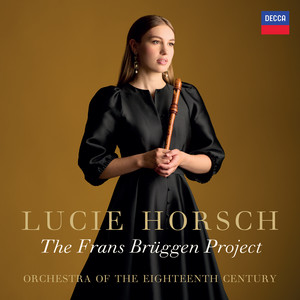 | Sonata for Flute and Violin, Op. 51 No. 2: IV. Gigha - Performed on Recorder | Joseph Bodin de Boismortier, Lucie Horsch, Rachel Podger | E♭ Major | 0 | 5B | 72 BPM | |
 | "Sonate à quatre parties" In D Major: 2. Adagio | Jean-Baptiste Quentin, Hajo Bäß, Jaap Ter Linden, Musica Antiqua Köln, Reinhard Goebel | B♭ Minor | 0 | 3A | 63 BPM | |
 | Concerto for Violoncello and Orchestra in D major: III. Larghetto, con poco moto | Leonardo Leo, Sol Gabetta, Andrés Gabetta | B Minor | 0 | 10A | 77 BPM | |
 | Telemann: Concerto for 2 Flutes and Violone in A Minor, TWV 53:a1: III. Loure | Georg Philipp Telemann, Emmanuel Pahud, Berliner Barock Solisten, Jacques Zoon, Klaus Stoll, Rainer Kussmaul | G Minor | 4 | 6A | 120 BPM | |
 | Overture (Suite) In D Major, TWV 55:D15: III. Loure | Cologne Chamber Orchestra, Georg Philipp Telemann | D Major | 0 | 10B | 97 BPM | |
 | Trio in E flat major / Mi bémol majeur / Es-dur: I. Affettuoso | Georg Philipp Telemann, Petra Mullejans, Gottfried Von Der Goltz, Freiburger Barockorchester | D Major | 1 | 10B | 90 BPM | |
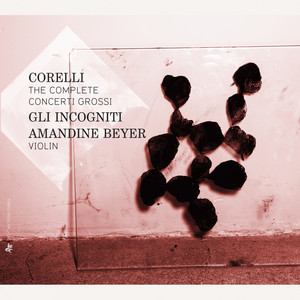 | Concerto grosso No. 1 in D Major, Op. 6: V. Allegro | Arcangelo Corelli, Gli Incogniti, Amandine Beyer, Helena Zemanova | D♭ Major | 4 | 3B | 85 BPM | |
 | Concerto For Oboe And Orchestra In G Major: 3. Allegro | Carl Ditters von Dittersdorf, Heinz Holliger, Camerata Bern, Thomas Füri | G Major | 2 | 9B | 133 BPM | |
 | Trio Sonata in C Major, DürG 13: IV. Gigue. Presto | Johann Gottlieb Goldberg, Florilegium | G Major | 1 | 9B | 95 BPM | |
 | Concerto for Violin and Bassoon in G Minor: II. Grave | Giuseppe Antonio Brescianello, David Plantier, Eckhard Lenzin, La Cetra Barockorchester Basel, Vaclav Luks | A♭ Major | 2 | 4B | 131 BPM | |
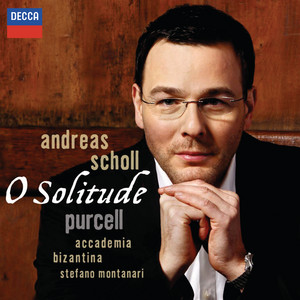 | Chacony, Z628 | Henry Purcell, Accademia Bizantina, Stefano Montanari | E Major | 1 | 12B | 82 BPM | |
 | Concerto for Recorder and Flute in E Minor, TWV 52:E1: II. Allegro | Georg Philipp Telemann, Gunther Holler, Konrad Hunteler, Cappella Coloniensis, Georg Fischer | F♯ Major | 2 | 2B | 116 BPM | |
 | Symphony No. 7 in B-Flat Major, Op. 2, "Pythian Ode": I. Andante - Spirituoso | William Boyce, Aradia Ensemble, Kevin Mallon | A Major | 2 | 11B | 88 BPM | |
| Overture (Suite) In D Major, TWV 55:D15: I. Ouverture: Grave. Allegro. Grave | Cologne Chamber Orchestra, Georg Philipp Telemann | D Major | 2 | 10B | 114 BPM | |
 | Les Indes Galantes - Air des Incas pour la dévotion du Soleil | Jean-Philippe Rameau, Jordi Savall, Le Concert Des Nations | F♯ Major | 0 | 2B | 112 BPM | |
| Overture (Suite) In G Minor, TWV 55: G4: III. Les Irresoluts | Cologne Chamber Orchestra, Georg Philipp Telemann | G Minor | 1 | 6A | 82 BPM | |
 | Sinfonia No. 6 in G Minor, Op. 5: III. Allegro | Johann Adolf Hasse, Le Concert de l'Hostel Dieu, Franck-Emmanuel Comte | D♭ Major | 3 | 3B | 120 BPM | |
 | Symphony in C Major, J-C 4: II. Andante e affettuoso | Giovanni Battista Sammartini, Aradia Ensemble, Kevin Mallon | F♯ Major | 1 | 2B | 137 BPM | |
 | Concerto in C Major, H.117, Op. 7: I. Francese Presto | Francesco Geminiani, Café Zimmermann | B Major | 3 | 1B | 112 BPM | |
 | Sonata da camera in G Minor, "O Haupt voll Blut und Wunden": I. Largo | Johann Gottlieb Janitsch, Il Gardellino | F♯ Minor | 2 | 11A | 171 BPM | |
 | Overture No. 2 in F Major: III. Sarabande | Francesco Maria Veracini, Accademia I Filarmonici, Alberto Martini | F Major | 1 | 7B | 108 BPM | |
 | Concerto in D Minor for Oboe, Strings and Basso continuo: I. Andante e spiccato | Alessandro Marcello, Frans Brüggen, L'arpa Festante | D♭ Minor | 0 | 12A | 115 BPM | |
| Sonata da camera in G Minor, "O Haupt voll Blut und Wunden": III. Adagio | Johann Gottlieb Janitsch, Il Gardellino | E Major | 1 | 12B | 60 BPM |
- ISRC
- This song does not have an ISRC.
- Label
- L-M Records/RCA Records