- BPM
- 85
- Key
- B Major
- Camelot
- 1B
Strauss, R: Also sprach Zarathustra, Op. 30: III. Of Science and Learning by Richard Strauss, Rudolf Kempe, Staatskapelle Dresden Song Details
"Strauss, R: Also sprach Zarathustra, Op. 30: III. Of Science and Learning" by Richard Strauss, Rudolf Kempe, Staatskapelle Dresden had its release date on January 1, 2013. With this song being around four minutes long, at 4:05, the duration of this song is pretty average compared to other songs. This track is safe for children and doesn't appear to contain any foul language, since the "Explicit" tag was not present in this track. There are a total of 103 in the song's album "Strauss: Complete Orchestral Works". In this album, this song's track order is #3. Furthermore, we believe that the track originated from United Kingdom. Strauss, R: Also sprach Zarathustra, Op. 30: III. Of Science and Learning is not that popular right now. In our opinion, the overall tone is not very danceable and projects negative sounds, such as being sad, depressed, or angry.
BPM and Tempo
With Strauss, R: Also sprach Zarathustra, Op. 30: III. Of Science and Learning by Richard Strauss, Rudolf Kempe, Staatskapelle Dresden having a BPM of 85 with a half-time of 42 BPM and a double-time of 170 BPM, we would consider this track to have a Andante (at a walking pace) tempo marking. Because of this, we believe that the song has an overall slow tempo. Looking at the BPM of this song, this song might go great with yoga or pilates. The time signature for this track is 5/4.
Music Key
This song has a musical key of B Major. Or for those who are familiar with the camelot wheel, this song has a camelot key of 1B. So, the perfect camelot match for 1B would be either 1B or 2A. While, 2B can give you a low energy boost. For moderate energy boost, you would use 10B and a high energy boost can either be 3B or 8B. Though, if you want a low energy drop, you should looking for songs with either a camelot key of 1A or 12B will give you a low energy drop, 4B would be a moderate one, and 11B or 6B would be a high energy drop. Lastly, 10A allows you to change the mood.
Want to find the BPM and music key for other songs? Check out our BPM and Key Finder page!
- Popularity
- 2%
- Loudness
- -24.774 dB
- Acousticness
- 92%
- Danceability
- 19%
- Energy
- 5%
- Instrumentalness
- 96%
- Liveness
- 64%
- Loudness
- 59%
- Speechiness
- 3%
- Valence
- 4%
Recommendations
| Track | Artist | Key | Energy | Camelot | BPM | ||
|---|---|---|---|---|---|---|---|
 | Consolation No. 3 in D-Flat Major, S. 172/3 | Franz Liszt, Vladimir Horowitz | D♭ Major | 0 | 3B | 70 BPM | |
 | Grieg: Holberg Suite, Op. 40: I. Praeludium | Edvard Grieg, Paavo Järvi, Estonian National Symphony Orchestra | G Major | 1 | 9B | 144 BPM | |
 | Piano Concerto No. 2 in C Minor, Op. 18: I. Moderato | Sergei Rachmaninoff, Yuja Wang, Los Angeles Philharmonic, Gustavo Dudamel | G Minor | 3 | 6A | 97 BPM | |
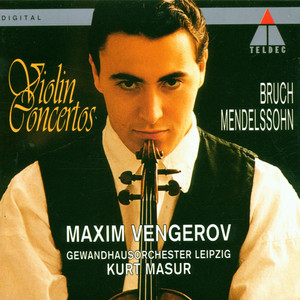 | Mendelssohn: Violin Concerto in E Minor, Op. 64, MWV O14: III. Allegretto non troppo - Allegro molto vivace | Felix Mendelssohn, Maxim Vengerov, Kurt Masur, Gewandhausorchester | E Major | 2 | 12B | 161 BPM | |
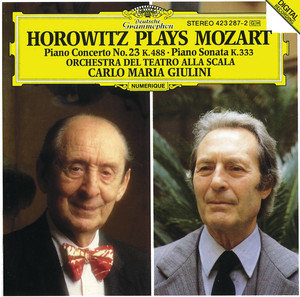 | Piano Concerto No. 23 in A Major, K. 488: I. Allegro (Cadenza by Busoni) | Wolfgang Amadeus Mozart, Vladimir Horowitz, Orchestra Del Teatro Alla Scala, Milano, Carlo Maria Giulini | A Major | 1 | 11B | 140 BPM | |
 | Symphony No. 9 in E-Flat Major, Op. 70: II. Moderato | Dmitri Shostakovich, Berliner Philharmoniker, Kirill Petrenko | B♭ Minor | 2 | 3A | 122 BPM | |
 | Scheherazade: Calm at Sea | Nikolai Rimsky-Korsakov, Lars Hjalmar Joakim | E Major | 2 | 12B | 84 BPM | |
 | Die Liebe der Danae: "Wie umgibst du mich mit Frieden" | Richard Strauss, Renée Fleming, Mariinsky Orchestra, Valery Gergiev | F Major | 1 | 7B | 171 BPM | |
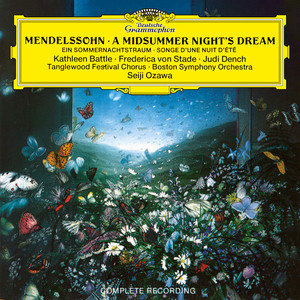 | Overture "A Midsummer Night's Dream", Op. 21 | Felix Mendelssohn, Boston Symphony Orchestra, Seiji Ozawa | E Major | 1 | 12B | 139 BPM | |
 | Symphony No. 2 in C Minor "Resurrection": III. In ruhig fließender Bewegung | Gustav Mahler, Leonard Bernstein, New York Philharmonic | B Minor | 0 | 10A | 112 BPM | |
 | Prelude: Allegro - Meno mosso - Alla breve (Allegro) - Adagio - | Ottorino Respighi, Seattle Symphony Orchestra, Gerard Schwarz | D Major | 1 | 10B | 74 BPM | |
 | Le carnaval des animaux, R. 125: Le cygne | Camille Saint-Saëns, Mischa Maisky, Orpheus Chamber Orchestra | C Major | 0 | 8B | 83 BPM | |
 | Ancient Airs & Dances, Suite III, P. 172: I. Italiana (Anonymous) | Ottorino Respighi, Filarmonica della Scala, Riccardo Chailly | B♭ Major | 1 | 6B | 172 BPM | |
 | 4 Impromptus, Op.90, D.899: No.3 in G Flat Major: Andante | Franz Schubert, Radu Lupu | F♯ Major | 0 | 2B | 173 BPM | |
 | 4 Lieder, Op. 27: 4. Morgen! | Richard Strauss, Jessye Norman, Gewandhausorchester Leipzig, Kurt Masur | G Major | 0 | 9B | 81 BPM | |
| 3 Chorales, P. 167: No. 1, Lento assai (After J.S. Bach's BWV 659) | Ottorino Respighi, Seattle Symphony Orchestra, Gerard Schwarz | C Major | 0 | 8B | 65 BPM | |
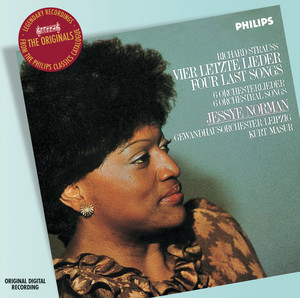 | Cäcilie, Op. 27 No. 2 (Version with Orchestra) | Richard Strauss, Jessye Norman, Gewandhausorchester, Kurt Masur | E♭ Minor | 3 | 2A | 97 BPM | |
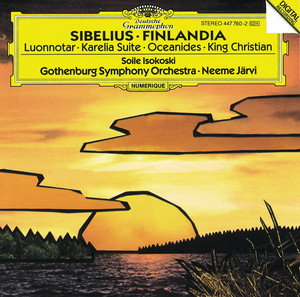 | Andante Festivo | Jean Sibelius, Gothenburg Symphony Orchestra, Neeme Järvi | G Major | 1 | 9B | 86 BPM | |
 | Piano Concerto No. 2 in F Major, Op. 102: II. Andante | Dmitri Shostakovich, Boris Giltburg, Royal Liverpool Philharmonic Orchestra, Vasily Petrenko | C Minor | 0 | 5A | 80 BPM | |
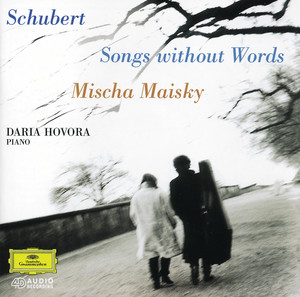 | Du bist die Ruh, D. 776 | Franz Schubert, Mischa Maisky, Daria Hovora | E♭ Major | 0 | 5B | 67 BPM | |
 | Alphorn, o. Op. | Richard Strauss, Christiane Karg, Malcolm Martineau, Felix Klieser | D Major | 3 | 10B | 78 BPM | |
 | Pirogov Suite, Op. 76a (Arr. L. Atovmyan for Orchestra): V. Finale | Dmitri Shostakovich, Bolshoi Theatre Orchestra, Maxim Shostakovich | E♭ Major | 2 | 5B | 107 BPM | |
 | Piano Concerto in A minor, Op. 16: II. Adagio - Live | Edvard Grieg, Alice Sara Ott, Symphonieorchester des Bayerischen Rundfunks, Esa-Pekka Salonen | D Major | 2 | 10B | 121 BPM | |
 | Oberon, J.306: Ouvertüre | Carl Maria von Weber, Bavarian Radio Symphony Orchestra, Rafael Kubelík | D Major | 1 | 10B | 131 BPM | |
 | Khovanshchina: Overture (Prelude) | Modest Mussorgsky, Mariinsky Orchestra, Valery Gergiev | D♭ Major | 0 | 3B | 90 BPM |
- ISRC
- GBAYC1201631
- Label
- L-M Records/RCA Records