- BPM
- 167
- Key
- A♭ Major
- Camelot
- 4B
Verbotener Gesang by Rudolf Schock Song Details
Rudolf Schock's 'Verbotener Gesang' had a release date set for February 28, 2023. With this song being around four minutes long, at 3:43, the duration of this song is pretty average compared to other songs. This track is safe for children and doesn't appear to contain any foul language, since the "Explicit" tag was not present in this track. There are a total of 20 in the song's album "Rudolf Schock; Einfach das beste, Vol. 2". In this album, this song's track order is #16. The popularity of Verbotener Gesang is currently unknown right now. In our opinion, the overall tone is not very danceable and projects negative sounds, such as being sad, depressed, or angry.
BPM and Tempo
With Verbotener Gesang by Rudolf Schock having a BPM of 167 with a half-time of 84 BPM and a double-time of 334 BPM, we would consider this track to have a Vivace (lively and fast) tempo marking. Because of this, we believe that the song has an overall fast tempo. The time signature for this track is 3/4.
Music Key
This song has a musical key of A♭ Major. Or for those who are familiar with the camelot wheel, this song has a camelot key of 4B. So, the perfect camelot match for 4B would be either 4B or 5A. While, 5B can give you a low energy boost. For moderate energy boost, you would use 1B and a high energy boost can either be 6B or 11B. Though, if you want a low energy drop, you should looking for songs with either a camelot key of 4A or 3B will give you a low energy drop, 7B would be a moderate one, and 2B or 9B would be a high energy drop. Lastly, 1A allows you to change the mood.
Want to find the BPM and music key for other songs? Check out our BPM and Key Finder page!
- Popularity
- 0%
- Loudness
- -11.357 dB
- Acousticness
- 94%
- Danceability
- 20%
- Energy
- 28%
- Instrumentalness
- 3%
- Liveness
- 9%
- Loudness
- 81%
- Speechiness
- 4%
- Valence
- 27%
Recommendations
| Track | Artist | Key | Energy | Camelot | BPM | ||
|---|---|---|---|---|---|---|---|
 | Giacomo Puccini: Madame Butterfly - Summchor | Chor der Staatsoper Wien, Vienna Volksoper Orchestra, Wilhelm Loibner | B♭ Major | 0 | 6B | 85 BPM | |
 | Carmen, WD 31 / Act 2: "La fleur que tu m'avais jetée" | Jonas Kaufmann, Georges Bizet, Prague Philharmonic Orchestra, Marco Armiliato | D♭ Major | 2 | 3B | 91 BPM | |
 | L'elisir d'amore / Act II: "Saria possibile?" | Gaetano Donizetti, Metropolitan Opera Chorus, David Stivender, Dawn Upshaw, Metropolitan Opera Orchestra, James Levine | B Major | 0 | 1B | 119 BPM | |
 | Kálmán: Die Csárdásfürstin, Act 2: "Tanzen möcht' ich" - "Tausend kleine Engel singen" (Sylva, Edwin) | Emmerich Kálmán, Anneliese Rothenberger, Nicolai Gedda, Willy Mattes, Symphonie-Orchester Graunke | D Major | 3 | 10B | 93 BPM | |
 | Horch, was kommt von draußen rein | Werner Hollweg, Orchester Kurt Rehfeld, Hubert Giesen | D Major | 4 | 10B | 115 BPM | |
 | Wagner: Tannhäuser, Act 2: "O Himmel! Laß dich jetzt erflehen!" (Wolfram, Tannhäuser) | Richard Wagner, Daniel Barenboim, Chor der Deutschen Staatsoper Berlin, Peter Seiffert, Staatskapelle Berlin, Thomas Hampson | A Minor | 1 | 8A | 99 BPM | |
 | Lohengrin: Treulich geführt | Chor der Deutschen Oper Berlin, Orchester der Deutschen Oper Berlin, Rafael Frühbeck de Burgos | B♭ Major | 2 | 6B | 92 BPM | |
 | Lasciami cantare una canzone | Leo Nucci, Salotto Ottocento Ensemble | D Major | 2 | 10B | 94 BPM | |
 | Sehn wir uns wohl einmal wieder | Jay Alexander, Czech Symphony Orchestra, Adrian Werum | D♭ Major | 2 | 3B | 72 BPM | |
 | Presssacklied | Martin Frank | E♭ Major | 4 | 5B | 85 BPM | |
 | Die Zeisserln, Walzer, Op. 114 | Josef Strauss, Christian Pollack, Slovak State Philharmonic Orchestra, Kosice | B♭ Major | 1 | 6B | 176 BPM | |
 | Ich Hab MEin Herz In Heidelberg | Willy Schneider | D Major | 4 | 10B | 103 BPM | |
 | Die lustige Witwe: Da geh' ich zu Maxim | Franz Lehár, Simon Keenlyside, Alfred Eschwe, Tonkünstler-Orchester, Angelika Kirchschlager | D Major | 1 | 10B | 87 BPM | |
 | Bizet: Les pêcheurs de perles, Act 1: "Au fond du temple saint" (Nadir, Zurga) | Georges Bizet, Pierre Dervaux, Ernest Blanc, Nicolai Gedda, Orchestre du Theatre National de IOpera-Comique | E♭ Major | 2 | 5B | 88 BPM | |
 | Deinen Namen, den hab' ich vergessen | René Carol | F Major | 4 | 7B | 87 BPM | |
 | L´Amico Fritz: Son pochi fiori | Mirella Freni, Munchener Rundfunkorchester, Ino Savini | B♭ Major | 2 | 6B | 63 BPM | |
 | Les Contes d'Hoffmann / Act 4: "Belle nuit, ô nuit d'amour" | Jacques Offenbach, Anne Sofie von Otter, Francisco Araiza, Cheryl Studer, MDR Leipzig Radio Chorus, Staatskapelle Dresden, Jeffrey Tate | G Major | 3 | 9B | 140 BPM | |
 | Granada | Fritz Wunderlich | F Major | 3 | 7B | 160 BPM | |
 | Dein ist mein ganzes Herz | Rudolf Schock | D♭ Major | 3 | 3B | 46 BPM | |
 | Komm in die Gondel | Rudolf Schock | C Major | 3 | 8B | 137 BPM | |
| Weißt du, wieviel Sterne stehen? | Werner Hollweg | F♯ Major | 3 | 2B | 165 BPM | |
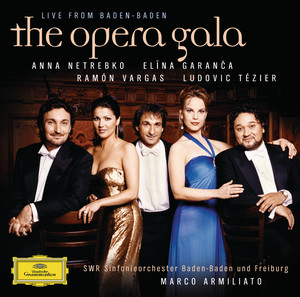 | Norma / Act I: Casta Diva | Vincenzo Bellini, Anna Netrebko, SWR Symphony Orchestra, Marco Armiliato | F Major | 1 | 7B | 85 BPM | |
 | Petite messe solennelle: Domine Deus | Gioachino Rossini, Orchestre de chambre de Paris, Ottavio Dantone, Michael Spyres | D Major | 2 | 10B | 138 BPM | |
 | Ich schau' den weißen Wolken nach | Lale Andersen | A♭ Major | 3 | 4B | 72 BPM | |
 | Girls were Made to Love and Kiss | Richard Tauber, Franz Lehár | E♭ Major | 2 | 5B | 80 BPM |
- ISRC
- UKMUY1734392
- Label
- L-M Records/RCA Records