- BPM
- 130
- Key
- B♭ Major
- Camelot
- 6B
Les Contes d'Hoffmann: Dis-tu vrai? by Jacques Offenbach, Richard Tucker, Martial Singher, Paul Franke, Alessio De Paolis, Pierre Monteux Song Details
"Les Contes d'Hoffmann: Dis-tu vrai?" by Jacques Offenbach, Richard Tucker, Martial Singher, Paul Franke, Alessio De Paolis, Pierre Monteux had its release date on October 28, 2011. The duration of This song is about two minutes long, specifically at 2:41. This song does not appear to have any foul language. Les Contes d'Hoffmann: Dis-tu vrai?'s duration is considered a little bit shorter than the average duration of a typical track. There are a total of 41 in the song's album "Offenbach: Les Contes d'Hoffmann (Metropolitan Opera)". In this album, this song's track order is #13. Furthermore, we believe that the track originated from United States. Based on our statistics, Les Contes d'Hoffmann: Dis-tu vrai?'s popularity is unknown right now. In our opinion, the overall tone is not very danceable and projects negative sounds, such as being sad, depressed, or angry.
BPM and Tempo
With Les Contes d'Hoffmann: Dis-tu vrai? by Jacques Offenbach, Richard Tucker, Martial Singher, Paul Franke, Alessio De Paolis, Pierre Monteux having a BPM of 130 with a half-time of 65 BPM and a double-time of 260 BPM, we would consider this track to have a Allegro (fast, quick, and bright) tempo marking. Because of this, we believe that the song has an overall fast tempo. Looking at the BPM of this song, this song might go great with walking. The time signature for this track is 4/4.
Music Key
This song is in the music key of B♭ Major. Or for those who are familiar with the camelot wheel, this song has a camelot key of 6B. So, the perfect camelot match for 6B would be either 6B or 7A. While, 7B can give you a low energy boost. For moderate energy boost, you would use 3B and a high energy boost can either be 8B or 1B. Though, if you want a low energy drop, you should looking for songs with either a camelot key of 6A or 5B will give you a low energy drop, 9B would be a moderate one, and 4B or 11B would be a high energy drop. Lastly, 3A allows you to change the mood.
Want to find the BPM and music key for other songs? Check out our BPM and Key Finder page!
- Popularity
- 0%
- Loudness
- -16.929 dB
- Acousticness
- 97%
- Danceability
- 34%
- Energy
- 25%
- Instrumentalness
- 0%
- Liveness
- 93%
- Loudness
- 72%
- Speechiness
- 8%
- Valence
- 7%
Recommendations
| Track | Artist | Key | Energy | Camelot | BPM | ||
|---|---|---|---|---|---|---|---|
 | Bizet: Carmen, WD 31, Act 4: "Les voici ! Voici le quadrille !" (Chœur) | Georges Bizet, Michel Plasson, La Lauzeta, Les Éléments, Orchestre National Du Capitole De Toulouse | D♭ Minor | 2 | 12A | 93 BPM | |
 | Les Contes d'Hoffmann / Act 2: "Belle nuit, ô nuit d'amour" | Jacques Offenbach, Dame Joan Sutherland, Huguette Tourangeau, Chorus Pro Arte Lausanne Du Brassus, Radio Suisse Romande Chorus, Orchestre de la Suisse Romande, Richard Bonynge | D Major | 1 | 10B | 82 BPM | |
 | Gayane Suite No. 2: III. Dance of the Boys | Aram Khachaturian, St. Petersburg State Symphony Orchestra, Andre Anichanov | D♭ Minor | 7 | 12A | 103 BPM | |
 | Boccerini: Minuet In D | Richard Hartley | A Major | 1 | 11B | 200 BPM | |
 | String Quartet No. 2 in D Major: III. Notturno: Andante | Alexander Borodin, Budapest Haydn Quartet | A Major | 1 | 11B | 89 BPM | |
 | Violin Concerto No. 1 in G Minor, Op. 26: III. Allegro energico | Max Bruch, Itzhak Perlman, Bernard Haitink, Royal Concertgebouw Orchestra | G Major | 3 | 9B | 97 BPM | |
 | Gaîté parisienne: Barcarolle | Jacques Offenbach, Berliner Philharmoniker, Herbert von Karajan | D Major | 0 | 10B | 82 BPM | |
 | Gitanerías - 1997 Remastered | Ernesto Lecuona, Morton Gould and His Orchestra | G Minor | 5 | 6A | 145 BPM | |
 | The Four Seasons: Concerto No. 1 in E Major, RV 269 "La primavera" (spring): I. Allegro | Antonio Vivaldi, Adrian Chandler, La Serenissima | A♭ Major | 3 | 4B | 126 BPM | |
 | Jazz Suite No. 2: IV. Waltz 1 | Dmitri Shostakovich, Russian State Symphony Orchestra, Dmitry Yablonsky | B♭ Major | 2 | 6B | 109 BPM | |
 | Ruslan and Ludmila: Overture | Mikhail Glinka, The USSR Bolshoy Theatre Orchestra, Yevgeny Svetlanov | F Major | 3 | 7B | 81 BPM | |
 | L'elisir d'amore / Act II: "Una furtiva lagrima" | Gaetano Donizetti, Luciano Pavarotti, Metropolitan Opera Orchestra, James Levine | B♭ Minor | 1 | 3A | 87 BPM | |
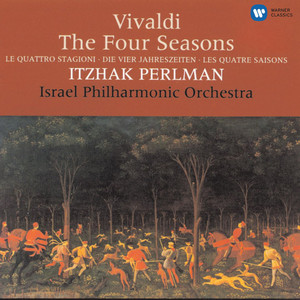 | Vivaldi: The Four Seasons, Violin Concerto in F Minor, Op. 8 No. 4, RV 297 "Winter": I. Allegro non molto | Antonio Vivaldi, Itzhak Perlman, Israel Philharmonic Orchestra | F Minor | 2 | 4A | 144 BPM | |
 | Piano Concerto No. 21 in C Major, K. 467: II. Andante "Elvira Madigan" | Wolfgang Amadeus Mozart, Géza Anda, Camerata Salzburg | E Major | 1 | 12B | 84 BPM | |
 | Sarasate: Zigeunerweisen, Op. 20 | Pablo de Sarasate, Itzhak Perlman, Abbey Road Ensemble | C Minor | 1 | 5A | 83 BPM | |
 | Gaîté parisienne: Overture | Jacques Offenbach, Pittsburgh Symphony Orchestra, André Previn | D Major | 3 | 10B | 138 BPM | |
 | Orchestral Suite No. 2 in B Minor, BWV 1067: Minuet and Badinerie | Johann Sebastian Bach, James Galway, Charles Gerhardt, National Philharmonic Orchestra | F Minor | 1 | 4A | 116 BPM | |
 | Hungarian Dance No. 5 in F Minor: Allegro | Johannes Brahms, London Festival Orchestra, Alfred Scholz | A Minor | 1 | 8A | 126 BPM | |
 | Caballeria Ligera - Obertura | Franz von Suppé, Inma Shara | G Major | 5 | 9B | 115 BPM | |
 | Tritsch Tratsch - Galopp Polka, Op. 214 | Orchestra of the Viennese Volksoper & Alfred Scholz | A Major | 2 | 11B | 80 BPM | |
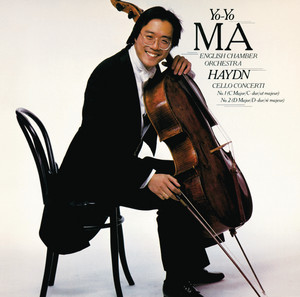 | Cello Concerto No. 1 in C Major, Hob. VIIb:1: II. Adagio | Joseph Haydn, Yo-Yo Ma, English Chamber Orchestra, José-Luis Garcia | F Major | 1 | 7B | 62 BPM | |
 | Humoresque No. 7 in G-flat Major, Op. 101 | Boston Symphony Orchestra, Yo-Yo Ma, Seiji Ozawa, Itzhak Perlman | F♯ Major | 1 | 2B | 83 BPM | |
 | Hungarian Dance No. 5 | Johannes Brahms, Isaac Stern, Milton Katims, Columbia Symphony Orchestra | G Minor | 2 | 6A | 111 BPM | |
 | Mozart: Die Zauberflöte, K. 620: Overture | Wolfgang Amadeus Mozart, Wolfgang Sawallisch, Bayerisches Staatsorchester | E♭ Major | 1 | 5B | 80 BPM | |
 | Shéhérazade, Op. 35: I. The Sea and Sinbad's Ship | Nikolai Rimsky-Korsakov, Sergej Galaktionov, Gianandrea Noseda, Filarmonica Teatro Regio Torino | E Major | 1 | 12B | 136 BPM |
- ISRC
- USY3P1102817
- Label
- L-M Records/RCA Records