- BPM
- 131
- Key
- B Major
- Camelot
- 1B
Huwelijk by Raf Vandermeulen, Andreas Scholl, Raphael Bell, Nikolaas Kende Song Details
"Huwelijk" by Raf Vandermeulen, Andreas Scholl, Raphael Bell, Nikolaas Kende had its release date on November 28, 2025. The duration of This song is about two minutes long, specifically at 2:34. This song does not appear to have any foul language. Huwelijk's duration is considered a little bit shorter than the average duration of a typical track. This song is part of Vandermeulen: De Seizoenen van het Leven by Raf Vandermeulen, Andreas Scholl, Raphael Bell, Nikolaas Kende. The song's track number on the album is #7 out of 24 tracks. Based on our data, Belgium was the country where this track was produced or recorded. Based on our statistics, Huwelijk's popularity is not that popular right now. Although the tone can be danceable to some, this track does projects more of a negative sound rather than a postive one.
BPM and Tempo
Since Huwelijk by Raf Vandermeulen, Andreas Scholl, Raphael Bell, Nikolaas Kende has a tempo of 131 beats per a minute, the tempo markings of this song would be Allegro (fast, quick, and bright). With Huwelijk being at 131 BPM, the half-time would be 66 BPM with a double-time of 262 BPM.In addition, we consider the tempo speed to be pretty fast for this song. This makes this song perfect for activities such as, walking. The time signature for this track is 4/4.
Music Key
This song has a musical key of B Major. Or for those who are familiar with the camelot wheel, this song has a camelot key of 1B. So, the perfect camelot match for 1B would be either 1B or 2A. While, 2B can give you a low energy boost. For moderate energy boost, you would use 10B and a high energy boost can either be 3B or 8B. Though, if you want a low energy drop, you should looking for songs with either a camelot key of 1A or 12B will give you a low energy drop, 4B would be a moderate one, and 11B or 6B would be a high energy drop. Lastly, 10A allows you to change the mood.
Want to find the BPM and music key for other songs? Check out our BPM and Key Finder page!
- Popularity
- 9%
- Loudness
- -17.397 dB
- Acousticness
- 99%
- Danceability
- 41%
- Energy
- 15%
- Instrumentalness
- 17%
- Liveness
- 12%
- Loudness
- 71%
- Speechiness
- 7%
- Valence
- 10%
Recommendations
| Track | Artist | Key | Energy | Camelot | BPM | ||
|---|---|---|---|---|---|---|---|
 | The Second Booke of Songs or Ayres: Flow, my tears | John Dowland, Ruby Hughes, Jonas Nordberg | A Major | 2 | 11B | 83 BPM | |
 | Excerpts from Dr. Einstein's Address About Peace in the Atomic Era | Stefan Wolpe, Constance Heller, Gerold Huber | D Major | 1 | 10B | 168 BPM | |
 | Daten | Raf Vandermeulen, Andreas Scholl, Raphael Bell, Nikolaas Kende | B Major | 1 | 1B | 67 BPM | |
 | 4 Gesänge, Op. 43: I. Von ewiger Liebe | Johannes Brahms, Bernarda Fink, Roger Vignoles | G Major | 3 | 9B | 76 BPM | |
 | Nabucco: Prologo / Siamo a riva | Michelangelo Falvetti, Cappella Mediterranea, Leonardo García-Alarcón, Chœur De Chambre De Namur, Capucine Keller, Mariana Flores, Matteo Bellotto | B♭ Minor | 1 | 3A | 77 BPM | |
| Rust | Raf Vandermeulen, Andreas Scholl, Raphael Bell, Nikolaas Kende | B Major | 1 | 1B | 67 BPM | |
 | V'Adoro, Pupille From Giulio Cesare | George Frideric Handel, Heidi Grant Murphy, Kevin Murphy | F Major | 1 | 7B | 101 BPM | |
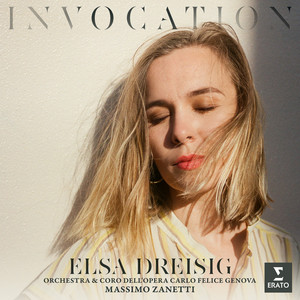 | Grieg: Peer Gynt, Op. 23, Act 4: Solveig's Song. "Kanske vil der gå både Vinter og Vår" (Solveig) | Edvard Grieg, Elsa Dreisig, Massimo Zanetti, Orchestra del Teatro Carlo Felice di Genova | A Major | 2 | 11B | 83 BPM | |
 | À Chloris | Reynaldo Hahn, Samuel Mariño, Jonathan Ware | D♭ Minor | 0 | 12A | 61 BPM | |
 | Stabat Mater in F Minor, G. 532: I. Stabat Mater dolorosa. Grave assai | Luigi Boccherini, Núria Rial, Orchester Le Phenix | C Major | 0 | 8B | 104 BPM | |
| Amarilli, mia bella | Giulio Caccini, Samuel Mariño, Jonathan Ware | G Major | 0 | 9B | 126 BPM | |
 | Traditional: The Frog and the Mouse | Traditional, Malena Ernman, L'Arpeggiata, Christina Pluhar | F Major | 1 | 7B | 88 BPM | |
 | Mass in B Minor, BWV 232: IV. Osanna, Benedictus, Agnus Dei, Dona nobis pacem: No. 26, Agnus Dei | Johann Sebastian Bach, Raphael Pichon, Ensemble Pygmalion, Lucile Richardot | D♭ Major | 5 | 3B | 101 BPM | |
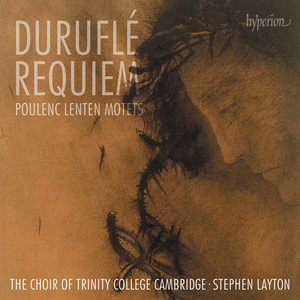 | Requiem, Op. 9: VIII. Libera me | Maurice Duruflé, Florian Störtz, The Choir Of Trinity College, Cambridge, Stephen Layton, Harrison Cole | G Minor | 1 | 6A | 75 BPM | |
 | Hai luli | Pauline Viardot, Cecilia Bartoli, Myung-Whun Chung | G Minor | 1 | 6A | 100 BPM | |
 | Etudes latines: Néère | Reynaldo Hahn, Véronique Gens, Susan Manoff | F♯ Minor | 0 | 11A | 104 BPM | |
 | Stabat Mater: Stabat Mater: VII. Eja mater, fons amoris | Francis Poulenc, Cappella Amsterdam, Estonian National Symphony Orchestra, Estonian Philharmonic Chamber Choir, Daniel Reuss | E♭ Major | 2 | 5B | 120 BPM | |
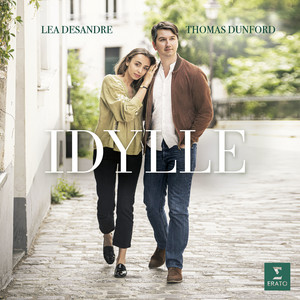 | Charpentier: Tristes déserts, sombre retraite, H. 469 | Marc-Antoine Charpentier, Lea Desandre, Thomas Dunford | D♭ Minor | 0 | 12A | 106 BPM | |
 | La Damnation de Faust, Op. 24, H 111 / Pt. 1: Scène 1. "Le vieil hiver a fait place au printemps" | Hector Berlioz, Kenneth Riegel, Chicago Symphony Orchestra, Sir Georg Solti | G Major | 1 | 9B | 75 BPM | |
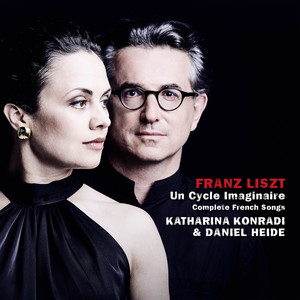 | Oh pourquoi donc, S. 301a | Franz Liszt, Katharina Konradi, Daniel Heide | E Major | 0 | 12B | 67 BPM | |
 | Germanicus: Rimembranza crudel | Georg Philipp Telemann, Jeanine De Bique, Concerto Köln, Luca Quintavalle | D Major | 1 | 10B | 93 BPM | |
 | O Salutaris Hostia (Arr. for Soprano, Soprano Saxophone, and Organ by Raimonds Petrauskis and Oskars Petrauskis) | Ēriks Ešenvalds, Oskars Petrauskis, Marina Rebeka, Liene Andreta Kalnciema | D Major | 2 | 10B | 85 BPM | |
 | Take Me Back to You | Doug Balliett, Thomas Dunford, Lea Desandre, Jupiter | D♭ Major | 1 | 3B | 112 BPM | |
 | Das Lied von der Erde: III. Von der Jugend. Behaglich, heiter | Gustav Mahler, Les Siècles, François-Xavier Roth, Andrew Staples | A Major | 2 | 11B | 83 BPM | |
 | Strozzi: Che si può fare? (Arr. Pluhar) | Barbara Strozzi, Christina Pluhar, L'Arpeggiata, Céline Scheen | D Minor | 2 | 7A | 98 BPM |
- ISRC
- BEH1N2500007
- Label
- L-M Records/RCA Records