- BPM
- 90
- Key
- E Major
- Camelot
- 12B
Tchaikovsky: Piano Trio in A Minor, Op. 50: II. (l) Variation XI by Pyotr Ilyich Tchaikovsky, Itzhak Perlman, Lynn Harrell, Vladimir Ashkenazy Song Details
"Tchaikovsky: Piano Trio in A Minor, Op. 50: II. (l) Variation XI" by Pyotr Ilyich Tchaikovsky, Itzhak Perlman, Lynn Harrell, Vladimir Ashkenazy had its release date on March 9, 2012. The duration of This song is about two minutes long, specifically at 2:19. This song does not appear to have any foul language. Tchaikovsky: Piano Trio in A Minor, Op. 50: II. (l) Variation XI's duration is considered a little bit shorter than the average duration of a typical track. There are a total of 14 in the song's album "Tchaikovsky: Piano Trio". In this album, this song's track order is #13. Furthermore, we believe that the track originated from United Kingdom. In terms of popularity, Tchaikovsky: Piano Trio in A Minor, Op. 50: II. (l) Variation XI is currently not that popular. In our opinion, the overall tone is not very danceable and projects negative sounds, such as being sad, depressed, or angry.
BPM and Tempo
With Tchaikovsky: Piano Trio in A Minor, Op. 50: II. (l) Variation XI by Pyotr Ilyich Tchaikovsky, Itzhak Perlman, Lynn Harrell, Vladimir Ashkenazy having a BPM of 90 with a half-time of 45 BPM and a double-time of 180 BPM, we would consider this track to have a Andante (at a walking pace) tempo marking. Because of this, we believe that the song has an overall slow tempo. Looking at the BPM of this song, this song might go great with yoga or pilates. The time signature for this track is 4/4.
Music Key
This song has a musical key of E Major. Or for those who are familiar with the camelot wheel, this song has a camelot key of 12B. So, the perfect camelot match for 12B would be either 12B or 1A. While, 1B can give you a low energy boost. For moderate energy boost, you would use 9B and a high energy boost can either be 2B or 7B. Though, if you want a low energy drop, you should looking for songs with either a camelot key of 12A or 11B will give you a low energy drop, 3B would be a moderate one, and 10B or 5B would be a high energy drop. Lastly, 9A allows you to change the mood.
Want to find the BPM and music key for other songs? Check out our BPM and Key Finder page!
- Popularity
- 9%
- Loudness
- -24.087 dB
- Acousticness
- 95%
- Danceability
- 28%
- Energy
- 8%
- Instrumentalness
- 38%
- Liveness
- 10%
- Loudness
- 60%
- Speechiness
- 4%
- Valence
- 7%
Recommendations
| Track | Artist | Key | Energy | Camelot | BPM | ||
|---|---|---|---|---|---|---|---|
 | Poulenc: Cello Sonata, FP 143: IV. Finale | Francis Poulenc, Daniel Müller-Schott/Robert Kulek | D♭ Minor | 1 | 12A | 171 BPM | |
 | Piano Quartet in A Minor, Op. 1: II. Adagio | Josef Suk, Karel Untermüller, Jiří Bárta, Jan Simon | F Major | 1 | 7B | 182 BPM | |
 | Concerto for Violin, Piano and String Quartet in D Major, Op. 21: II. Sicilienne | Ernest Chausson, Jorge Bolet, Juilliard String Quartet | A Minor | 2 | 8A | 89 BPM | |
 | La Vida breve (2006 Digital Remaster): Danse espagnole No.1 | Itzhak Perlman, Samuel Sanders | A Minor | 3 | 8A | 113 BPM | |
 | Violin Concerto In D Minor, Op. 47: 2. Adagio di molto | Jean Sibelius, Esther Yoo, Philharmonia Orchestra, Vladimir Ashkenazy | B Major | 4 | 1B | 158 BPM | |
 | Saint-Saëns: Violin Sonata No. 1 in D Minor, Op. 75: I. Allegro agitato | Camille Saint-Saëns, Renaud Capuçon, Bertrand Chamayou | B♭ Major | 0 | 6B | 118 BPM | |
 | Piano Trio in G Minor, Op. 17: II. Scherzo. Tempo di Menuetto | Clara Schumann, Nash Ensemble | D Major | 0 | 10B | 66 BPM | |
 | Divertimento in D Major, Hob. XI.113: I. Adagio | Franz Joseph Haydn, Denis Brott, Samuel Sanders | D Major | 1 | 10B | 145 BPM | |
 | Violin Concerto No. 1 in G Minor, Op. 26: I. Prelude. Allegro moderato – | Max Bruch, Janine Jansen, Gewandhausorchester, Riccardo Chailly | C Minor | 1 | 5A | 103 BPM | |
 | Cello Concerto in E Minor, Op. 85: III. Adagio | Edward Elgar, Yo-Yo Ma, André Previn, London Symphony Orchestra | C Minor | 1 | 5A | 109 BPM | |
 | Langsamer Satz | Anton Webern, Leonkoro Quartet | E Major | 0 | 12B | 171 BPM | |
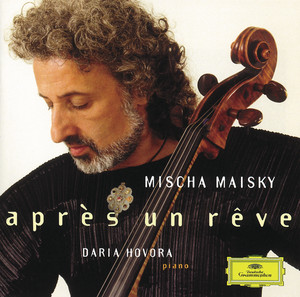 | Vocalise - Étude (en forme de habañera) | Maurice Ravel, Mischa Maisky, Daria Hovora | C Minor | 0 | 5A | 91 BPM | |
 | Elgar: Violin Sonata in E Minor, Op. 82: II. Romance. Andante | Renaud Capuçon, Stephen Hough | E Major | 0 | 12B | 171 BPM | |
 | 8 Pieces, Op. 83: I. Andante | Max Bruch, Philon Trio | F♯ Minor | 0 | 11A | 78 BPM | |
| Bagatelles, Op. 47, B. 79: No. 3 in G Minor, Allegretto scherzando | Antonín Dvořák, Josef Suk, Miroslav Ambroš, Jiří Bárta, Jan Simon | E♭ Major | 4 | 5B | 91 BPM | |
 | Piano Trio in G Minor, Op. 17: II. Scherzo. Tempo di Menuetto | Clara Schumann, Ragna Schirmer, Iason Keramidis, Benedict Kloeckner | E♭ Major | 0 | 5B | 83 BPM | |
 | Carmen Concert Fantasy, Op. 25: III. Lento assai | Pablo de Sarasate, Tianwa Yang, Navarre Symphony Orchestra, Ernest Martinez Izquierdo | D Major | 1 | 10B | 111 BPM | |
 | Double Concerto in A Minor, Op. 102: II. Andante | Johannes Brahms, Anne-Sophie Mutter, Antonio Meneses, Berliner Philharmoniker, Herbert von Karajan | D Major | 1 | 10B | 114 BPM | |
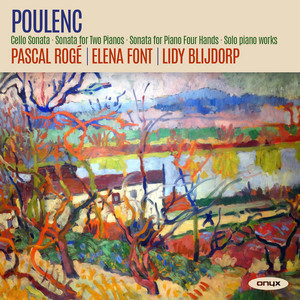 | Cello Sonata, FP 143: I. Allegro. Tempo di marcia | Francis Poulenc, Lidy Blijdorp, Pascal Rogé | E Major | 0 | 12B | 171 BPM | |
 | Violin Concerto in D Minor, Op. 47: III. Allegro, ma non tanto | Jean Sibelius, Anne-Sophie Mutter, Staatskapelle Dresden, André Previn | D Major | 2 | 10B | 112 BPM | |
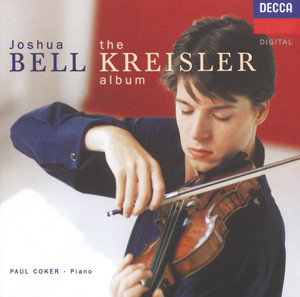 | Aucassin and Nicolette, Medieval Canzonetta | Fritz Kreisler, Joshua Bell, Paul Coker | G Major | 1 | 9B | 79 BPM | |
 | Tchaikovsky: Piano Trio in A Minor, Op. 50: II. (i) Variation VIII | Pyotr Ilyich Tchaikovsky, Itzhak Perlman, Lynn Harrell, Vladimir Ashkenazy | D♭ Minor | 4 | 12A | 108 BPM | |
 | Variations on a Rococo Theme, Op. 33 for cello and orchestra: Moderato assai quasi Andante - Thema: Moderato semplice | Pyotr Ilyich Tchaikovsky, Jean-Guihen Queyras, Jiří Bělohlávek, BBC Symphony Orchestra | F♯ Minor | 0 | 11A | 109 BPM | |
 | Vieuxtemps: Violin Concerto No. 4 in D Minor, Op. 31: II. Adagio religioso | Henri Vieuxtemps, Alexander Markov, Lawrence Renes, Monte-Carlo Philharmonic Orchestra | B♭ Major | 1 | 6B | 98 BPM | |
 | Cello Sonata in G Minor, Op. 19: III. Andante | Sergei Rachmaninoff, Stephen Hough, Steven Isserlis | E♭ Major | 0 | 5B | 53 BPM |
- ISRC
- GBAYC1501603
- Label
- L-M Records/RCA Records