- BPM
- 134
- Key
- A Major
- Camelot
- 11B
Liebeslieder-Walzer, Op. 52 - Verses from "Polydora": 6. Ein kleiner, hübscher Vogel nahm den Flug - Live by Johannes Brahms, Martha Argerich, Gabriela Montero, Coro della Radiotelevisione della Svizzera Italiana, Diego Fasolis Song Details
Johannes Brahms, Martha Argerich, Gabriela Montero, Coro della Radiotelevisione della Svizzera Italiana, Diego Fasolis's 'Liebeslieder-Walzer, Op. 52 - Verses from "Polydora": 6. Ein kleiner, hübscher Vogel nahm den Flug - Live' had a release date set for January 1, 2012. The duration of This song is about two minutes long, specifically at 2:21. This song does not appear to have any foul language. Liebeslieder-Walzer, Op. 52 - Verses from "Polydora": 6. Ein kleiner, hübscher Vogel nahm den Flug - Live's duration is considered a little bit shorter than the average duration of a typical track. The track order of this song in Martha Argerich's "Martha Argerich - Lugano Concertos" album is number 9 out of 56. On top of that, Germany appears to be the country where this track was created. Based on our statistics, Liebeslieder-Walzer, Op. 52 - Verses from "Polydora": 6. Ein kleiner, hübscher Vogel nahm den Flug - Live's popularity is unknown right now. In our opinion, the overall tone is not very danceable and projects negative sounds, such as being sad, depressed, or angry.
BPM and Tempo
We consider the tempo marking of Liebeslieder-Walzer, Op. 52 - Verses from "Polydora": 6. Ein kleiner, hübscher Vogel nahm den Flug - Live by Johannes Brahms, Martha Argerich, Gabriela Montero, Coro della Radiotelevisione della Svizzera Italiana, Diego Fasolis to be Allegro (fast, quick, and bright) because the track has a tempo of 134 BPM, a half-time of 67BPM, and a double-time of 268 BPM. Based on that, the speed of the song's tempo is fast. Activities such as, walking, can go well with this song. The time signature for this track is 3/4.
Music Key
This song is in the music key of A Major. This also means that this song has a camelot key of 11B. So, the perfect camelot match for 11B would be either 11B or 12A. While, 12B can give you a low energy boost. For moderate energy boost, you would use 8B and a high energy boost can either be 1B or 6B. Though, if you want a low energy drop, you should looking for songs with either a camelot key of 11A or 10B will give you a low energy drop, 2B would be a moderate one, and 9B or 4B would be a high energy drop. Lastly, 8A allows you to change the mood.
Want to find the BPM and music key for other songs? Check out our BPM and Key Finder page!
- Popularity
- 0%
- Loudness
- -22.421 dB
- Acousticness
- 99%
- Danceability
- 39%
- Energy
- 9%
- Instrumentalness
- 9%
- Liveness
- 14%
- Loudness
- 63%
- Speechiness
- 3%
- Valence
- 35%
Recommendations
| Track | Artist | Key | Energy | Camelot | BPM | ||
|---|---|---|---|---|---|---|---|
 | 21 Hungarian Dances, WoO 1 (arr. J. Joachim for violin and piano): No. 8 in A Minor | Joseph Joachim, Johannes Brahms, Marat Bisengaliev, John Lenehan | A Minor | 2 | 8A | 94 BPM | |
 | Piano Concerto No. 2 in A Minor, Op. 85: II. Larghetto | Johann Nepomuk Hummel, Stephen Hough, English Chamber Orchestra, Bryden Thomson | F Major | 1 | 7B | 127 BPM | |
 | Overture (Suite) No. 2 In B Minor, BWV 1067 : VII. Badinerie | Cologne Chamber Orchestra, Johann Sebastian Bach | B Minor | 4 | 10A | 119 BPM | |
 | Mozart: Clarinet Concerto in A Major, K. 622: II. Adagio | Wolfgang Amadeus Mozart, Sabine Meyer, Hans Vonk, Staatskapelle Dresden | D Major | 0 | 10B | 93 BPM | |
 | Adagio in F, H.XVII No. 9 | Joseph Haydn, Alfred Brendel | F Major | 0 | 7B | 71 BPM | |
 | Lyric Pieces, Book 9, Op. 68: Badnlat (Cradle Song) | Edvard Grieg, Einar Steen-Nøkleberg | B♭ Major | 0 | 6B | 72 BPM | |
 | 21 Hungarian Dances, WoO 1: No. 1 in G Minor. Allegro molto | Johannes Brahms, Tal & Groethuysen | G Minor | 1 | 6A | 70 BPM | |
 | The Moldau | Bedřich Smetana, Ferenc Fricsay, Berliner Philharmoniker | E Minor | 3 | 9A | 86 BPM | |
 | Saint-Saëns: Romance pour cor et orchestre, Op. 36 (Version for Cello and Piano) | Camille Saint-Saëns, Roland Pidoux | F Major | 0 | 7B | 132 BPM | |
| 21 Hungarian Dances, WoO 1 (arr. J. Joachim for violin and piano): No. 3 in F Major | Joseph Joachim, Johannes Brahms, Marat Bisengaliev, John Lenehan | F Major | 0 | 7B | 146 BPM | |
 | Chopin - 6 Chants Polonais, S480/R145: No. 2. Fruhling(Wiosna, Spring) | Joseph Banowetz, Franz Liszt | G Major | 1 | 9B | 108 BPM | |
 | Vocalise, Op. 34, No. 14 | Sergei Rachmaninoff, Berliner Philharmoniker, Lorin Maazel | E Minor | 1 | 9A | 76 BPM | |
 | 3 Romances, Op. 11: I. Andante | Clara Schumann, Yoshiko Iwai | C Major | 0 | 8B | 66 BPM | |
 | Violin Concerto No. 2 in B Minor, Op. 7, "La campanella": III. Rondo | Niccolò Paganini, Netherlands Symphony Orchestra, Rudolf Koelman, Jan Willem de Vriend | B Minor | 2 | 10A | 105 BPM | |
 | Brahms: 6 Piano Pieces, Op. 118: No. 2, Intermezzo in A Major | Johannes Brahms, Martin James Bartlett | B♭ Major | 1 | 6B | 129 BPM | |
| 21 Hungarian Dances, WoO 1 (arr. J. Joachim for violin and piano): No. 11 in D Minor | Joseph Joachim, Johannes Brahms, Marat Bisengaliev, John Lenehan | A Minor | 1 | 8A | 93 BPM | |
 | 13 Pieces, Op. 76: No. 2, Etude | Jean Sibelius, Olli Mustonen | G Major | 0 | 9B | 66 BPM | |
 | Brahms: Violin Concerto in D Major, Op. 77: III. Allegro giocoso, ma non troppo vivace | Johannes Brahms, Itzhak Perlman, Carlo Maria Giulini, Chicago Symphony Orchestra | G Major | 3 | 9B | 87 BPM | |
 | Carmen Variations | Vladimir Horowitz | E Major | 2 | 12B | 148 BPM | |
 | Symphonie fantastique, Op. 14, H 48: II. Un Bal | Hector Berlioz, London Symphony Orchestra, Sir Colin Davis | A Major | 1 | 11B | 113 BPM | |
 | Liebeslied "Widmung, von Robert Schumann", S. 566 (After Myrthen, Op. 25/1) | Franz Liszt, Angela Hewitt | G Major | 0 | 9B | 63 BPM | |
 | Scottish Fantasy for Violin and Orchestra, Op. 46: I. Introduction: Grave, Adagio cantabile | Max Bruch, Joshua Bell, Academy of St. Martin in the Fields | E♭ Major | 2 | 5B | 60 BPM | |
 | Le Carnaval des Animaux, R. 125: Le Cygne | Camille Saint-Saëns, Mischa Maisky, Martha Argerich, Nelson Freire | A♭ Major | 0 | 4B | 73 BPM | |
 | 12 Songs, Op. 21: V. Lilacs (Transcr. Rachmaninoff for Solo Piano) | Sergei Rachmaninoff, Sergei Babayan | A♭ Major | 0 | 4B | 78 BPM | |
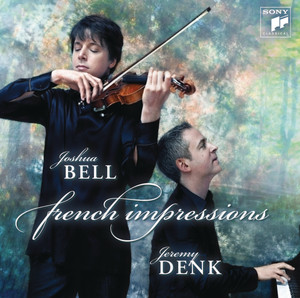 | Violin Sonata in A major, FWV 8: IV. Allegretto poco mosso | César Franck, Joshua Bell, Jeremy Denk | A Major | 1 | 11B | 94 BPM |
- ISRC
- DEN960533306
- Label
- L-M Records/RCA Records