- BPM
- 83
- Key
- C Major
- Camelot
- 8B
Der Rattenfänger von Hameln: Wandern, ach Wandern by Adolf Neuendorff, Richard Tauber, Odeon-Künstler-Orchester, Frieder Weissmann Song Details
Adolf Neuendorff, Richard Tauber, Odeon-Künstler-Orchester, Frieder Weissmann's 'Der Rattenfänger von Hameln: Wandern, ach Wandern' had a release date set for October 7, 2014. The duration of This song is about 3 minutes long, at 3:02. Based on our data, This song appears to be safe for all ages and is not considered explicit. This track is about the average length of a typical track. There are a total of 24 in the song's album "The Richard Tauber Collection, Vol. 26: Various Operetta & Film Scenes". In this album, this song's track order is #17. Furthermore, we believe that the track originated from Germany. Der Rattenfänger von Hameln: Wandern, ach Wandern is unknown right now. In our opinion, the overall tone is not very danceable and projects negative sounds, such as being sad, depressed, or angry.
BPM and Tempo
With Der Rattenfänger von Hameln: Wandern, ach Wandern by Adolf Neuendorff, Richard Tauber, Odeon-Künstler-Orchester, Frieder Weissmann having a BPM of 83 with a half-time of 42 BPM and a double-time of 166 BPM, we would consider this track to have a Andante (at a walking pace) tempo marking. Because of this, we believe that the song has an overall slow tempo. The time signature for this track is 1/4.
Music Key
C Major is the music key of this track. Or for those who are familiar with the camelot wheel, this song has a camelot key of 8B. So, the perfect camelot match for 8B would be either 8B or 9A. While, 9B can give you a low energy boost. For moderate energy boost, you would use 5B and a high energy boost can either be 10B or 3B. Though, if you want a low energy drop, you should looking for songs with either a camelot key of 8A or 7B will give you a low energy drop, 11B would be a moderate one, and 6B or 1B would be a high energy drop. Lastly, 5A allows you to change the mood.
Want to find the BPM and music key for other songs? Check out our BPM and Key Finder page!
- Popularity
- 0%
- Loudness
- -16.055 dB
- Acousticness
- 93%
- Danceability
- 31%
- Energy
- 12%
- Instrumentalness
- 0%
- Liveness
- 25%
- Loudness
- 73%
- Speechiness
- 4%
- Valence
- 32%
Recommendations
| Track | Artist | Key | Energy | Camelot | BPM | ||
|---|---|---|---|---|---|---|---|
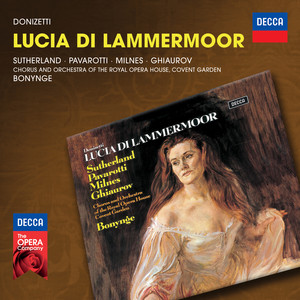 | Lucia di Lammermoor / Act 3: "D'immenso giubilo" | Gaetano Donizetti, Chorus of the Royal Opera House, Covent Garden, Orchestra of the Royal Opera House, Covent Garden, Richard Bonynge | E Minor | 0 | 9A | 89 BPM | |
 | Cantate Nuptiale, Op. 168: "Qu'il me donne un baiser" | Darius Milhaud, Orchestre De La Société Des Concerts Du Conservatoire, Janine Micheau | G Minor | 2 | 6A | 84 BPM | |
 | Lehár: La veuve joyeuse, Act I: Finale. "Cotillon, c'est l'heure du cotillon" - "C'est la valse, écoutez" | Franz Lehár, Yvon Leenart, André Mallabrera, Christos Grigoriou, Choeurs Rene Duclos, Jean Christophe Benoit, Michel Dens, Micheline Dax, Suzanne Lafaye, Orchestre De La Société Des Concerts Du Conservatoire | B Minor | 1 | 10A | 97 BPM | |
 | Puccini: Madama Butterfly, Act 1: "Quale smania vi prende!" (Sharpless, Pinkerton, Coro, Goro) | Giacomo Puccini, Herbert von Karajan, Coro Del Teatro Alla Scala Di Milano, Mario Borriello, Nicolai Gedda, Renato Ercolani, Orchestra Del Teatro Alla Scala, Milano | B♭ Major | 3 | 6B | 86 BPM | |
 | Cendrillon: On appelle, on sonne! | Jules Massenet, Philharmonia Orchestra, Julius Rudel | G Major | 1 | 9B | 84 BPM | |
 | Tannhäuser: Beglückt darf nun dich, o Heimat, ich schauen | Chor der Deutschen Oper Berlin, Orchester der Deutschen Oper Berlin, Rafael Frühbeck de Burgos | E♭ Major | 2 | 5B | 83 BPM | |
 | Die Zauberflöte, K. 620 / Act 2: "O Isis und Osiris" | Wolfgang Amadeus Mozart, Franz-Josef Selig, RIAS Kammerchor, Justin Doyle, Jory Vinikour, Chamber Orchestra of Europe, Yannick Nézet-Séguin | F Major | 1 | 7B | 140 BPM | |
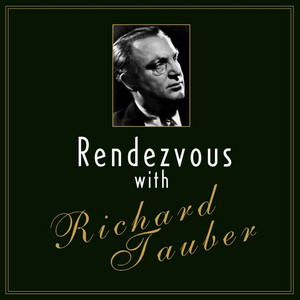 | Deine Mutter Bleibt Immer Bei Dir | Moritz Moszkowski, Kaper Rotter, Erich Meyer-Helmund, Karl Kapeller, Robert Radecke, Giovanni Battista Martini, Adolf Neuendorff, Karl Böhm, Stanislao Gastaldon, Francesco Paolo Tosti, Eduardo di Capua, Ludolf Waldmann, Fritz Rotter, Constantin Bakaleinikoff, Melanie Jäger-Waldau, Richard Tauber | E Major | 0 | 12B | 75 BPM | |
 | Viktoria und ihr Husar: Reich' mir zum Abschied noch einmal die Hände | Paul Abraham, Sandor Konya, Herta Talmar, Grosses Operetten Orchester, Franz Marszalek | B♭ Major | 3 | 6B | 110 BPM | |
 | Cadman: 2 Songs, Op. 29: No. 1, At Dawning | Charles Wakefield Cadman, Thomas Hampson, Kenneth Sillito, Armen Guzelimian | F Major | 1 | 7B | 92 BPM | |
 | Tosca, Act I: "Ah, quegli occhi!" - "Qual occhio al mondo" | Giacomo Puccini, Jonas Kaufmann, Sonya Yoncheva, Asher Fisch, Orchestra del Teatro Comunale di Bologna | D♭ Minor | 2 | 12A | 59 BPM | |
 | Als flotter Geist – Ja, das alles auf Ehr' (aus "Der Zigeunerbaron") | Rudolf Schock | B Major | 2 | 1B | 60 BPM | |
 | Eugene Onegin, Op. 24, TH. 5 / Act II: Scene and Couplets. "Uzhel ya zasluzhil ot nasmyeshku etu?" | Pyotr Ilyich Tchaikovsky, Anne Sofie von Otter, Neil Shicoff, Michel Sénéchal, Thomas Allen, Staatskapelle Dresden, James Levine, MDR Leipzig Radio Chorus | E Minor | 2 | 9A | 78 BPM | |
 | Rossini: Guillaume Tell, Act 1: "Quel jour serein le ciel présage !" (Chœur) | Gioachino Rossini, Antonio Pappano, Coro dell'Accademia Nazionale Di Santa Cecilia, Orchestra dell'Accademia Nazionale di Santa Cecilia | G Major | 0 | 9B | 98 BPM | |
 | Wagner: Tristan und Isolde, Act 2: "O sink hernieder, Nacht der Liebe" (Isolde, Tristan) | Richard Wagner, Daniel Barenboim, Berliner Philharmoniker, Siegfried Jerusalem, Waltraud Meier | A Major | 0 | 11B | 133 BPM | |
 | West Side Story: Only you, you're the only thing I'll see forever....Tonight, tonight, it all began tonight | Orchestra of the Royal Opera House, Covent Garden, Angela Gheorghiu, Richard Armstrong, Roberto Alagna | B♭ Major | 1 | 6B | 72 BPM | |
 | Carmen / Act 3: Trio: "Mêlons! Coupons!" | Georges Bizet, Christine Barbaux, Jane Berbié, Agnes Baltsa, Berliner Philharmoniker, Herbert von Karajan | F Major | 0 | 7B | 114 BPM | |
| Wagner: Tannhäuser, Act 3: "Wie Todesahnung, Dämmrung deckt die Lande" (Wolfram) | Richard Wagner, Daniel Barenboim, Staatskapelle Berlin, Thomas Hampson | E Major | 0 | 12B | 129 BPM | |
 | Giordano: Andrea Chénier, Act I: "O pastorelle, addio!" | Umberto Giordano, Bernard Haitink, Chorus of the Royal Opera House, Covent Garden, Orchestra of the Royal Opera House, Covent Garden | A Major | 0 | 11B | 137 BPM | |
 | Simon Boccanegra: Prologo: A te l'estremo addio (Fiesco) | Giuseppe Verdi, Michele Pertusi, Michele Spotti, Orchestra del Teatro San Carlo di Napoli | F Major | 1 | 7B | 92 BPM | |
| Carmen, Act II: Messieurs les officiers, je vous en supplie – Marche | Georges Bizet, Robert Manuel, Jean-Noel Sissia, Tony Jacquot, Maria Laborit, Isabelle Karajan, Claudine Coster, Alain Hitier, Berliner Philharmoniker, Herbert von Karajan, Choeur de l'Opéra de Paris | E Major | 1 | 12B | 98 BPM | |
 | Die Csárdásfürstin · Operette in 3 Akten (1988 Digital Remaster), Erster Akt: Heia, heia, in den Bergen ist mein Heimatland (Sylva - Boni - Feri - Chor) | Emmerich Kálmán, Anneliese Rothenberger, Willy Mattes, Symphonie-Orchester Graunke | C Minor | 5 | 5A | 91 BPM | |
 | Salome, Op. 54 / Scene 4: "Siehe, der Tah ist nahe" | Richard Strauss, Leonie Rysanek, Horst Hiestermann, Uwe Peper, Ralf Lukas, Bryn Terfel, Friedrich Molsberger, Orchester der Deutschen Oper Berlin, Giuseppe Sinopoli | E Major | 1 | 12B | 132 BPM | |
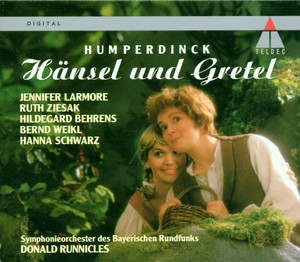 | Humperdinck : Hänsel und Gretel : Act 3 "Alles bleibt still" [Gretel, Hänsel] | Engelbert Humperdinck, Donald Runnicles, Bavarian Radio Symphony Orchestra | B Major | 1 | 1B | 77 BPM | |
| Die Csárdásfürstin · Operette in 3 Akten (1988 Digital Remaster), Erster Akt: Alle sind wir Sünder (Boni - Feri - Chor) | Emmerich Kálmán, Anneliese Rothenberger, Willy Mattes, Symphonie-Orchester Graunke | F Major | 4 | 7B | 78 BPM |
- ISRC
- DEL111401377
- Label
- L-M Records/RCA Records