- BPM
- 86
- Key
- D Minor
- Camelot
- 7A
Quartet No. 2, Op. 26: I. Allegro rustico by Alberto Ginastera, Miami String Quartet, Felicia Moye, Cathy Meng Robinson, Chauncey Patterson, Keith Robinson Song Details
"Quartet No. 2, Op. 26: I. Allegro rustico" by Alberto Ginastera, Miami String Quartet, Felicia Moye, Cathy Meng Robinson, Chauncey Patterson, Keith Robinson had its release date on January 1, 1994. This song is about six minutes long, preciously at 6:10, making this song fairly long compared to other songs. The song is number 1 out of 9 in Alberto Ginastera, Miami String Quartet by Alberto Ginastera, Miami String Quartet, Felicia Moye, Cathy Meng Robinson. Going off of the ISRC code of this track, we detected that the origin of this track is from France. Quartet No. 2, Op. 26: I. Allegro rustico is unknown right now. In our opinion, the overall tone is not very danceable and projects negative sounds, such as being sad, depressed, or angry.
BPM and Tempo
The tempo marking of Quartet No. 2, Op. 26: I. Allegro rustico by Alberto Ginastera, Miami String Quartet, Felicia Moye, Cathy Meng Robinson, Chauncey Patterson, Keith Robinson is Andante (at a walking pace), since this song has a tempo of 86 BPM. With that information, we can conclude that the song has a slow tempo. This song can go great with yoga or pilates. The time signature for this track is 4/4.
Music Key
D Minor is the music key of this track. Because this track belongs in the D Minor key, the camelot key is 7A. So, the perfect camelot match for 7A would be either 7A or 6B. While, a low energy boost can consist of either 7B or 8A. For moderate energy boost, you would use 4A and a high energy boost can either be 9A or 2A. However, if you are looking for a low energy drop, finding a song with a camelot key of 6A would be a great choice. Where 10A would give you a moderate drop, and 5A or 12A would be a high energy drop. Lastly, 10B allows you to change the mood.
Want to find the BPM and music key for other songs? Check out our BPM and Key Finder page!
- Popularity
- 0%
- Loudness
- -26.523 dB
- Acousticness
- 89%
- Danceability
- 9%
- Energy
- 5%
- Instrumentalness
- 46%
- Liveness
- 13%
- Loudness
- 56%
- Speechiness
- 5%
- Valence
- 3%
Recommendations
| Track | Artist | Key | Energy | Camelot | BPM | ||
|---|---|---|---|---|---|---|---|
 | Deux Sérénades (Written for Hilary Hahn): No. 1. Sérénade pour mon amour. Moderato | Einojuhani Rautavaara, Hilary Hahn, Orchestre Philharmonique de Radio France, Mikko Franck | A Minor | 1 | 8A | 92 BPM | |
 | I. Rubato (from 3 Hungarian Folksongs from Csík, Sz. 35a/1) - Grand Piano | Víkingur Ólafsson | D Minor | 0 | 7A | 77 BPM | |
 | Piano Quintet in C Minor: II. Scherzo: Allegro non troppo | Alexander Borodin, Ilona Prunyi, New Budapest Quartet | C Major | 1 | 8B | 115 BPM | |
 | Suite, Op. 157b: II. Divertissement | Darius Milhaud, Jean-Marc Fessard, Frédéric Pélassy, Eliane Reyes | F♯ Major | 0 | 2B | 82 BPM | |
 | 9 Preludes, Op. 1: No. 7 in C Minor. Moderato | Karol Szymanowski, Krystian Zimerman | D♭ Major | 0 | 3B | 67 BPM | |
| III. Poco vivo (from 3 Hungarian Folksongs from Csík, Sz. 35a/3) - Grand Piano | Víkingur Ólafsson | D Minor | 0 | 7A | 77 BPM | |
 | Massenet: 10 Pièces de genre, Op. 10: No. 5, Mélodie "Élégie" | Jules Massenet, Shani Diluka | F Major | 2 | 7B | 123 BPM | |
 | The Seasons, Op. 37a: X. October. Chant d'automne. Andante doloroso e molto cantabile | Pyotr Ilyich Tchaikovsky, Pavel Kolesnikov | F Major | 1 | 7B | 118 BPM | |
 | Saint-Saëns: Piano Concerto No. 2 in G Minor, Op. 22: I. Andante sostenuto | Camille Saint-Saëns, Bertrand Chamayou, Emmanuel Krivine, Orchestre National De France | G Minor | 2 | 6A | 94 BPM | |
 | Reflection No. 2 | Camille Thomas, Julien Brocal | D♭ Major | 1 | 3B | 110 BPM | |
 | Cello Concerto in C Minor, Op. 43: I. Adagio | Mieczysław Weinberg, Kristina Reiko Cooper, Constantine Orbelian, Kaunas City Symphony Orchestra | D♭ Major | 1 | 3B | 110 BPM | |
 | String Quartet No.2 in D Major | Alexander Borodin, Borodin Quartet | A Major | 1 | 11B | 90 BPM | |
 | Barcarolle No. 12, Op. 106 bis | Gabriel Fauré, Louis Lortie | E♭ Major | 0 | 5B | 107 BPM | |
 | 6 Moments Musicaux, Op. 16: VI. Maestoso | Sergei Rachmaninoff, Sergei Babayan | C Major | 1 | 8B | 76 BPM | |
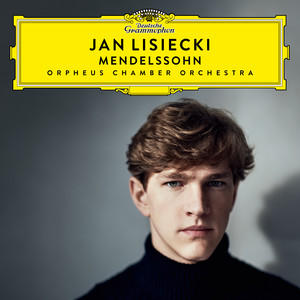 | Piano Concerto No. 1 in G Minor, Op. 25, MWV O7: III. Presto. Molto allegro e vivace | Felix Mendelssohn, Jan Lisiecki, Orpheus Chamber Orchestra | G Major | 2 | 9B | 91 BPM | |
| Saint-Saëns: Mazurka No. 3 in B Minor, Op. 66 | Camille Saint-Saëns, Bertrand Chamayou | A Major | 2 | 11B | 79 BPM | |
 | Preludes: Le nombre leger (The Light Number) | Olivier Messiaen, Håkon Austbø | B Major | 1 | 1B | 68 BPM | |
 | Serenade for Strings in E-Flat Major, Op. 6: II. Allegro non troppe e grazioso | Josef Suk, Alexej Svjatlovskij, Igor Makarow, Sergej Belesow, European New Philharmonic Orchestra, Volker Hartung | F♯ Major | 1 | 2B | 109 BPM | |
 | Symphony No. 5 in E Minor, Op. 64: III. Valse. Allegro moderato | Pyotr Ilyich Tchaikovsky, Berliner Philharmoniker, Kirill Petrenko | A Major | 0 | 11B | 139 BPM | |
 | Prelude in F Minor (Arr. for Wind Quintet by Kara LaMoure) | Nadia Boulanger, WindSync | D♭ Major | 1 | 3B | 110 BPM | |
 | String Quartet No. 1, Op. 20: II. Vivacissimo | Alberto Ginastera, Miró Quartet | D Major | 2 | 10B | 100 BPM | |
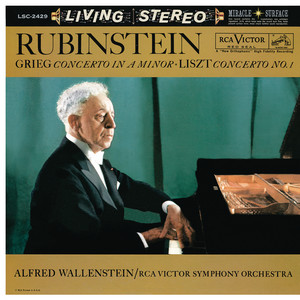 | Piano Concerto in A Minor, Op. 16: III. Allegro moderato molto e marcato - Remastered | Edvard Grieg, Arthur Rubinstein, Alfred Wallenstein, RCA Victor Symphony Orchestra | F Major | 1 | 7B | 119 BPM | |
 | 10 Pieces for Piano, Op. 24: Romance, No. 9 | Jean Sibelius, Leif Ove Andsnes | D♭ Major | 0 | 3B | 69 BPM | |
 | Automne | Cécile Chaminade, Eric Parkin | D♭ Major | 1 | 3B | 69 BPM | |
 | Piano Quintet in F-Sharp Minor, Op. 67: II. Adagio espressivo | Amy Beach, Ambache | D♭ Major | 0 | 3B | 60 BPM |
- ISRC
- FR6GO1003130
- Label
- L-M Records/RCA Records