- BPM
- 97
- Key
- F♯ Minor
- Camelot
- 11A
Crisantemi, SC. 65 by Giacomo Puccini, Quatuor Modigliani Song Details
"Crisantemi, SC. 65" by Giacomo Puccini, Quatuor Modigliani had its release date on January 11, 2019. Since This song is still less than 10 minute long, it is still considered a pretty long duration song compared to the average song length. This song does not appear to be explicit due to the lack of the "E" tag. There are a total of 13 in the song's album "Portraits". In this album, this song's track order is #3. Furthermore, we believe that the track originated from France. In terms of popularity, Crisantemi, SC. 65 is currently not that popular. In our opinion, the overall tone is not very danceable and projects negative sounds, such as being sad, depressed, or angry.
BPM and Tempo
With Crisantemi, SC. 65 by Giacomo Puccini, Quatuor Modigliani having a BPM of 97 with a half-time of 48 BPM and a double-time of 194 BPM, we would consider this track to have a Andante (at a walking pace) tempo marking. Because of this, we believe that the song has an overall slow tempo. The time signature for this track is 4/4.
Music Key
This song is in the music key of F♯ Minor. Or for those who are familiar with the camelot wheel, this song has a camelot key of 11A. So, the perfect camelot match for 11A would be either 11A or 10B. While, a low energy boost can consist of either 11B or 12A. For moderate energy boost, you would use 8A and a high energy boost can either be 1A or 6A. However, if you are looking for a low energy drop, finding a song with a camelot key of 10A would be a great choice. Where 2A would give you a moderate drop, and 9A or 4A would be a high energy drop. Lastly, 2B allows you to change the mood.
Want to find the BPM and music key for other songs? Check out our BPM and Key Finder page!
- Popularity
- 10%
- Loudness
- -24.106 dB
- Acousticness
- 96%
- Danceability
- 14%
- Energy
- 5%
- Instrumentalness
- 81%
- Liveness
- 10%
- Loudness
- 60%
- Speechiness
- 5%
- Valence
- 4%
Recommendations
| Track | Artist | Key | Energy | Camelot | BPM | ||
|---|---|---|---|---|---|---|---|
 | La Bohème / Act 2: "Quando m'en vo'" (Musetta's Waltz) | Giacomo Puccini, Gianna D'Angelo, Ettore Bastianini, Fernando Corena, Renata Tebaldi, Carlo Bergonzi, Renato Cesari, Cesare Siepi, Orchestra dell'Accademia Nazionale di Santa Cecilia, Tullio Serafin | A Major | 3 | 11B | 100 BPM | |
 | Les Contes d'Hoffmann / Act 2: "Les oiseaux dans la charmille" | Jacques Offenbach, Edita Gruberova, Choeur de Radio France, Jacques Jouineau, Orchestre National De France, Seiji Ozawa | A♭ Major | 1 | 4B | 178 BPM | |
 | Libiamo Ne' Lieti Calici (Brindisi) - La Traviata Atto I | Renata Tebaldi | D Major | 2 | 10B | 74 BPM | |
 | L'elisir d'amore / Act 2: "Una furtiva lagrima" | Gaetano Donizetti, Luciano Pavarotti, English Chamber Orchestra, Richard Bonynge | B♭ Major | 1 | 6B | 166 BPM | |
 | Offenbach: Baracolle - From “The Tales of Hoffmann” | Katherine Jenkins, The Czech Film Orchestra, William Hayward | D Major | 5 | 10B | 163 BPM | |
 | Tosca / Act 1: "Recondita armonia" | Giacomo Puccini, José Carreras, Fernando Corena, Berliner Philharmoniker, Herbert von Karajan | F Major | 1 | 7B | 78 BPM | |
 | Song to the moon | Antonín Dvořák, Ophélie Gaillard, Tim Redmond, Royal Philharmonic Orchestra | B♭ Major | 2 | 6B | 79 BPM | |
 | Carmina Burana: In trutina | Carl Orff, Lucia Popp, Kurt Eichhorn | E♭ Minor | 1 | 2A | 62 BPM | |
 | Verdi: Otello, Act 4: "Ave Maria" (Desdemona) | Giuseppe Verdi, Cristina Gallardo-Domas, Maurizio Barbacini, Munich Radio Orchestra | A♭ Major | 0 | 4B | 181 BPM | |
 | Madama Butterfly, Act II: Coro a bocca chiusa "Humming Chorus" | Giacomo Puccini, Wiener Staatsopernchor, Wiener Philharmoniker, Herbert von Karajan | B♭ Major | 0 | 6B | 78 BPM | |
 | Ombra mai fu | Andreas Scholl | E Major | 2 | 12B | 112 BPM | |
 | Vaga luna che inargenti | Vincenzo Bellini, Cecilia Bartoli, James Levine | A♭ Major | 0 | 4B | 101 BPM | |
 | Tannhauser, Act III: Begluckt darf nun dich, o Heimat, ich schauen ("Pilgrims' Chorus") | Richard Wagner, Slovak Philharmonic Chorus, Slovak Radio Symphony Orchestra, Johannes Wildner | D Major | 4 | 10B | 129 BPM | |
 | Cavalleria rusticana: Preludio | Pietro Mascagni, National Philharmonic Orchestra, Gianandrea Gavazzeni | F Major | 2 | 7B | 88 BPM | |
 | Madama Butterfly (1986 - Remaster), Act II: Non lo sapete insomma (Butterfly/Sharpless/Goro/Yamadori) | Giacomo Puccini, Renata Scotto, Rolando Panerai, Piero de Palma, Giuseppe Morresi, Renata Scotto, Carlo Bergonzi, Orchestra del Teatro dell’Opera di Roma & Sir John Barbirolli, Sir John Barbirolli, Orchestra Del Teatro Dell'Opera Di Roma | D Major | 0 | 10B | 98 BPM | |
 | Requiem, Op. 48: V. Pie Jesu | Gabriel Fauré, Laurence Equilbey, Sandrine Piau, Orchestre National De France | B♭ Major | 1 | 6B | 85 BPM | |
 | La Forza Del Destino 1862: La Vergine degli angeli (Act 2) | Inessa Galante | G Major | 1 | 9B | 76 BPM | |
 | Qui la voce sua soave | Maria Callas | D♭ Major | 2 | 3B | 126 BPM | |
 | Les contes d'Hoffmann (The Tales of Hoffmann): Barcarolle | London Philharmonic Orchestra | D Major | 1 | 10B | 80 BPM | |
 | Torna a Surriento | Ernesto de Curtis, Juan Diego Flórez, Filarmonica Gioachino Rossini, Carlo Tenan | E Major | 2 | 12B | 91 BPM | |
 | Rigoletto, Atto III, Canzone: "La donna è mobile" | Giuseppe Verdi, Jonas Kaufmann, Pier Giorgio Morandi, Parma Opera Orchestra | B Major | 2 | 1B | 136 BPM | |
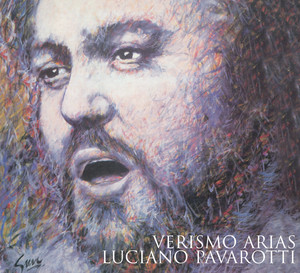 | Werther / Act 3: "Pourquoi me réveiller, ô souffle du printemps?" | Jules Massenet, Luciano Pavarotti, National Philharmonic Orchestra, Oliviero de Fabritiis | F♯ Minor | 2 | 11A | 80 BPM | |
 | Verdi: Nabucco, Act 3: "Va pensiero", 'Chorus of the Hebrew slaves' (Chorus) | Giuseppe Verdi, Carlo Rizzi, Chorus of the National Academy of Saint Cecilia, Orchestra of the National Academy of Saint Cecilia | E Major | 0 | 12B | 79 BPM | |
 | Lohengrin, WWV 75: Prelude to Act I | Richard Wagner, Gewandhausorchester, Andris Nelsons | A Major | 1 | 11B | 72 BPM | |
| La traviata - Intermezzo | Peter Illenyi | D♭ Major | 2 | 3B | 126 BPM |
- ISRC
- FRU621841403
- Label
- L-M Records/RCA Records