- BPM
- 128
- Key
- C Minor
- Camelot
- 5A
Capriccio, Op. 85, TrV 279 (Excerpts): Aber so hort doch! [Live] by Richard Strauss, Lisa della Casa, Robert Kerns, Waldemar Kmentt, Walter Berry, Otto Wiener, Christa Ludwig, Peter Klein, Lucia Popp, Fritz Wunderlich, Alois Pernerstorfer, August Jaresch, Ljubomir Pantscheff, Fritz Sperlbauer, Hans Christian, Herbert Lackner, Erich Majkut, Siegfried Rudolf Frese, Harald Pröglhöf, Orchester der Wiener Staatsoper, Georges Prêtre Song Details
Richard Strauss, Lisa della Casa, Robert Kerns, Waldemar Kmentt, Walter Berry, Otto Wiener, Christa Ludwig, Peter Klein, Lucia Popp, Fritz Wunderlich, Alois Pernerstorfer, August Jaresch, Ljubomir Pantscheff, Fritz Sperlbauer, Hans Christian, Herbert Lackner, Erich Majkut, Siegfried Rudolf Frese, Harald Pröglhöf, Orchester der Wiener Staatsoper, Georges Prêtre's 'Capriccio, Op. 85, TrV 279 (Excerpts): Aber so hort doch! [Live]' had a release date set for January 1, 2016. The duration of This song is about 3 minutes long, at 3:29. Based on our data, This song appears to be safe for all ages and is not considered explicit. This track is about the average length of a typical track. There are a total of 25 in the song's album "R. Strauss: Capriccio, Op. 85, TrV 279 (Excerpts) [Live]". In this album, this song's track order is #2. Furthermore, we believe that the track originated from Germany. Based on our statistics, Capriccio, Op. 85, TrV 279 (Excerpts): Aber so hort doch! [Live]'s popularity is unknown right now. Although the tone can be danceable to some, this track does projects more of a negative sound rather than a postive one.
BPM and Tempo
With Capriccio, Op. 85, TrV 279 (Excerpts): Aber so hort doch! [Live] by Richard Strauss, Lisa della Casa, Robert Kerns, Waldemar Kmentt, Walter Berry, Otto Wiener, Christa Ludwig, Peter Klein, Lucia Popp, Fritz Wunderlich, Alois Pernerstorfer, August Jaresch, Ljubomir Pantscheff, Fritz Sperlbauer, Hans Christian, Herbert Lackner, Erich Majkut, Siegfried Rudolf Frese, Harald Pröglhöf, Orchester der Wiener Staatsoper, Georges Prêtre having a BPM of 128 with a half-time of 64 BPM and a double-time of 256 BPM, we would consider this track to have a Allegro (fast, quick, and bright) tempo marking. Because of this, we believe that the song has an overall fast tempo. Looking at the BPM of this song, this song might go great with walking. The time signature for this track is 4/4.
Music Key
This song has a musical key of C Minor. Which also means that the camelot key for this song is 5A. So, the perfect camelot match for 5A would be either 5A or 4B. While, a low energy boost can consist of either 5B or 6A. For moderate energy boost, you would use 2A and a high energy boost can either be 7A or 12A. However, if you are looking for a low energy drop, finding a song with a camelot key of 4A would be a great choice. Where 8A would give you a moderate drop, and 3A or 10A would be a high energy drop. Lastly, 8B allows you to change the mood.
Want to find the BPM and music key for other songs? Check out our BPM and Key Finder page!
- Popularity
- 0%
- Loudness
- -17.123 dB
- Acousticness
- 93%
- Danceability
- 43%
- Energy
- 42%
- Instrumentalness
- 0%
- Liveness
- 87%
- Loudness
- 71%
- Speechiness
- 17%
- Valence
- 33%
Recommendations
| Track | Artist | Key | Energy | Camelot | BPM | ||
|---|---|---|---|---|---|---|---|
 | Mahler: Blumine | Gustav Mahler, San Francisco Symphony, Michael Tilson Thomas | C Major | 1 | 8B | 100 BPM | |
 | Symphony No. 1 in D Major: III. Feierlich und gemessen, ohne zu schleppen | Gustav Mahler, Berliner Philharmoniker, Daniel Harding | G Minor | 0 | 6A | 107 BPM | |
 | Piano Concerto No. 2 Op. 102 in F Major: I. Allegro | Dmitri Shostakovich, Alexander Melnikov, Mahler Chamber Orchestra, Teodor Currentzis | B♭ Major | 2 | 6B | 73 BPM | |
 | Piano Concerto No. 2 in C Minor, Op. 18: I. Moderato | Sergei Rachmaninoff, Arthur Rubinstein, Fritz Reiner | C Minor | 1 | 5A | 71 BPM | |
 | Prelude to "La princesse lointaine", Op. 4 | Nikolai Tcherepnin, Bamberg Symphony, Łukasz Borowicz | A Major | 1 | 11B | 111 BPM | |
 | Symphony No. 3 in F Major, Op. 90: III. Poco allegretto | Johannes Brahms, Berliner Philharmoniker, Claudio Abbado | C Minor | 0 | 5A | 101 BPM | |
 | 4 Letzte Lieder, TrV 296: No. 4, Im Abendrot | Richard Strauss, Jessye Norman, Gewandhausorchester, Kurt Masur | B♭ Major | 1 | 6B | 78 BPM | |
 | Mendelssohn: A Midsummer Night's Dream, Op. 61, MWV M13: No. 7, Nocturne | Felix Mendelssohn, Nikolaus Harnoncourt, Chamber Orchestra of Europe | C Major | 2 | 8B | 90 BPM | |
 | Violin Concerto No. 3 in B Minor, Op. 61: I. Allegro non troppo | Camille Saint-Saëns, Itzhak Perlman, Orchestre de Paris, Daniel Barenboim | A Minor | 2 | 8A | 113 BPM | |
 | La forza del destino: Overture (Sinfonia) | Giuseppe Verdi, Berliner Philharmoniker, Claudio Abbado | E Minor | 2 | 9A | 80 BPM | |
 | Mozart - Serenade K361 "Gran Partita" for 13 wind instruments: Adagio | Wolfgang Amadeus Mozart, London Winds, Michael Collins | G Major | 1 | 9B | 135 BPM | |
 | Symphony No. 3 in E flat, Op. 97 - "Rhenish": 3. Nicht schnell | Robert Schumann, Los Angeles Philharmonic, Carlo Maria Giulini | A♭ Major | 0 | 4B | 83 BPM | |
 | Symphony No. 3 in D Minor, Zweite Abteilung: V. Lustig im Tempo und keck im Ausdruck | Gustav Mahler, Berliner Philharmoniker, Gustavo Dudamel, Gerhild Romberger, Damen des Rundfunkchors Berlin, Knaben des Staats- und Domchors Berlin | F Major | 1 | 7B | 111 BPM | |
 | Lasst mich allein, Op. 82 No. 1, B. 157/1 (Orch. Leopold) | Antonín Dvořák, Mahler Chamber Orchestra, Daniel Harding | A Major | 2 | 11B | 130 BPM | |
 | Scheherazade: The Young Prince | Nikolai Rimsky-Korsakov, Lars Hjalmar Joakim | G Major | 1 | 9B | 91 BPM | |
 | Tone Poems: Träumerei am Kamin | Richard Strauss, Orchestre Philharmonique De Strasbourg, Marc Albrecht | A♭ Major | 1 | 4B | 111 BPM | |
 | Souvenir d'un lieu cher, Op. 42: III. Mélodie (Ed. Herrmann) | Pyotr Ilyich Tchaikovsky, Daniel Lozakovich, Stanislav Soloviev | E♭ Major | 1 | 5B | 178 BPM | |
 | Sonata In G Minor For Cello & Piano, Op. 19: 3. Andante | Sergei Rachmaninoff, Alisa Weilerstein, Inon Barnatan | F Major | 2 | 7B | 82 BPM | |
 | Simple Symphony, Op. 4: III. Sentimental Sarabande | Benjamin Britten, Camerata Nordica, Terje Tonnesen | G Minor | 0 | 6A | 85 BPM | |
 | Also sprach Zarathustra, Op. 30: IV. Von den Freuden und Leidenschaften | Richard Strauss, Berliner Philharmoniker, Herbert von Karajan | C Minor | 5 | 5A | 112 BPM | |
 | Holberg Suite, Op. 40: II. Sarabande (Andante) | Edvard Grieg, Gothenburg Symphony Orchestra, Neeme Järvi | A Major | 1 | 11B | 87 BPM | |
 | Symphony No. 9 in D Minor, Op. 125: IVa. Presto | Ludwig van Beethoven, Berliner Philharmoniker, Kirill Petrenko | D Major | 0 | 10B | 82 BPM | |
 | Dvorák: Cello Concerto in B Minor, Op. 104, B. 191: III. Finale (Allegro moderato) | Antonín Dvořák, Jacqueline du Pré, Daniel Barenboim, Chicago Symphony Orchestra | B Minor | 2 | 10A | 97 BPM | |
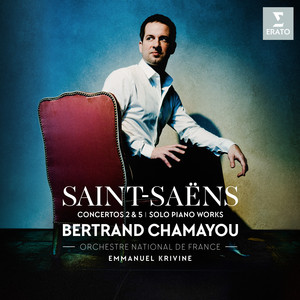 | Saint-Saëns: Piano Concerto No. 2 in G Minor, Op. 22: I. Andante sostenuto | Camille Saint-Saëns, Bertrand Chamayou, Emmanuel Krivine, Orchestre National De France | G Minor | 2 | 6A | 94 BPM | |
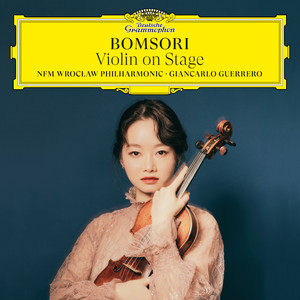 | Thaïs: Méditation | Jules Massenet, Bomsori, NFM Wrocław Philharmonic, Giancarlo Guerrero | D Major | 0 | 10B | 84 BPM |
- ISRC
- DEB950873417
- Label
- L-M Records/RCA Records