- BPM
- 110
- Key
- D♭ Minor
- Camelot
- 12A
Twenty-Four Preludes, Op. 34: No. 10 In C Sharp Minor by Dmitri Shostakovich, Jascha Heifetz, Emanuel Bay Song Details
"Twenty-Four Preludes, Op. 34: No. 10 In C Sharp Minor" by Dmitri Shostakovich, Jascha Heifetz, Emanuel Bay had its release date on January 1, 2006. The duration of This song is about two minutes long, specifically at 2:01. This song does not appear to have any foul language. Twenty-Four Preludes, Op. 34: No. 10 In C Sharp Minor's duration is considered a little bit shorter than the average duration of a typical track. The track order of this song in Jascha Heifetz's "Jascha Heifetz - It Ain't Necessarily So. Legendary classic and jazz studio takes" album is number 6 out of 52. On top of that, Germany appears to be the country where this track was created. In terms of popularity, Twenty-Four Preludes, Op. 34: No. 10 In C Sharp Minor is currently unknown. In our opinion, the overall tone is not very danceable and projects negative sounds, such as being sad, depressed, or angry.
BPM and Tempo
We consider the tempo marking of Twenty-Four Preludes, Op. 34: No. 10 In C Sharp Minor by Dmitri Shostakovich, Jascha Heifetz, Emanuel Bay to be Moderato (at a moderate speed) because the track has a tempo of 110 BPM, a half-time of 55BPM, and a double-time of 220 BPM. Based on that, the speed of the song's tempo is moderate. The time signature for this track is 3/4.
Music Key
D♭ Minor is the music key of this track. This also means that this song has a camelot key of 12A. So, the perfect camelot match for 12A would be either 12A or 11B. While, a low energy boost can consist of either 12B or 1A. For moderate energy boost, you would use 9A and a high energy boost can either be 2A or 7A. However, if you are looking for a low energy drop, finding a song with a camelot key of 11A would be a great choice. Where 3A would give you a moderate drop, and 10A or 5A would be a high energy drop. Lastly, 3B allows you to change the mood.
Want to find the BPM and music key for other songs? Check out our BPM and Key Finder page!
- Popularity
- 0%
- Loudness
- -24.676 dB
- Acousticness
- 81%
- Danceability
- 32%
- Energy
- 10%
- Instrumentalness
- 0%
- Liveness
- 13%
- Loudness
- 59%
- Speechiness
- 6%
- Valence
- 4%
Recommendations
| Track | Artist | Key | Energy | Camelot | BPM | ||
|---|---|---|---|---|---|---|---|
 | Carmen Suite No. 2: IV. Chanson du toréador (Act II) | Georges Bizet, Orchestre Symphonique de Montréal, Charles Dutoit | F Major | 2 | 7B | 116 BPM | |
 | Masquerade Suite: Maskarad (Masquerade): I. Waltz | St. Petersburg State Symphony Orchestra, Aram Khachaturian | C Major | 3 | 8B | 94 BPM | |
 | Ballet Suite No. 1 (arr. L. Atovmyan): Romance (The Limpid Stream) | Lev Atovmyan, Dmitri Shostakovich, Russian Philharmonic Orchestra, Dmitry Yablonsky | F Major | 1 | 7B | 90 BPM | |
 | Masquerade Suite: Mazurka | Aram Khachaturian, St. Petersburg State Symphony Orchestra, Andre Anichanov | A♭ Major | 3 | 4B | 178 BPM | |
 | Suite bergamasque, L. 75: 3. Clair de lune | Claude Debussy, Daniel Barenboim | D♭ Major | 0 | 3B | 66 BPM | |
 | Caprice viennois | Fritz Kreisler, Isaac Stern, János Rolla, Franz Liszt Chamber Orchestra | B Major | 1 | 1B | 89 BPM | |
 | Warsaw Concerto | Richard Addinsell, Jean-Yves Thibaudet, BBC Symphony Orchestra, Hugh Wolff | B Major | 1 | 1B | 76 BPM | |
 | Sarasate: Zigeunerweisen, Op. 20 | Pablo de Sarasate, Itzhak Perlman, Abbey Road Ensemble | C Minor | 1 | 5A | 83 BPM | |
 | Salyut, Ispaniya (Hail, Spain), Op. 44: March of the Officers | Dmitri Shostakovich, Kamil Barczewski, Camerata Silesia, Polish National Radio Symphony Orchestra, Mark Fitz-Gerald | E♭ Major | 3 | 5B | 98 BPM | |
 | Piano Concerto No. 2 Op. 102 in F Major: II. Andante | Dmitri Shostakovich, Alexander Melnikov, Mahler Chamber Orchestra, Teodor Currentzis | C Minor | 0 | 5A | 78 BPM | |
 | Scheherazade: The Sea & Sinbad's Ship | Nikolai Rimsky-Korsakov, Lars Hjalmar Joakim | E Major | 1 | 12B | 82 BPM | |
 | The Tale of Tsar Saltan: Flight of the Bumblebee | Nikolai Rimsky-Korsakov, Seattle Symphony Orchestra, Gerard Schwarz | G Major | 1 | 9B | 80 BPM | |
 | Midsummer Night's Dream, Op. 61: No. 9, Wedding March | Felix Mendelssohn, Boston Symphony Orchestra, Seiji Ozawa | C Major | 2 | 8B | 74 BPM | |
 | Piano Concerto No. 21 in C Major, K. 467: II. Andante | Wolfgang Amadeus Mozart, London Mozart Players, Howard Shelley | F Major | 0 | 7B | 179 BPM | |
 | Handel / Orch. Hale: Keyboard Suite No. 4 in D Minor, HWV 437: III. Sarabande | George Frideric Handel, Alexander Briger, Academy of St. Martin in the Fields | D Minor | 0 | 7A | 116 BPM | |
 | Suite No. 2 for Jazz Orchestra: VII. Waltz II | Dmitri Shostakovich, Dmitri Kitayenko, Hr-sinfonieorchester | G Major | 1 | 9B | 104 BPM | |
 | Piano Concerto in A Minor, Op. 16: II. Adagio - Remastered | Edvard Grieg, Arthur Rubinstein, RCA Victor Symphony Orchestra, Alfred Wallenstein | D♭ Major | 0 | 3B | 86 BPM | |
| Gold Und Silber (Gold And Silver), Op. 79 | Slovak Radio Symphony Orchestra, Franz Lehár | C Major | 1 | 8B | 81 BPM | |
 | Scottish Fantasy for Violin and Orchestra, Op. 46: I. Introduction: Grave, Adagio cantabile | Max Bruch, Joshua Bell, Academy of St. Martin in the Fields | E♭ Major | 2 | 5B | 60 BPM | |
 | 6 Impromptus, Op. 5: Impromptu No. 5 in B Minor | Jean Sibelius, Håvard Gimse | B Minor | 0 | 10A | 84 BPM | |
 | Consolation No. 3 in D-Flat Major, S. 172/3 | Franz Liszt, Vladimir Horowitz | D♭ Major | 0 | 3B | 70 BPM | |
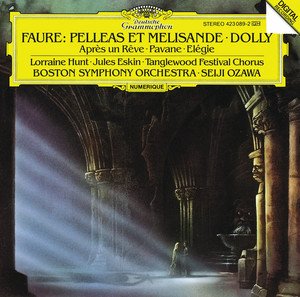 | Pelléas et Mélisande, Op. 80, Suite: III. Sicilienne | Gabriel Fauré, Boston Symphony Orchestra, Seiji Ozawa | F Major | 2 | 7B | 98 BPM | |
 | Borodin: String Quartet No. 2 in D Major: III. Notturno. Andante | Alexander Borodin, Borodin Quartet | F Major | 3 | 7B | 96 BPM | |
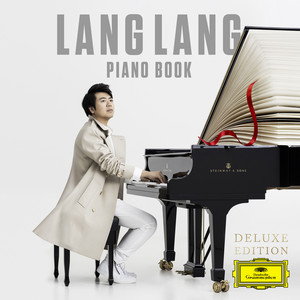 | The Well-Tempered Clavier I, Prelude & Fugue No. 1 in C Major, BWV 846: I. Prelude | Johann Sebastian Bach, Lang Lang | C Major | 1 | 8B | 134 BPM | |
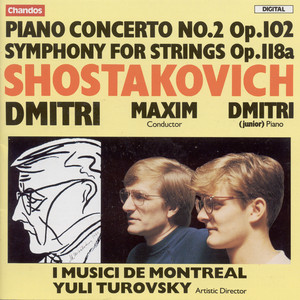 | Piano Concerto No. 2 in F Major, Op. 102: II. Andante | Dmitri Shostakovich, I Musici de Montréal, Maxim Shostakovich | C Minor | 0 | 5A | 177 BPM |
- ISRC
- DEF054530106
- Label
- L-M Records/RCA Records