- BPM
- 136
- Key
- F Major
- Camelot
- 7B
Rigoletto: Rigoletto's Aria "Cortigiani, vil razza dannata!" by Giuseppe Verdi, Georg Ots, Neeme Järvi, Estonian Radio Symphony Orchestra Song Details
Giuseppe Verdi, Georg Ots, Neeme Järvi, Estonian Radio Symphony Orchestra's ' "Rigoletto: Rigoletto's Aria "Cortigiani, vil razza dannata!"" was released on its scheduled release date, 1979. With this song being about 5 minutes long, at This song is fairly a long song compared to the average song length. This song does not have an "Explicit" tag, making it safe for all ages. The song is number 4 out of 25 in Arias from Operas and Operettas by Georg Ots. Based on our statistics, Rigoletto: Rigoletto's Aria "Cortigiani, vil razza dannata!"'s popularity is unknown right now. The overall mood can be danceable to some, especially with it's high amount of postive energy.
BPM and Tempo
The tempo marking of Rigoletto: Rigoletto's Aria "Cortigiani, vil razza dannata!" by Giuseppe Verdi, Georg Ots, Neeme Järvi, Estonian Radio Symphony Orchestra is Allegro (fast, quick, and bright), since this song has a tempo of 136 BPM. With that information, we can conclude that the song has a fast tempo. This song can go great with walking. The time signature for this track is 4/4.
Music Key
This song is in the music key of F Major. This also means that this song has a camelot key of 7B. So, the perfect camelot match for 7B would be either 7B or 8A. While, 8B can give you a low energy boost. For moderate energy boost, you would use 4B and a high energy boost can either be 9B or 2B. Though, if you want a low energy drop, you should looking for songs with either a camelot key of 7A or 6B will give you a low energy drop, 10B would be a moderate one, and 5B or 12B would be a high energy drop. Lastly, 4A allows you to change the mood.
Want to find the BPM and music key for other songs? Check out our BPM and Key Finder page!
- Popularity
- 0%
- Loudness
- -18.999 dB
- Acousticness
- 99%
- Danceability
- 50%
- Energy
- 27%
- Instrumentalness
- 0%
- Liveness
- 34%
- Loudness
- 68%
- Speechiness
- 8%
- Valence
- 60%
Recommendations
| Track | Artist | Key | Energy | Camelot | BPM | ||
|---|---|---|---|---|---|---|---|
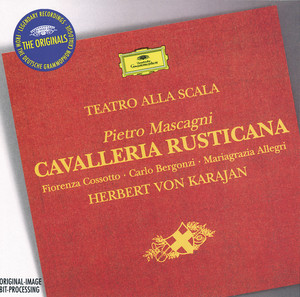 | Cavalleria rusticana: Brindisi. Viva il vino spumeggiante "Drinking Song" | Pietro Mascagni, Adriane Martino, Carlo Bergonzi, Orchestra Del Teatro Alla Scala, Milano, Herbert von Karajan, Coro Del Teatro Alla Scala Di Milano | A♭ Major | 3 | 4B | 126 BPM | |
 | Hungarian Dance No. 5 in G Minor, WoO 1, No. 5 | Johannes Brahms, Budapest Festival Orchestra, Iván Fischer | F♯ Minor | 1 | 11A | 107 BPM | |
 | Siface: Come Nave in mezzo all'onde | Nicola Porpora, Cecilia Bartoli, Il Giardino Armonico, Giovanni Antonini | E Major | 4 | 12B | 140 BPM | |
 | Carmina Burana: XI. Estuans interius | Carl Orff, Dietrich Fischer-Dieskau, Orchester der Deutschen Oper Berlin, Eugen Jochum | A Minor | 4 | 8A | 84 BPM | |
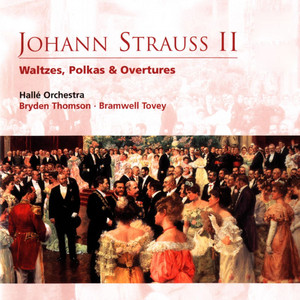 | On the Beautiful Blue Danube - Waltz Op. 314 | Johann Strauss II, Hallé, Bryden Thomson | D Major | 0 | 10B | 81 BPM | |
 | Barcarolle: Schöne Nacht, du Liebesnacht - Hoffmanns Erzählungen | Jacques Offenbach, Jesús López-Cobos, Hei-Kyung Hong, Jennifer Larmore, Munich Radio Orchestra | D Major | 2 | 10B | 81 BPM | |
 | Un bel di vedremo (Madame Butterfly) | Renata Tebaldi, Orchestre de la Suisse Romande | A Major | 1 | 11B | 104 BPM | |
 | Das Rheingold: Entrance of the Gods into Valhalla | Richard Wagner, Leopold Stokowski, Martina Arroyo, Carlotta Ordassy, Louise Parker | D♭ Major | 1 | 3B | 79 BPM | |
 | La sonnambula, Act I: Come per me sereno | Vincenzo Bellini, Maria Callas, Orchestra Del Teatro Alla Scala, Milano, Antonino Votto | E♭ Major | 1 | 5B | 88 BPM | |
 | op.314: An der schoenen blauen Donau-Walzer: Most Famous Waltzes | Vienna Volksoper Orchestra, Paul Redinowski | D Major | 1 | 10B | 93 BPM | |
 | Le nozze di Figaro, K. 492, Atto I Scene 1 - 2: No. 1, Duettino. Cinque... dieci... venti... (Figaro, Susanna) | Wolfgang Amadeus Mozart, Lorenzo Regazzo, Patrizia Ciofi, Concerto Köln, René Jacobs | D Major | 1 | 10B | 134 BPM | |
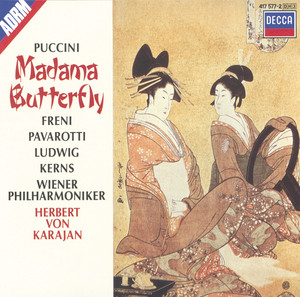 | Madama Butterfly, Act II: Coro a bocca chiusa "Humming Chorus" | Giacomo Puccini, Wiener Staatsopernchor, Wiener Philharmoniker, Herbert von Karajan | B♭ Major | 0 | 6B | 78 BPM | |
 | Le nozze di Figaro, K. 492, Act I: No. 10, Non più andrai | Wolfgang Amadeus Mozart, Bryn Terfel, Scottish Chamber Orchestra, Sir Charles Mackerras | G Major | 2 | 9B | 134 BPM | |
 | Don Giovanni, K.527: Overture | Wolfgang Amadeus Mozart, Academy of St. Martin in the Fields, Sir Neville Marriner | D Major | 1 | 10B | 129 BPM | |
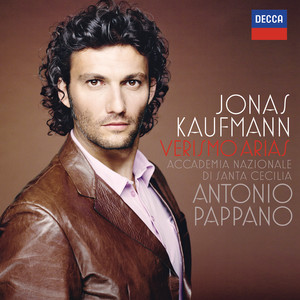 | Pagliacci / Act 1: "Recitar!...Vesti la giubba" | Ruggero Leoncavallo, Jonas Kaufmann, Orchestra dell'Accademia Nazionale di Santa Cecilia, Antonio Pappano | E Minor | 4 | 9A | 81 BPM | |
 | Overture | Georges Bizet, Herbert von Karajan, Wiener Philharmoniker | D Minor | 4 | 7A | 126 BPM | |
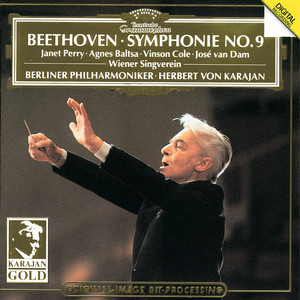 | Symphony No.9 In D Minor, Op.125 - "Choral" - Excerpt From 4th Movement: 4. Presto | Ludwig van Beethoven, Berliner Philharmoniker, Herbert von Karajan | D Major | 1 | 10B | 74 BPM | |
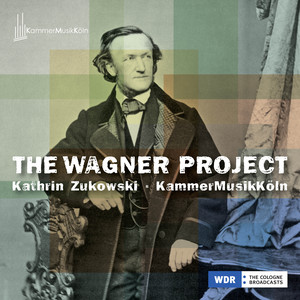 | Wesendonck Lieder, WWV 91 (Arr. Fontanelli for Voice and Ensemble): No. 5, Träume | Richard Wagner, Kathrin Zukowski, KammerMusikKöln | A Major | 0 | 11B | 169 BPM | |
| Carmina Burana: I. O fortuna | Carl Orff, Orchester der Deutschen Oper Berlin, Eugen Jochum, Chor der Deutschen Oper Berlin | B♭ Major | 2 | 6B | 70 BPM | |
 | Chorus of the Hebrew Slaves (from Nabucco, Act III) (1842) | Giuseppe Verdi, Chorus of the Sofia National Opera, Sofia Philharmonic Orchestra, Rouslan Raychev | B Major | 1 | 1B | 84 BPM | |
 | Mozart: Le nozze di Figaro, K. 492, Act 2: "Voi, che sapete che cosa è amor" (Cherubino) | Wolfgang Amadeus Mozart, Daniel Barenboim, Cecilia Bartoli, Berliner Philharmoniker | B♭ Major | 2 | 6B | 110 BPM | |
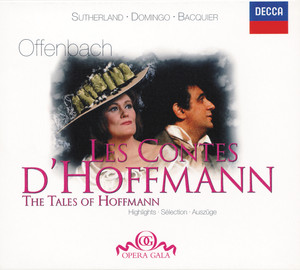 | Les Contes d'Hoffmann / Act 2: "Belle nuit, ô nuit d'amour" | Jacques Offenbach, Dame Joan Sutherland, Huguette Tourangeau, Chorus Pro Arte Lausanne Du Brassus, Radio Suisse Romande Chorus, Orchestre de la Suisse Romande, Richard Bonynge | D Major | 1 | 10B | 82 BPM | |
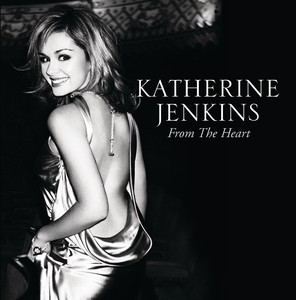 | The Flower Duet (From "Lakmé") | Katherine Jenkins, Kiri Te Kanawa, Philharmonia Orchestra, Anthony Inglis | B Major | 3 | 1B | 102 BPM | |
| Cavalleria rusticana: "O lola ch'ai di latti la cammisa" (Siciliana) | Pietro Mascagni, Carlo Bergonzi, Orchestra Del Teatro Alla Scala, Milano, Herbert von Karajan | F Minor | 0 | 4A | 167 BPM | |
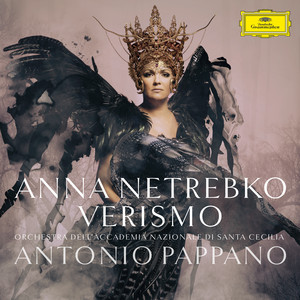 | Adriana Lecouvreur / Act 1: "Ecco: respiro appena ... Io son l'umile ancella" | Francesco Cilea, Anna Netrebko, Orchestra dell'Accademia Nazionale di Santa Cecilia, Antonio Pappano | A♭ Major | 1 | 4B | 82 BPM |
- ISRC
- UK2Y21701500
- Label
- L-M Records/RCA Records