- BPM
- 93
- Key
- B♭ Major
- Camelot
- 6B
Adeus ao Piano, Op. 32 by Ludwig van Beethoven, Gilson Peranzzetta Song Details
Ludwig van Beethoven, Gilson Peranzzetta's 'Adeus ao Piano, Op. 32' had a release date set for May 3, 2001. With this song being about 5 minutes long, at This song is fairly a long song compared to the average song length. This song does not have an "Explicit" tag, making it safe for all ages. The track order of this song in Gilson Peranzzetta's "Gilson Peranzzetta: Metamorfose" album is number 9 out of 11. On top of that, Brazil appears to be the country where this track was created. In terms of popularity, Adeus ao Piano, Op. 32 is currently unknown. Although the tone can be danceable to some, this track does projects more of a negative sound rather than a postive one.
BPM and Tempo
We consider the tempo marking of Adeus ao Piano, Op. 32 by Ludwig van Beethoven, Gilson Peranzzetta to be Andante (at a walking pace) because the track has a tempo of 93 BPM, a half-time of 46BPM, and a double-time of 186 BPM. Based on that, the speed of the song's tempo is slow. Activities such as, yoga or pilates, can go well with this song. The time signature for this track is 4/4.
Music Key
This song is in the music key of B♭ Major. This also means that this song has a camelot key of 6B. So, the perfect camelot match for 6B would be either 6B or 7A. While, 7B can give you a low energy boost. For moderate energy boost, you would use 3B and a high energy boost can either be 8B or 1B. Though, if you want a low energy drop, you should looking for songs with either a camelot key of 6A or 5B will give you a low energy drop, 9B would be a moderate one, and 4B or 11B would be a high energy drop. Lastly, 3A allows you to change the mood.
Want to find the BPM and music key for other songs? Check out our BPM and Key Finder page!
- Popularity
- 0%
- Loudness
- -12.611 dB
- Acousticness
- 94%
- Danceability
- 47%
- Energy
- 31%
- Instrumentalness
- 0%
- Liveness
- 17%
- Loudness
- 79%
- Speechiness
- 3%
- Valence
- 38%
Recommendations
| Track | Artist | Key | Energy | Camelot | BPM | ||
|---|---|---|---|---|---|---|---|
 | Nocturne in C-Sharp Minor | Frédéric Chopin, Vladimir Feltsman | D♭ Minor | 0 | 12A | 79 BPM | |
 | Piano Sonata No. 13 In B Flat Major, K. 333: I. Allegro | Jenő Jandó, Wolfgang Amadeus Mozart | B♭ Major | 1 | 6B | 127 BPM | |
 | Sonata No. 42 in D Minor (Arr. Ólafsson) | Domenico Cimarosa, Víkingur Ólafsson | D Minor | 0 | 7A | 61 BPM | |
 | Symphony No. 9 in D Minor, Op. 125 "Choral": II. Scherzo. Molto vivace – Presto | Ludwig van Beethoven, Berliner Philharmoniker, Herbert von Karajan | G Major | 2 | 9B | 119 BPM | |
 | Septet in E-Flat Major, Op. 20: III. Tempo di menuetto | Ludwig van Beethoven, József Balogh, Jozsef Vajda, Jeno Kevehazi, Ildiko Hegyi, Gyözö Máthé, Péter Szabó, Istvan Toth | E♭ Major | 1 | 5B | 120 BPM | |
| Wind Quintet in E-Flat Major, Hess 19: III. Minuetto | Ludwig van Beethoven, Ottó Rácz, Jozsef Vajda, Sándor Berki, János Keveházi, Jeno Kevehazi | E♭ Major | 0 | 5B | 82 BPM | |
 | Halvorsen: Passacaglia (After Handel's Keyboard Suite, HWV 432) | Johan Halvorsen, Itzhak Perlman, Pinchas Zukerman | G Minor | 2 | 6A | 109 BPM | |
 | Mendelssohn: 6 Lieder ohne Worte, Book 6, Op. 67: II. Allegro leggiero | Felix Mendelssohn, Leif Ove Andsnes | F♯ Minor | 1 | 11A | 182 BPM | |
 | Haydn: Symphony No. 94 in G Major, Hob. I:94 "Surprise": IV. Finale. Allegro di molto | Joseph Haydn, André Previn, Pittsburgh Symphony Orchestra | G Major | 2 | 9B | 140 BPM | |
 | Peer Gynt Suite No. 1, Op. 46: Morning Mood | London Philharmonic Orchestra | E Major | 1 | 12B | 132 BPM | |
 | Má Vlast: The Moldau (Vltava), JB 1:112/2 | Bedřich Smetana, Leopold Stokowski, RCA Victor Symphony Orchestra | G Major | 2 | 9B | 98 BPM | |
 | Symphony No. 7 in A major, Op. 92: IV. Allegro con brio | Nicolaus Esterhazy Sinfonia | A Major | 3 | 11B | 146 BPM | |
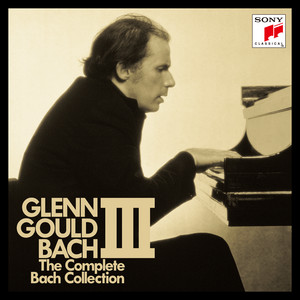 | Goldberg Variations, BWV 988: Aria | Johann Sebastian Bach, Glenn Gould | A♭ Major | 0 | 4B | 123 BPM | |
 | Handel / Orch. Hale: Keyboard Suite No. 4 in D Minor, HWV 437: III. Sarabande | George Frideric Handel, Alexander Briger, Academy of St. Martin in the Fields | D Minor | 0 | 7A | 116 BPM | |
 | Souvenir d'un lieu cher, Op. 42: 3. Mélodie | Pyotr Ilyich Tchaikovsky, Janine Jansen, Mahler Chamber Orchestra, Daniel Harding | E♭ Major | 0 | 5B | 99 BPM | |
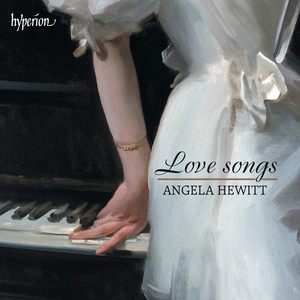 | Morgen, Op. 27 No. 4 (Arr. Reger for Piano) | Richard Strauss, Angela Hewitt | A Major | 2 | 11B | 143 BPM | |
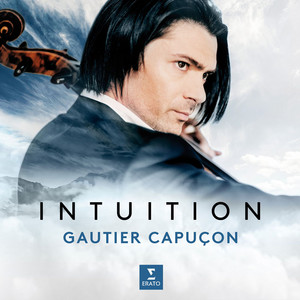 | Saint-Saëns / Transcr. Vidal: Le carnaval des animaux: XIII. Le cygne | Camille Saint-Saëns, Gautier Capuçon, Douglas Boyd, Orchestre de chambre de Paris | G Major | 0 | 9B | 82 BPM | |
 | Humoresque No. 7 in G-flat Major, Op. 101 | Boston Symphony Orchestra, Yo-Yo Ma, Seiji Ozawa, Itzhak Perlman | F♯ Major | 1 | 2B | 83 BPM | |
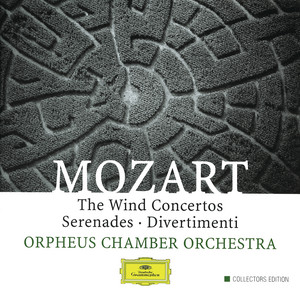 | Serenade in B-Flat Major, K. 361 "Gran Partita": III. Adagio | Wolfgang Amadeus Mozart, Orpheus Chamber Orchestra | E♭ Major | 0 | 5B | 68 BPM | |
 | Fidelio, Op. 72: Overture | Ludwig van Beethoven, Wolfgang Glashof, Hungarian Radio Chorus, Nicolaus Esterhazy Sinfonia, Michael Halasz, Alan Titus, Gösta Winbergh, Inga Nielsen, Kurt Moll, Edith Lienbacher, Herwig Pecoraro, Péter Pálinkás, József Moldvay | E Major | 1 | 12B | 62 BPM | |
 | Orchestral Suite No. 3 in D Major, BWV 1068: II. Air "on the G String" | Johann Sebastian Bach, David Bell, Berliner Philharmoniker, Herbert von Karajan | D Major | 1 | 10B | 113 BPM | |
 | Piano Concerto in A Minor, Op. 7: II. Romanze. Andante non troppo con grazia | Clara Schumann, Veronica Jochum, Bamberg Symphony, Joseph Silverstein | A♭ Major | 0 | 4B | 96 BPM | |
 | Piano Sonata No. 12 in F Major, K. 332: II. Adagio | Wolfgang Amadeus Mozart, Maria João Pires | F Major | 0 | 7B | 73 BPM | |
 | Violin Concerto In D, Op. 61: 3. Rondo (Allegro) | Ludwig van Beethoven, Fritz Kreisler, Vadim Repin, Wiener Philharmoniker, Riccardo Muti | G Major | 0 | 9B | 74 BPM | |
 | Oboe Concerto in D Minor: II. Adagio | Alessandro Marcello, Jozsef Kiss, Budapest Ferenc Erkel Chamber Orchestra | D Minor | 1 | 7A | 131 BPM |
- ISRC
- BRGJP1500009
- Label
- L-M Records/RCA Records