- BPM
- 116
- Key
- D♭ Major
- Camelot
- 3B
String Quartet No. 11 in F Minor, Op. 122: II. Scherzo. Allegretto by Dmitri Shostakovich, Cuarteto Casals Song Details
"String Quartet No. 11 in F Minor, Op. 122: II. Scherzo. Allegretto" by Dmitri Shostakovich, Cuarteto Casals had its release date on July 11, 2025. The duration of This song is about two minutes long, specifically at 2:54. This song does not appear to have any foul language. String Quartet No. 11 in F Minor, Op. 122: II. Scherzo. Allegretto's duration is considered a little bit shorter than the average duration of a typical track. There are a total of 30 in the song's album "Shostakovich: Complete String Quartets, Vol. 2, Nos. 6-12". In this album, this song's track order is #14. Furthermore, we believe that the track originated from France. In terms of popularity, String Quartet No. 11 in F Minor, Op. 122: II. Scherzo. Allegretto is currently unknown. In our opinion, the overall tone is not very danceable and projects negative sounds, such as being sad, depressed, or angry.
BPM and Tempo
With String Quartet No. 11 in F Minor, Op. 122: II. Scherzo. Allegretto by Dmitri Shostakovich, Cuarteto Casals having a BPM of 116 with a half-time of 58 BPM and a double-time of 232 BPM, we would consider this track to have a Moderato (at a moderate speed) tempo marking. Because of this, we believe that the song has an overall moderate tempo. Looking at the BPM of this song, this song might go great with walking. The time signature for this track is 4/4.
Music Key
D♭ Major is the music key of this track. Or for those who are familiar with the camelot wheel, this song has a camelot key of 3B. So, the perfect camelot match for 3B would be either 3B or 4A. While, 4B can give you a low energy boost. For moderate energy boost, you would use 12B and a high energy boost can either be 5B or 10B. Though, if you want a low energy drop, you should looking for songs with either a camelot key of 3A or 2B will give you a low energy drop, 6B would be a moderate one, and 1B or 8B would be a high energy drop. Lastly, 12A allows you to change the mood.
Want to find the BPM and music key for other songs? Check out our BPM and Key Finder page!
- Popularity
- 0%
- Loudness
- -20.106 dB
- Acousticness
- 97%
- Danceability
- 32%
- Energy
- 6%
- Instrumentalness
- 67%
- Liveness
- 10%
- Loudness
- 66%
- Speechiness
- 5%
- Valence
- 4%
Recommendations
| Track | Artist | Key | Energy | Camelot | BPM | ||
|---|---|---|---|---|---|---|---|
 | J.S. Bach: J.S. Bach: Orchestral Suite No. 3 in D Major, BWV 1068: 2. Air | Johann Sebastian Bach, Orpheus Chamber Orchestra | D Major | 3 | 10B | 65 BPM | |
 | Mozart: Requiem in D Minor, K. 626: VIII. Lacrimosa | Wolfgang Amadeus Mozart, Pierre Génisson, Bruno Fontaine | D Minor | 0 | 7A | 121 BPM | |
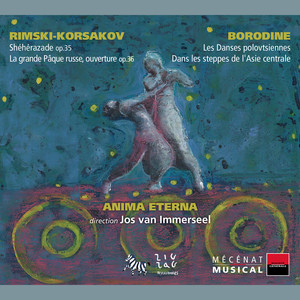 | Les danses polovtsiennes (Extraits de l'opéra Le Prince Igor): II. Danse des hommes | Alexander Borodin, Anima Eterna, Jos Van Immerseel | A Major | 0 | 11B | 87 BPM | |
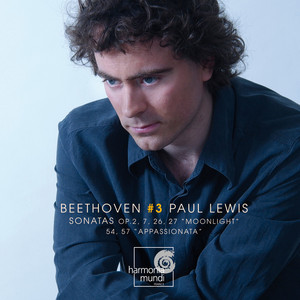 | Piano Sonata No. 14 in C-Sharp Minor, Op. 27 No. 2 "Moonlight": I. Adagio sostenuto | Ludwig van Beethoven, Paul Lewis | D♭ Minor | 0 | 12A | 172 BPM | |
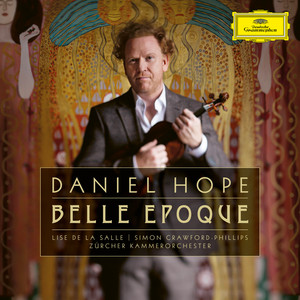 | Notturno for Strings and Harp | Arnold Schoenberg, Daniel Hope, Zürcher Kammerorchester, Jane Berthe | A♭ Major | 1 | 4B | 75 BPM | |
 | Moses Fantasy | Niccolò Paganini, Nemanja Radulović | C Major | 1 | 8B | 100 BPM | |
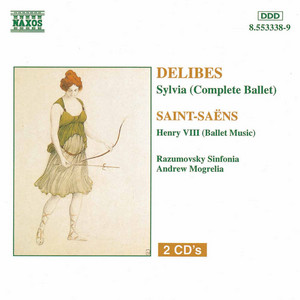 | Sylvia: Act III: Divertissement: Variation - Valse | Léo Delibes, Razumovsky Symphony Orchestra, Andrew Mogrelia | E♭ Major | 1 | 5B | 97 BPM | |
 | Scottish Fantasy for Violin and Orchestra, Op. 46: I. Introduction: Grave, Adagio cantabile | Max Bruch, Joshua Bell, Academy of St. Martin in the Fields | E♭ Major | 2 | 5B | 60 BPM | |
 | String Quartet No. 2 in D Major: III. Notturno: Andante | Alexander Borodin, Budapest Haydn Quartet | A Major | 1 | 11B | 89 BPM | |
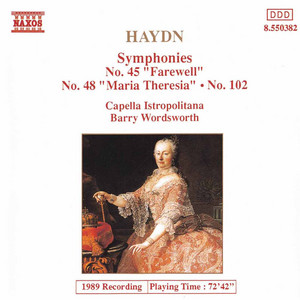 | Symphony No. 45 in F-Sharp Minor, Hob.I:45, "Farewell": I. Allegro assai | Joseph Haydn, Capella Istropolitana, Barry Wordsworth | F♯ Minor | 2 | 11A | 156 BPM | |
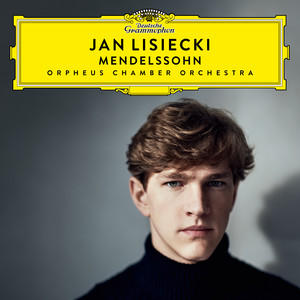 | Lieder ohne Worte, Op. 19: No. 6 in G Minor (Andante sostenuto) "Venetian Gondola Song", MWV U78 | Felix Mendelssohn, Jan Lisiecki | G Minor | 0 | 6A | 168 BPM | |
 | Sarasate: Zigeunerweisen, Op. 20 | Pablo de Sarasate, Itzhak Perlman, Abbey Road Ensemble | C Minor | 1 | 5A | 83 BPM | |
 | Carmen Variations | Vladimir Horowitz | E Major | 2 | 12B | 148 BPM | |
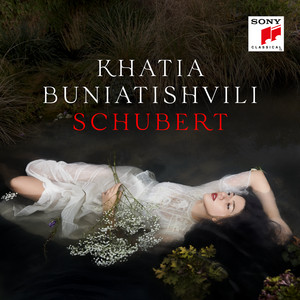 | Ständchen, S. 560 (Trans. from Schwanengesang No. 4, D. 957) | Franz Schubert, Franz Liszt, Khatia Buniatishvili | D Major | 0 | 10B | 67 BPM | |
 | Waltz in A flat major, Op.39 No. 15 | Johannes Brahms, Radio Symphony Orchestra | A Major | 1 | 11B | 89 BPM | |
 | Flute Sonata in E-Flat Major, BWV 1031: II. Siciliano (Arr. for Piano by Ignaz Friedman) | Johann Sebastian Bach, Joseph Banowetz | G Minor | 0 | 6A | 73 BPM | |
 | Raymonda, Act III: Variation 4 | Alexander Glazunov, Kivov Orchestra, Viktor Fedotov | D Minor | 1 | 7A | 103 BPM | |
 | Sicilienne, Op. 78 | Gabriel Fauré, Harriet Krijgh, Kamilla Isanbaeva | G Minor | 1 | 6A | 123 BPM | |
 | Preghiera (Arr. by Fritz Kreisler from Piano Concerto No. 2 in C Minor, Op. 18, 2nd Movement) | Sergei Rachmaninoff, Gidon Kremer, Daniil Trifonov | C Major | 1 | 8B | 104 BPM | |
 | Hungarian Dance No. 5 | Johannes Brahms, Isaac Stern, Milton Katims, Columbia Symphony Orchestra | G Minor | 2 | 6A | 111 BPM | |
 | Die Geschichte Eines Unbekannten Schauspielers (The Story of the Unknown Actor): Waltzer (Abschied) | Alfred Schnittke, Berlin Radio Symphony Orchestra, Frank Strobel | C Minor | 0 | 5A | 168 BPM | |
 | Cello Concerto No. 1 in A Minor, Op. 33: I. Allegro non troppo | Camille Saint-Saëns, Mischa Maisky, Orpheus Chamber Orchestra | F Major | 2 | 7B | 131 BPM | |
 | Shostakovich: Suite for Jazz Orchestra No. 1, Op. 38a: I. Waltz | Dmitri Shostakovich, Philadelphia Orchestra, Mariss Jansons | E♭ Major | 0 | 5B | 81 BPM | |
 | La Traviata / Act 1: Prelude | Giuseppe Verdi, Bavarian State Orchestra, Carlos Kleiber | B Major | 0 | 1B | 131 BPM | |
 | Liszt: Liebesträume, S. 541: No. 3 in A-Flat Major, Oh Lieb, so lang du lieben kannst | Franz Liszt, Mariam Batsashvili | A♭ Major | 0 | 4B | 61 BPM |
- ISRC
- FR7JM2457140
- Label
- L-M Records/RCA Records