- BPM
- 124
- Key
- C Minor
- Camelot
- 5A
Variations on an Original Theme, Op. 36 "Enigma": Var. XII. Andante "B.G.N." by Edward Elgar, Chicago Symphony Orchestra, Sir Georg Solti Song Details
"Variations on an Original Theme, Op. 36 "Enigma": Var. XII. Andante "B.G.N."" by Edward Elgar, Chicago Symphony Orchestra, Sir Georg Solti had its release date on November 1, 1976. The duration of This song is about two minutes long, specifically at 2:39. This song does not appear to have any foul language. Variations on an Original Theme, Op. 36 "Enigma": Var. XII. Andante "B.G.N."'s duration is considered a little bit shorter than the average duration of a typical track. The song is number 13 out of 16 in Elgar: Enigma Variations; Cockaigne by Edward Elgar, Sir Georg Solti, Chicago Symphony Orchestra. Going off of the ISRC code of this track, we detected that the origin of this track is from United Kingdom. Based on our statistics, Variations on an Original Theme, Op. 36 "Enigma": Var. XII. Andante "B.G.N."'s popularity is not that popular right now. In our opinion, the overall tone is not very danceable and projects negative sounds, such as being sad, depressed, or angry.
BPM and Tempo
The tempo marking of Variations on an Original Theme, Op. 36 "Enigma": Var. XII. Andante "B.G.N." by Edward Elgar, Chicago Symphony Orchestra, Sir Georg Solti is Allegro (fast, quick, and bright), since this song has a tempo of 124 BPM. With that information, we can conclude that the song has a fast tempo. This song can go great with walking. The time signature for this track is 4/4.
Music Key
C Minor is the music key of this track. Because this track belongs in the C Minor key, the camelot key is 5A. So, the perfect camelot match for 5A would be either 5A or 4B. While, a low energy boost can consist of either 5B or 6A. For moderate energy boost, you would use 2A and a high energy boost can either be 7A or 12A. However, if you are looking for a low energy drop, finding a song with a camelot key of 4A would be a great choice. Where 8A would give you a moderate drop, and 3A or 10A would be a high energy drop. Lastly, 8B allows you to change the mood.
Want to find the BPM and music key for other songs? Check out our BPM and Key Finder page!
- Popularity
- 1%
- Loudness
- -17.79 dB
- Acousticness
- 91%
- Danceability
- 24%
- Energy
- 22%
- Instrumentalness
- 89%
- Liveness
- 8%
- Loudness
- 70%
- Speechiness
- 4%
- Valence
- 12%
Recommendations
| Track | Artist | Key | Energy | Camelot | BPM | ||
|---|---|---|---|---|---|---|---|
 | 21 Hungarian Dances, WoO 1: Hungarian Dance No. 11 in D Minor | Johannes Brahms, Seattle Symphony Orchestra, Gerard Schwarz | A Minor | 0 | 8A | 104 BPM | |
 | Elgar: Cello Concerto in E Minor, Op. 85: II. Lento - Allegro molto | Edward Elgar, Jacqueline du Pré, London Symphony Orchestra, Sir John Barbirolli | G Major | 2 | 9B | 87 BPM | |
 | 3 Romances, Op. 22: 1. Andante molto | Clara Schumann, Elena Urioste, Isata Kanneh-Mason | D♭ Major | 0 | 3B | 168 BPM | |
 | Notturno for Strings and Harp | Arnold Schoenberg, Daniel Hope, Zürcher Kammerorchester, Jane Berthe | A♭ Major | 1 | 4B | 75 BPM | |
 | Lalo: Cello Concerto in D Minor: II. Intermezzo - Allegro presto | Édouard Lalo, André Navarra, Charles Münch, Orchestre des Concerts Lamoureux | C Minor | 1 | 5A | 75 BPM | |
 | Rusalka, Op. 114: Song to the Moon (Arranged for Violin & Orchestra by Joshua Bell) | Antonín Dvořák, Joshua Bell, Michael Stern, Orchestra of St. Luke's | F♯ Major | 1 | 2B | 137 BPM | |
 | Symphony No. 2 In C Minor - "Resurrection" / 1st Movement - Allegro maestoso (Totenfeier): Im Tempo nachgeben | Gustav Mahler, Wiener Philharmoniker, Gilbert Kaplan | B Major | 1 | 1B | 152 BPM | |
 | Symphony in B Minor (arr. T. Finno for orchestra): Ii. Un poco lento, cantabile | Claude Debussy, フランス国立リヨン管弦楽団, 準・メルクル | E♭ Major | 1 | 5B | 92 BPM | |
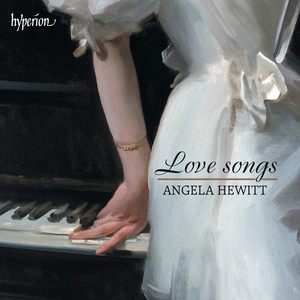 | Morgen, Op. 27 No. 4 (Arr. Reger for Piano) | Richard Strauss, Angela Hewitt | A Major | 2 | 11B | 143 BPM | |
 | Brahms Symphony No. 3 - 3rd Movement | John Keating/London Symphony Orchestra | C Minor | 1 | 5A | 116 BPM | |
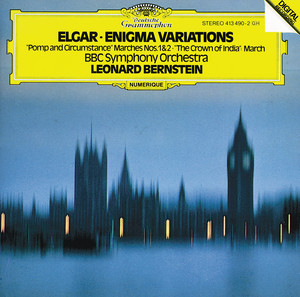 | Enigma Variations, Op. 36: Var. 1. L'istesso tempo "C.A.E." | Edward Elgar, BBC Symphony Orchestra, Leonard Bernstein | G Minor | 0 | 6A | 81 BPM | |
 | Abendlied, Op. 85, No. 12 (Arr. for String Orchestra by Johan Svendsen) | Robert Schumann, Lucerne Festival Strings, Daniel Dodds | B Major | 1 | 1B | 113 BPM | |
 | Romance for Violin and Piano, Op. 23 | Amy Beach, Esther Abrami, Iyad Sughayer | A Major | 2 | 11B | 87 BPM | |
 | Peer Gynt Suite No.1 op. 46 Anitra's Dance (Tempo di Mazurka) | Academy of St. Martin in the Fields | E Minor | 0 | 9A | 168 BPM | |
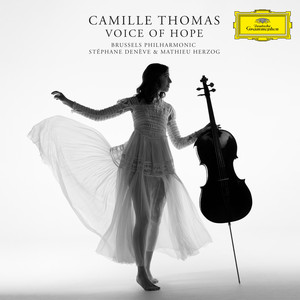 | Dido and Aeneas, Z. 626 / Act III: "When I Am Laid in Earth" Dido's Lamento (Arr. by Mathieu Herzog for Cello and Strings) | Henry Purcell, Camille Thomas, Brussels Philharmonic, Mathieu Herzog | G Minor | 1 | 6A | 77 BPM | |
 | Symphony No. 1 in G Minor, Op. 13, TH 24, "Winter Daydreams": II. Adagio cantabile ma non tanto, "Land of Desolation, Land of Mist | Pyotr Ilyich Tchaikovsky, Mariss Jansons, Oslo Philharmonic Orchestra | B Minor | 2 | 10A | 139 BPM | |
 | 4 Impromptus, Op.90, D.899: No.3 in G Flat Major: Andante | Franz Schubert, Radu Lupu | F♯ Major | 0 | 2B | 173 BPM | |
 | Saint-Saëns: Le carnaval des animaux, R 125: XIII. Le cygne | Camille Saint-Saëns, Güher Pekinel, Éric Levionnais, Süher Pekinel | E♭ Major | 1 | 5B | 82 BPM | |
 | Serenade for String Orchestra in C Major, Op. 48, TH 48: II. Valse | Pyotr Ilyich Tchaikovsky, The Russian Virtuosi of Europe, Yuri Zhislin | G Major | 2 | 9B | 98 BPM | |
 | L'Arlésienne Suite No. 1, WD 40: III. Adagietto | Georges Bizet, Orchestre Symphonique de Montréal, Charles Dutoit | F Major | 0 | 7B | 86 BPM | |
 | The Lark Ascending: I. Andante sostenuto | Ralph Vaughan Williams, Hyeyoon Park, Benjamin Grosvenor | E Minor | 0 | 9A | 91 BPM | |
 | Le carnaval des animaux, R. 125: Le cygne | Camille Saint-Saëns, Mischa Maisky, Orpheus Chamber Orchestra | C Major | 0 | 8B | 83 BPM | |
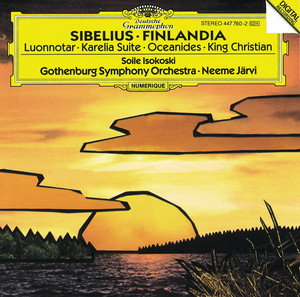 | Andante Festivo | Jean Sibelius, Gothenburg Symphony Orchestra, Neeme Järvi | G Major | 1 | 9B | 86 BPM | |
 | Beethoven: Symphony No. 6 in F Major, Op. 68 "Pastoral": IV. Gewitter. Sturm. Allegro - | Ludwig van Beethoven, Philadelphia Orchestra, Riccardo Muti | G Major | 0 | 9B | 127 BPM | |
 | Kol Nidrei - Adagio For Cello, Opus 47 | Max Bruch, Alisa Weilerstein, Staatskapelle Berlin, Daniel Barenboim | D Major | 1 | 10B | 81 BPM |
- ISRC
- GBF077440613
- Label
- L-M Records/RCA Records