- BPM
- 67
- Key
- A Minor
- Camelot
- 8A
Corrente I by Bernardo Pasquini, Rinaldo Alessandrini Song Details
Bernardo Pasquini, Rinaldo Alessandrini's ' "Corrente I" was released on its scheduled release date, April 1, 1991. With This song being less than two minutes long, at 1:11, we are fairly confident that this song is not explicit and is safe for all ages. Based on the duration of this song, this song duration is much smaller than the average song duration. There are a total of 33 in the song's album "Pasquini: Sonate per gravicembalo". In this album, this song's track order is #4. Corrente I is unknown right now. The overall mood can be danceable to some, especially with it's high amount of postive energy.
BPM and Tempo
With Corrente I by Bernardo Pasquini, Rinaldo Alessandrini having a BPM of 67 with a half-time of 34 BPM and a double-time of 134 BPM, we would consider this track to have a Adagio (slowly with great expression) tempo marking. Because of this, we believe that the song has an overall slow tempo. The time signature for this track is 4/4.
Music Key
A Minor is the music key of this track. Which also means that the camelot key for this song is 8A. So, the perfect camelot match for 8A would be either 8A or 7B. While, a low energy boost can consist of either 8B or 9A. For moderate energy boost, you would use 5A and a high energy boost can either be 10A or 3A. However, if you are looking for a low energy drop, finding a song with a camelot key of 7A would be a great choice. Where 11A would give you a moderate drop, and 6A or 1A would be a high energy drop. Lastly, 11B allows you to change the mood.
Want to find the BPM and music key for other songs? Check out our BPM and Key Finder page!
- Popularity
- 0%
- Loudness
- -16.006 dB
- Acousticness
- 91%
- Danceability
- 46%
- Energy
- 52%
- Instrumentalness
- 0%
- Liveness
- 12%
- Loudness
- 73%
- Speechiness
- 4%
- Valence
- 75%
Recommendations
| Track | Artist | Key | Energy | Camelot | BPM | ||
|---|---|---|---|---|---|---|---|
 | Laudate pueri Dominum, RV 600: Excelsus super omnes gentes | Antonio Vivaldi, Tracy Smith Bessette, Aradia Ensemble, Kevin Mallon | D♭ Minor | 0 | 12A | 99 BPM | |
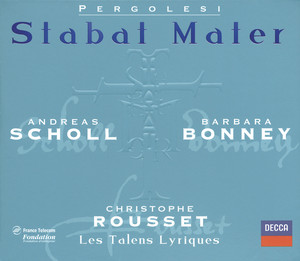 | Stabat Mater: 2. Cujus animam | Giovanni Battista Pergolesi, Barbara Bonney, Les Talens Lyriques, Christophe Rousset | G Major | 1 | 9B | 75 BPM | |
 | Laudate pueri in G Major, RV 601 "Salmo 112": I. Laudate, pueri (Allegro non molto) | Antonio Vivaldi, Sandrine Piau, Accademia Bizantina, Ottavio Dantone, Stefano Montanari | D♭ Major | 2 | 3B | 92 BPM | |
 | L'Histoire de la femme adultère, C. 191: Simphonie | Louis-Nicolas Clérambault, Reinoud Van Mechelen, A Nocte Temporis | F Minor | 0 | 4A | 117 BPM | |
 | Sonata II In G Minor: I. Grave (Muffat) | Georg Muffat, Masques, Olivier Fortin | F♯ Minor | 0 | 11A | 132 BPM | |
 | Stabat mater in C Major: Stabat mater | Emanuele d'Astorga, Thomas Hengelbrock, Balthasar-Neumann-Chor | B Minor | 1 | 10A | 62 BPM | |
 | Psyche, Act I: Overture | Matthew Locke, Ensemble Correspondances, Sébastien Daucé | D♭ Major | 1 | 3B | 122 BPM | |
 | Concerto in A Major, Op. 12 No. 1: II. Allegro | Jean-Baptiste Quentin, Musica Antiqua Köln, Reinhard Goebel | A♭ Major | 2 | 4B | 109 BPM | |
 | Concerto Grosso in C Minor, Op. 1 No. 11: IV. Giga. Allegro | Pietro Locatelli, Isabelle Faust, Il Giardino Armonico, Giovanni Antonini | C Minor | 3 | 5A | 69 BPM | |
 | The Gordion Knot Unty'd, Z. 597: Second Music II: Minuet | Henry Purcell, Aradia Ensemble, Kevin Mallon | D♭ Major | 0 | 3B | 49 BPM | |
 | The Indian Queen, Z. 630: "I attempt from love's sickness" | Henry Purcell, Alfred Deller, Roderick Skeaping, Wieland Kuijken, William Christie | D Major | 1 | 10B | 72 BPM | |
 | Stabat Mater in F Minor, P. 77: IV. Quae moerebat et dolebat | Giovanni Battista Pergolesi, Christopher Lowrey, Les Talens Lyriques, Christophe Rousset | C Minor | 1 | 5A | 58 BPM | |
 | Ode for St Cecilia's Day, Z. 339: "Here the Deities Approve" | Henry Purcell, Tim Mead, Les Musiciens De Saint-Julien, François Lazarevitch | B♭ Minor | 2 | 3A | 119 BPM | |
 | Hasse: Serpentes ignei in deserto: Aria. "Incerta vivendo" (Eliab) | Johann Adolf Hasse, Thibault Noally, Les Accents, David Hansen | B Minor | 3 | 10A | 120 BPM | |
 | Allegro | Nicola Matteis, Gli Incogniti, Amandine Beyer | E♭ Minor | 3 | 2A | 131 BPM | |
 | Concerti grossi a quatro e sei strumenti, Op. 7, Libro secondo, Concerto No. 11 in A Minor: II. Allegro | Giuseppe Valentini, Ensemble 415, Chiara Banchini, Olivia Centurioni, Odile Edouard, David Plantier, David Courvoisier, Alain Gervreau | A♭ Minor | 2 | 1A | 131 BPM | |
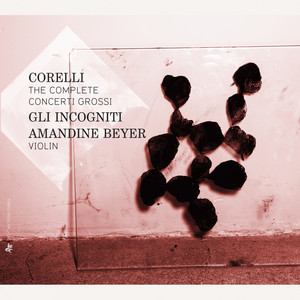 | Concerto grosso No. 11 in B-Flat Major, Op. 6: I. Preludio (Andante largo) | Arcangelo Corelli, Gli Incogniti, Amandine Beyer, Alba Roca | E Major | 2 | 12B | 80 BPM | |
 | Flute Quartet in G Minor, TWV 43 g4: II. Adagio | Georg Philipp Telemann, Musica Antiqua Köln, Reinhard Goebel | A Major | 1 | 11B | 77 BPM | |
 | Missa Divi Xaverii, ZWV 12: Gloria in excelsis Deo | Jan Dismas Zelenka, Collegium Vocale 1704, Collegium 1704, Vaclav Luks | D♭ Major | 3 | 3B | 104 BPM | |
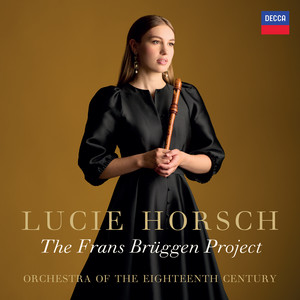 | Concert royaux, Quatrième concert in E Minor: VII. Forlane en rondeau. Gaiement | François Couperin, Lucie Horsch, Tom Foster | E♭ Major | 0 | 5B | 72 BPM | |
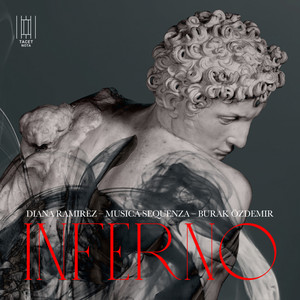 | Sinfonia Doriclea | Francesco Cavalli, Musica Sequenza, BURAK | F♯ Minor | 1 | 11A | 75 BPM | |
 | Concerto for 2 Violins in A Major, TWV 52:A2: II. Largo | Georg Philipp Telemann, Julia Huber, Martin Jopp, L'Orfeo Barockorchester, Carin van Heerden | E♭ Major | 0 | 5B | 138 BPM | |
 | Credo, RV. 591: Coro "Crucifixus etiam pro nobis" | Antonio Vivaldi, Les Arts Florissants, Paul Agnew | B Minor | 1 | 10A | 75 BPM | |
 | Atys, LWV 53, Prologue: Premier air pour la suite de Flore | Jean-Baptiste Lully, Les Ambassadeurs ~ La Grande Écurie, Alexis Kossenko | F Minor | 0 | 4A | 66 BPM | |
 | Dixit Dominus, RV 595: VIII. Aria "De torrente in via bibet" | Antonio Vivaldi, Jordi Savall, Anthony Roth Costanzo, Le Concert Des Nations | B♭ Minor | 0 | 3A | 92 BPM |
- ISRC
- This song does not have an ISRC.
- Label
- L-M Records/RCA Records