- BPM
- 151
- Key
- G Major
- Camelot
- 9B
Four Dramatic Studies: No. 3, — by Ivo Jirásek, Film Symphony Orchestra, Mario Klemens Song Details
Ivo Jirásek, Film Symphony Orchestra, Mario Klemens's ' "Four Dramatic Studies: No. 3, —" was released on its scheduled release date, May 26, 2015. With this song being about 5 minutes long, at This song is fairly a long song compared to the average song length. This song does not have an "Explicit" tag, making it safe for all ages. This song is part of Week of New Production 1986 by Mario Klemens, Rostislav Hališka, Film Symphony Orchestra. The song's track number on the album is #3 out of 9 tracks. Based on our data, Czechia was the country where this track was produced or recorded. Based on our statistics, Four Dramatic Studies: No. 3, —'s popularity is unknown right now. The overall mood can be danceable to some, especially with it's high amount of postive energy.
BPM and Tempo
Since Four Dramatic Studies: No. 3, — by Ivo Jirásek, Film Symphony Orchestra, Mario Klemens has a tempo of 151 beats per a minute, the tempo markings of this song would be Allegro (fast, quick, and bright). With Four Dramatic Studies: No. 3, — being at 151 BPM, the half-time would be 76 BPM with a double-time of 302 BPM.In addition, we consider the tempo speed to be pretty fast for this song. This makes this song perfect for activities such as, running. The time signature for this track is 3/4.
Music Key
This song is in the music key of G Major. Or for those who are familiar with the camelot wheel, this song has a camelot key of 9B. So, the perfect camelot match for 9B would be either 9B or 10A. While, 10B can give you a low energy boost. For moderate energy boost, you would use 6B and a high energy boost can either be 11B or 4B. Though, if you want a low energy drop, you should looking for songs with either a camelot key of 9A or 8B will give you a low energy drop, 12B would be a moderate one, and 7B or 2B would be a high energy drop. Lastly, 6A allows you to change the mood.
Want to find the BPM and music key for other songs? Check out our BPM and Key Finder page!
- Popularity
- 0%
- Loudness
- -18.105 dB
- Acousticness
- 98%
- Danceability
- 40%
- Energy
- 24%
- Instrumentalness
- 3%
- Liveness
- 14%
- Loudness
- 70%
- Speechiness
- 5%
- Valence
- 62%
Recommendations
| Track | Artist | Key | Energy | Camelot | BPM | ||
|---|---|---|---|---|---|---|---|
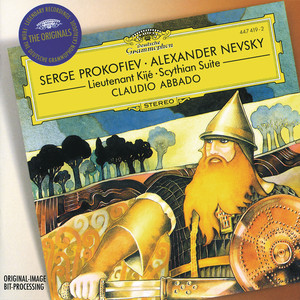 | Alexander Nevsky, Op. 78: I. Russia Under The Mongolian Yoke | Sergei Prokofiev, London Symphony Orchestra, Claudio Abbado | C Minor | 0 | 5A | 71 BPM | |
 | Sibelius: Finlandia, Op. 26 | Jean Sibelius, Helsinki Philharmonic Orchestra, Okko Kamu | A Major | 3 | 11B | 81 BPM | |
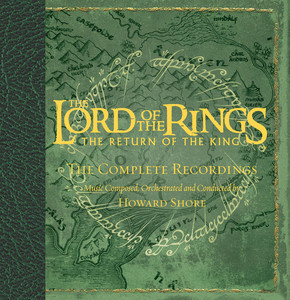 | The Mouth of Sauron (feat. Sir James Galway) | Howard Shore | C Major | 2 | 8B | 140 BPM | |
 | Petrouchka: Les déguisés | Ferenc Fricsay, Berliner Philharmoniker | B♭ Major | 7 | 6B | 164 BPM | |
 | El Olimpo de los Dioses: VI. Hephaestus | Oscar Navarro, N/A, Royal Symphonic Band of the Belgian Guides, Yves Segers | G Minor | 5 | 6A | 141 BPM | |
 | Born Anew | Masashi Hamauzu | D Minor | 4 | 7A | 132 BPM | |
 | The Southern Underground | Joel McNeely, Royal Scottish National Orchestra, Royal Scottish National Orchestra and Chorus | A Major | 0 | 11B | 91 BPM | |
 | Tríptico A(marillo) | Renato Di Prinzio, Renato Pedro Di Prinzio | A Major | 2 | 11B | 94 BPM | |
 | Don Quixote, Op. 35, TrV 184: Variation II (Kriegerisch) | Richard Strauss, Pierre Fournier, Giusto Cappone, Berliner Philharmoniker, Herbert von Karajan | E♭ Major | 3 | 5B | 102 BPM | |
 | Organ Concerto in G Minor, FP 93: III. Andante moderato | Francis Poulenc, Philippe Lefebvre, Orchestre National de Lille, Jean-Claude Casadesus | D♭ Major | 0 | 3B | 79 BPM | |
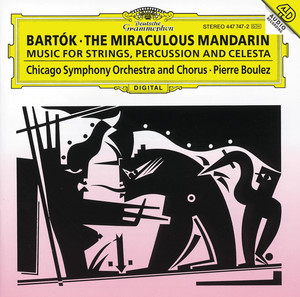 | The Miraculous Mandarin, BB 82, Sz. 73 (Op. 19): Maestoso: The Mandarin Enters | Béla Bartók, Chicago Symphony Orchestra, Pierre Boulez | F Minor | 1 | 4A | 84 BPM | |
 | King Kristian II, Op. 27: III. Musette | Jean Sibelius, New Zealand Symphony Orchestra, Pietari Inkinen | A Minor | 3 | 8A | 70 BPM | |
 | Harp Concerto, Op. 25: II. Molto moderato | Alberto Ginastera, Xavier De Maistre, Bertrand de Billy, Vienna Radio Symphony Orchestra | C Major | 0 | 8B | 78 BPM | |
 | Kaonashi (No Face) | Joe Hisaishi | F Minor | 3 | 4A | 160 BPM | |
 | Realized Capacity | Yoshihisa Hirano | F Minor | 9 | 4A | 160 BPM | |
 | Symphony No. 3 In D Minor / Part 2: 3.- Wieder sehr gemaechlich, beinahe langsam | Gustav Mahler, New York Philharmonic, Leonard Bernstein | G Minor | 0 | 6A | 129 BPM | |
 | Main Title - From "Aliens" | James Horner, London Symphony Orchestra | C Major | 0 | 8B | 175 BPM | |
 | III. Allegro comodo — Allegro deciso | Allan Pettersson, Christian Lindberg, Norrköping Symphony Orchestra | G Major | 0 | 9B | 81 BPM | |
 | The Firebird (Original Version): No. 20, Lullaby | Igor Stravinsky, City Of Birmingham Symphony Orchestra, Andris Nelsons | E♭ Minor | 0 | 2A | 172 BPM | |
 | From Shangai to London | Lang Lang, Alexandre Desplat | E♭ Minor | 1 | 2A | 120 BPM | |
 | La Fiesta Mexicana: I. Prelude and Aztec Dance | US Marine Band | D Major | 2 | 10B | 145 BPM | |
 | Fantasia on a Theme from Thailand | Orquesta Infantil Promúsica | G Major | 2 | 9B | 137 BPM | |
 | The Planets, Op. 32: VII. Neptune, the Mystic | Gustav Holst, Le Choeur des femmes de l’Orchestre symphonique de Montréal, Orchestre Symphonique de Montréal, Charles Dutoit | E Major | 0 | 12B | 78 BPM | |
 | The Planets, Op. 32: II. Venus, the Bringer of Peace | Gustav Holst, Daniel Harding, Bavarian Radio Symphony Orchestra | C Minor | 2 | 5A | 89 BPM | |
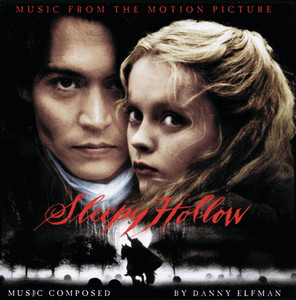 | The Chase | Danny Elfman | C Major | 7 | 8B | 82 BPM |
- ISRC
- CZA160513078
- Label
- L-M Records/RCA Records