- BPM
- 180
- Key
- E Minor
- Camelot
- 9A
Keyboard Suite No. 3 (Set I) in D Minor, HWV 428: I. Prelude by George Frideric Handel, Philip Edward Fisher Song Details
On March 30, 2010, the song "Keyboard Suite No. 3 (Set I) in D Minor, HWV 428: I. Prelude" was released by George Frideric Handel, Philip Edward Fisher. With This song being less than two minutes long, at 1:02, we are fairly confident that this song is not explicit and is safe for all ages. Based on the duration of this song, this song duration is much smaller than the average song duration. The track order of this song in George Frideric Handel, Philip Edward Fisher's "Handel: Keyboard Suites, Vol. 1" album is number 9 out of 20. On top of that, Hong Kong appears to be the country where this track was created. The popularity of Keyboard Suite No. 3 (Set I) in D Minor, HWV 428: I. Prelude is currently unknown right now. The overall mood can be danceable to some, especially with it's high amount of postive energy.
BPM and Tempo
We consider the tempo marking of Keyboard Suite No. 3 (Set I) in D Minor, HWV 428: I. Prelude by George Frideric Handel, Philip Edward Fisher to be Presto (very, very fast) because the track has a tempo of 180 BPM, a half-time of 90BPM, and a double-time of 360 BPM. Based on that, the speed of the song's tempo is fast. The time signature for this track is 4/4.
Music Key
This song is in the music key of E Minor. Because this track belongs in the E Minor key, the camelot key is 9A. So, the perfect camelot match for 9A would be either 9A or 8B. While, a low energy boost can consist of either 9B or 10A. For moderate energy boost, you would use 6A and a high energy boost can either be 11A or 4A. However, if you are looking for a low energy drop, finding a song with a camelot key of 8A would be a great choice. Where 12A would give you a moderate drop, and 7A or 2A would be a high energy drop. Lastly, 12B allows you to change the mood.
Want to find the BPM and music key for other songs? Check out our BPM and Key Finder page!
- Popularity
- 0%
- Loudness
- -20.396 dB
- Acousticness
- 99%
- Danceability
- 42%
- Energy
- 32%
- Instrumentalness
- 91%
- Liveness
- 14%
- Loudness
- 66%
- Speechiness
- 7%
- Valence
- 97%
Recommendations
| Track | Artist | Key | Energy | Camelot | BPM | ||
|---|---|---|---|---|---|---|---|
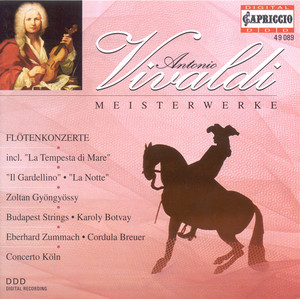 | Sinfonia in E major, RV 132: III. Allegro | Karoly Botvay | E Major | 1 | 12B | 187 BPM | |
 | Concerto Per Oboe, Archi E Continuo In Re Minore: II. Adagio | Alessandro Marcello, Venice Baroque Orchestra | D♭ Minor | 0 | 12A | 79 BPM | |
 | Symphony No. 3 in C Major, Op. 2, "the Chaplet": II. Vivace | William Boyce, Aradia Ensemble, Kevin Mallon | B Major | 0 | 1B | 82 BPM | |
 | Concerto grosso No. 3 in D Minor: IV. Allegro (After D. Scarlatti) | Charles Avison, Avison Ensemble, Pavlo Beznosiuk | F Major | 1 | 7B | 74 BPM | |
 | Oboe Concerto in D Minor, S. Z799: III. Presto | Alessandro Marcello, Marcel Ponseele, Il Gardellino | D♭ Minor | 3 | 12A | 70 BPM | |
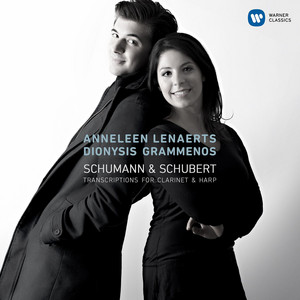 | Schumann: 12 Gedichte aus Liebesfrühling, Op. 37: No. 11: Warum willst du andre fragen | Clara Schumann, Anneleen Lenaerts, Dionysis Grammenos | A♭ Major | 0 | 4B | 71 BPM | |
 | Concerto grosso in B minor, Op. 6, No. 12: 3. Larghetto, e piano | George Frideric Handel, Michel Schwalbé, Hanns-Joachim Westphal, Ottomar Borwitzky, Edith Picht-Axenfeld, Herbert von Karajan, Karl Scheit, Friedrich Fischer, Berliner Philharmoniker | G Major | 2 | 9B | 85 BPM | |
| Oboe Concerto in D Minor, S. Z799: I. Andante e spiccato | Alessandro Marcello, Marcel Ponseele, Il Gardellino | D Minor | 2 | 7A | 122 BPM | |
| Symphony No. 5 in D Major, Op. 2, "St. Cecilia's Day Ode": I. Allegro ma non troppo - Allegro assai | William Boyce, Aradia Ensemble, Kevin Mallon | D♭ Major | 2 | 3B | 126 BPM | |
 | Bach, JS : Well-Tempered Clavier Book 1 : Prelude No.6 in D minor BWV851 | Daniel Barenboim | D Minor | 1 | 7A | 129 BPM | |
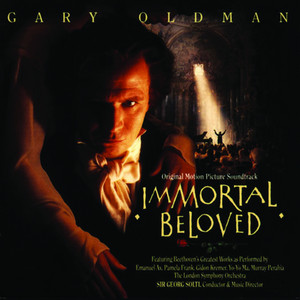 | II. Adagio cantabile from Piano Sonata No. 8 in C minor, Op. 13 "Pathetique" - Instrumental | Ludwig van Beethoven, Murray Perahia | A♭ Major | 0 | 4B | 62 BPM | |
 | Couperin, F: Second Livre de pièces de clavecin, Sixième Ordre: Les baricades mïstérieuses | François Couperin, Jean Rondeau | A Major | 1 | 11B | 145 BPM | |
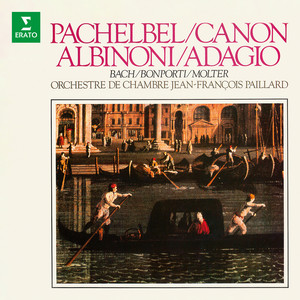 | Molter: Concerto for 2 Trumpets in D Major, MWV 6.31: II. Andante | Johann Melchior Molter, Jean-François Paillard, Orchestre de chambre Jean-François Paillard | D Minor | 1 | 7A | 128 BPM | |
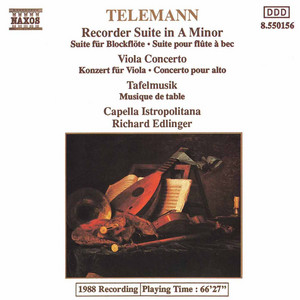 | Viola Concerto In G Major, TWV 51:g9: II. Allegro | Ladislav Kyselák, Capella Istropolitana, Georg Philipp Telemann | G Major | 3 | 9B | 108 BPM | |
 | Céphale et Procris, Act III Scene 3: Passacaille | Élisabeth Jacquet de La Guerre, Reinoud Van Mechelen, A Nocte Temporis | C Major | 2 | 8B | 78 BPM | |
 | Recorder Concerto in C Major, TWV 51:C1: IV. Tempo di Minuet | Georg Philipp Telemann, Dan Laurin, Arte dei Suonatori | B Major | 2 | 1B | 141 BPM | |
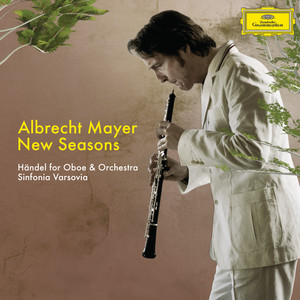 | Concerto for Oboe, Strings and B.c. "Voli per l'aria": Largo ("Where'er You Walk" from Oratorio 'Semele', HWV 58) | George Frideric Handel, Albrecht Mayer, Sinfonia Varsovia, Jakub Haufa, Monika Razynska | B♭ Major | 2 | 6B | 108 BPM | |
 | Symphony No. 5 in D Major: 1. Allegro ma non troppo - Allegro assai | William Boyce, Academy of Ancient Music, Christopher Hogwood | D♭ Major | 2 | 3B | 131 BPM | |
 | Burlesque de Quixotte: III. Son Attaque des moulins à vent | Georg Philipp Telemann, Simon Standage, Collegium Musicum 90 | D♭ Major | 4 | 3B | 134 BPM | |
 | Concerto Grosso In F Minor, Op. 1, No. 8: III. Andante | Pietro Locatelli, Tafelmusik Baroque Orchestra, Jeanne Lamon | A Minor | 1 | 8A | 99 BPM | |
 | Overture (Suite) in E-Flat Major, TWV 55:Es3, "La lyra": VII. Gigue | Georg Philipp Telemann, Northern Chamber Orchestra, Nicholas Ward | E♭ Major | 2 | 5B | 125 BPM | |
 | Water Music, Suite No. 3, HWV 350: Water Music, Suite No. 3, HWV 350: XXIi. Minuet (Coro) | George Frideric Handel, Akademie für Alte Musik Berlin | D♭ Major | 2 | 3B | 174 BPM | |
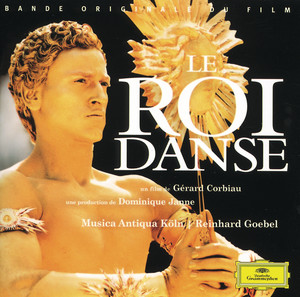 | La Nuit Ballet: Le Roi représentant le soleils levant | Jean-Baptiste Lully, Musica Antiqua Köln, Reinhard Goebel | F♯ Minor | 1 | 11A | 111 BPM | |
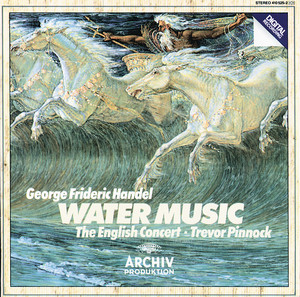 | Water Music Suite No.1 In F, HWV 348: 1. Ouverture (Grave - Allegro) | George Frideric Handel, Simon Standage, Elizabeth Wilcock, The English Concert, Trevor Pinnock | E Major | 3 | 12B | 123 BPM | |
 | Concerto Armonico No. 1 in G Major: Grave | Unico Wilhelm van Wassenaer, Aradia Ensemble, Kevin Mallon | F♯ Major | 1 | 2B | 63 BPM |
- ISRC
- HKI190903509
- Label
- L-M Records/RCA Records