- BPM
- 130
- Key
- F Major
- Camelot
- 7B
Kinderszenen, Op. 15: VII. Träumerei by Robert Schumann, Martha Argerich Song Details
Robert Schumann, Martha Argerich's 'Kinderszenen, Op. 15: VII. Träumerei' had a release date set for January 1, 1984. The duration of This song is about two minutes long, specifically at 2:55. This song does not appear to have any foul language. Kinderszenen, Op. 15: VII. Träumerei's duration is considered a little bit shorter than the average duration of a typical track. There are a total of 21 in the song's album "Schumann: Kinderszenen; Kreisleriana". In this album, this song's track order is #7. Furthermore, we believe that the track originated from Germany. Based on our statistics, Kinderszenen, Op. 15: VII. Träumerei's popularity is fairly popular right now. Although the tone can be danceable to some, this track does projects more of a negative sound rather than a postive one.
BPM and Tempo
With Kinderszenen, Op. 15: VII. Träumerei by Robert Schumann, Martha Argerich having a BPM of 130 with a half-time of 65 BPM and a double-time of 260 BPM, we would consider this track to have a Allegro (fast, quick, and bright) tempo marking. Because of this, we believe that the song has an overall fast tempo. Looking at the BPM of this song, this song might go great with walking. The time signature for this track is 4/4.
Music Key
This song has a musical key of F Major. Or for those who are familiar with the camelot wheel, this song has a camelot key of 7B. So, the perfect camelot match for 7B would be either 7B or 8A. While, 8B can give you a low energy boost. For moderate energy boost, you would use 4B and a high energy boost can either be 9B or 2B. Though, if you want a low energy drop, you should looking for songs with either a camelot key of 7A or 6B will give you a low energy drop, 10B would be a moderate one, and 5B or 12B would be a high energy drop. Lastly, 4A allows you to change the mood.
Want to find the BPM and music key for other songs? Check out our BPM and Key Finder page!
- Popularity
- 64%
- Loudness
- -42.236 dB
- Acousticness
- 99%
- Danceability
- 41%
- Energy
- 0%
- Instrumentalness
- 90%
- Liveness
- 6%
- Loudness
- 30%
- Speechiness
- 5%
- Valence
- 32%
Recommendations
| Track | Artist | Key | Energy | Camelot | BPM | ||
|---|---|---|---|---|---|---|---|
 | Rusalka, Op. 114, Act I: Song to the Moon | Antonín Dvořák, Pablo Ferrandez, Martin Fröst, Swedish Chamber Orchestra | D Minor | 1 | 7A | 109 BPM | |
 | Haydn: Cello Concerto No. 1 in C Major, Hob. VIIb, 1: I. Moderato (Cadenza by Britten) | Franz Joseph Haydn, Mstislav Rostropovich, Academy of St. Martin in the Fields | C Major | 1 | 8B | 68 BPM | |
 | Thaïs: Méditation | Jules Massenet, Bomsori, NFM Wrocław Philharmonic, Giancarlo Guerrero | D Major | 0 | 10B | 84 BPM | |
 | Pavane in F-Sharp Minor, Op. 50 | Gabriel Fauré, Lucas Debargue | F♯ Minor | 0 | 11A | 163 BPM | |
 | Forest Scenes, Op. 82: No. 7, The bird as prophet. Langsam, sehr zart | Robert Schumann, Matthias Kirschnereit | E♭ Minor | 10 | 2A | 176 BPM | |
 | Ave verum corpus, K.618 (Arr. for Piano by Franz Liszt) | Wolfgang Amadeus Mozart, Mao Fujita | C Major | 2 | 8B | 82 BPM | |
 | Lyric Pieces, Book 3, Op. 43: No. 6, To Spring | Edvard Grieg, Lang Lang | F♯ Major | 1 | 2B | 105 BPM | |
 | Bach, JS : Well-Tempered Clavier Book 1 : Prelude No.1 in C major BWV846 | Daniel Barenboim | C Major | 0 | 8B | 95 BPM | |
 | Sérénade, Op. 29 | Cécile Chaminade, Eric Parkin | D Major | 0 | 10B | 70 BPM | |
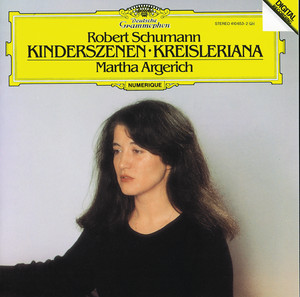 | Kinderszenen, Op. 15: IV. Bittendes Kind | Robert Schumann, Martha Argerich | D Major | 0 | 10B | 113 BPM | |
 | Cello Sonata No. 3 in A Major, Op. 69: III. Adagio cantabile | Ludwig van Beethoven, Mischa Maisky, Martha Argerich | E Major | 0 | 12B | 89 BPM | |
 | Notturno in G Minor | Fanny Mendelssohn, Heather Schmidt | G Minor | 1 | 6A | 125 BPM | |
 | 6 Impromptus, Op. 5: Impromptu V | Jean Sibelius, Leif Ove Andsnes | B Minor | 0 | 10A | 72 BPM | |
 | 24 Preludes, Op. 11: No. 11 in B Major. Allegro assai | Alexander Scriabin, Yuja Wang | B Major | 0 | 1B | 67 BPM | |
 | Andante spianato et Grande polonaise brillante, Op. 22: Andante spianato. Tranquillo | Frédéric Chopin, Martha Argerich | G Major | 0 | 9B | 83 BPM | |
 | Symphony No. 5 In C Sharp Minor: 4. Adagietto (Sehr langsam) | Gustav Mahler, Gyeonggi Philharmonic Orchestra, Shi-Yeon Sung | F Major | 0 | 7B | 82 BPM | |
 | Tales "Skazki", Op. 26: III. Narrante a piacere | Nikolai Medtner, Anna Gourari | F Minor | 0 | 4A | 62 BPM | |
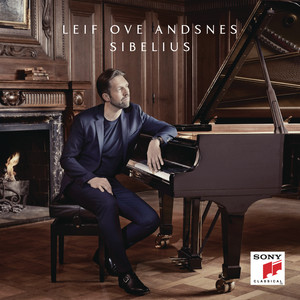 | 13 Pieces for Piano, Op. 76: Elegiaco, No. 10 | Jean Sibelius, Leif Ove Andsnes | E Major | 0 | 12B | 169 BPM | |
 | 7 Variations on the Air Vien qua, Dorina bella by Bianchi, Op. 7, J. 53: Andante | Carl Maria von Weber, Michael Endres | E Major | 1 | 12B | 87 BPM | |
 | Rachmaninov: Suite No. 1 in G Minor, Op. 5 "Fantaisie-tableaux": I. Barcarolle | Sergei Rachmaninoff, Martha Argerich, Alexandre Rabinovitch-Barakovsky | G Minor | 1 | 6A | 130 BPM | |
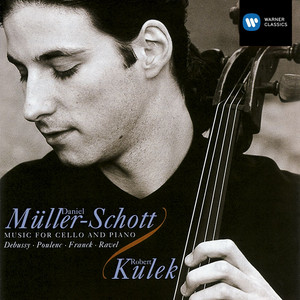 | Poulenc: Cello Sonata, FP 143: II. Cavatine | Francis Poulenc, Daniel Müller-Schott/Robert Kulek | F♯ Major | 0 | 2B | 77 BPM | |
 | Glinka / Arr Balakirev : The Lark | Mikhail Glinka, Izumi Tateno | B♭ Minor | 1 | 3A | 65 BPM | |
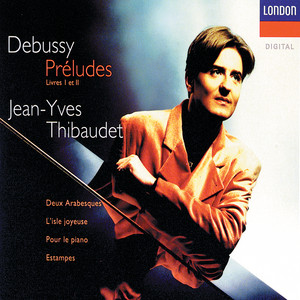 | Rêverie, L. 68: Rêverie | Claude Debussy, Jean-Yves Thibaudet | G Minor | 0 | 6A | 69 BPM | |
 | 6 Melodies, Op. 4 - 6 melodies, Op. 5: Allegretto | Fanny Mendelssohn, Beatrice Rauchs | G Minor | 1 | 6A | 107 BPM | |
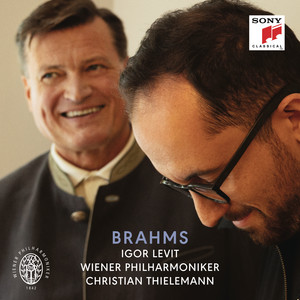 | 6 Piano Pieces, Op. 118: No. 2: Intermezzo in A Major | Johannes Brahms, Igor Levit | F♯ Minor | 0 | 11A | 78 BPM |
- ISRC
- DEF058330101
- Label
- L-M Records/RCA Records