- BPM
- 127
- Key
- D Major
- Camelot
- 10B
Légende d'Amour by Giuseppe Becce, Andrzej Kowalski, Rudolf Lutz Song Details
"Légende d'Amour" by Giuseppe Becce, Andrzej Kowalski, Rudolf Lutz had its release date on September 20, 1996. With this song being around four minutes long, at 4:16, the duration of this song is pretty average compared to other songs. This track is safe for children and doesn't appear to contain any foul language, since the "Explicit" tag was not present in this track. The song is number 5 out of 18 in Elgar: Salut D'amour by Andrzej Kowalski, Rudolf Lutz. Based on our statistics, Légende d'Amour's popularity is unknown right now. In our opinion, the overall tone is not very danceable and projects negative sounds, such as being sad, depressed, or angry.
BPM and Tempo
The tempo marking of Légende d'Amour by Giuseppe Becce, Andrzej Kowalski, Rudolf Lutz is Allegro (fast, quick, and bright), since this song has a tempo of 127 BPM. With that information, we can conclude that the song has a fast tempo. This song can go great with walking. The time signature for this track is 4/4.
Music Key
This song is in the music key of D Major. This also means that this song has a camelot key of 10B. So, the perfect camelot match for 10B would be either 10B or 11A. While, 11B can give you a low energy boost. For moderate energy boost, you would use 7B and a high energy boost can either be 12B or 5B. Though, if you want a low energy drop, you should looking for songs with either a camelot key of 10A or 9B will give you a low energy drop, 1B would be a moderate one, and 8B or 3B would be a high energy drop. Lastly, 7A allows you to change the mood.
Want to find the BPM and music key for other songs? Check out our BPM and Key Finder page!
- Popularity
- 0%
- Loudness
- -23.896 dB
- Acousticness
- 92%
- Danceability
- 21%
- Energy
- 8%
- Instrumentalness
- 2%
- Liveness
- 12%
- Loudness
- 60%
- Speechiness
- 4%
- Valence
- 4%
Recommendations
| Track | Artist | Key | Energy | Camelot | BPM | ||
|---|---|---|---|---|---|---|---|
![Moskva, Cheryomushki (Moscow, Cheryomushki) Suite, Op. 105: II. Waltz [arr. A. Cornall for orchestra] by Dmitri Shostakovich, Rundfunk-Sinfonieorchester Berlin, Steven Sloane](https://i.scdn.co/image/ab67616d00001e02c06e905a88f5d29124ed4988) | Moskva, Cheryomushki (Moscow, Cheryomushki) Suite, Op. 105: II. Waltz [arr. A. Cornall for orchestra] | Dmitri Shostakovich, Rundfunk-Sinfonieorchester Berlin, Steven Sloane | F Major | 4 | 7B | 145 BPM | |
 | Ade, mein Kind (From "Peer Gynt") | Giuseppe Becce, Luigi Bernauer, Eric Harden Dance Orchestra, Otto Dobrindt | A♭ Major | 2 | 4B | 113 BPM | |
 | Khachaturian: Suite No. 1 from Spartacus: III. Variation of Aegina - Bacchanalia | Aram Khachaturian, Alexander Lazarev, The Bolshoi Symphony Orchestra | E♭ Minor | 2 | 2A | 129 BPM | |
 | The Ballet | Charlie Chaplin, Alfred Newman | F Major | 5 | 7B | 118 BPM | |
 | This Is My Song | Charlie Chaplin, Thomas Beckmann | F Major | 1 | 7B | 174 BPM | |
 | Blue Danube | Richard Tauber | D♭ Major | 3 | 3B | 171 BPM | |
 | Childhood | Matt Milan | E Minor | 2 | 9A | 136 BPM | |
 | Wenn ich Liebe brauch geh ich zur Pauline | Marek Weber, Orchester | D♭ Minor | 5 | 12A | 121 BPM | |
 | Badian: Concerto for Piano & Orchestra, Pt. 3 (Live) | Maya Badian, Winnipeg Symphony Orchestra, Peter Tiefenbach | G Minor | 5 | 6A | 74 BPM | |
 | Oldies: Snow | Oldies Playing | D♭ Minor | 1 | 12A | 70 BPM | |
 | Essence of Zen | Rylandiaa | E Major | 3 | 12B | 175 BPM | |
 | Carmen Suite: VIII. Bolero (after G. Bizet): Changing of the Guard | Rodion Shchedrin, Ukrainian State Symphony Orchestra, Theodore Kuchar | G Major | 1 | 9B | 114 BPM | |
 | Dorfschwalben aus Österreich - Walzer, Op.164 | Josef Strauss, Willi Boskovsky, Wiener Johann Strauss Orchester, Johann Strauss II | E♭ Major | 1 | 5B | 176 BPM | |
 | Die Fledermaus: Waltz | Johann Strauss II, Ronnie Munro Scottish Variety Orchestra, Ronnie Munro, David Java Orchestra, Harold Collins Orchestra, Harry Davidson Orchestra, Harry Fryer Orchestra, London Coliseum Orchestra, Phil Green Theatreland Orchestra, Reginald Pursglove Orchestra, Richard Crean Orchestra, Ronnie Munro Waltz Orchestra, Studio Orchestra, Symphony Orchestra, Wynford Reynolds Orchestra | F Major | 2 | 7B | 182 BPM | |
 | III | Sammy Weissberg, Samuel Weissberg | C Minor | 0 | 5A | 84 BPM | |
 | Liebesfreud | Fritz Kreisler, Victor Symphony Orchestra, Charles O'Connell | B♭ Major | 2 | 6B | 83 BPM | |
 | Pirogov Suite, Op. 76a (Arr. L. Atovmyan for Orchestra): V. Finale | Dmitri Shostakovich, Bolshoi Theatre Orchestra, Maxim Shostakovich | E♭ Major | 2 | 5B | 107 BPM | |
| Gounod: Faust, CG 4, Act 2 Scene 5: Waltz | Charles Gounod, Willi Boskovsky/Wiener Symphoniker, Willi Boskovsky, Wiener Philharmoniker, Wiener Symphoniker | D Major | 2 | 10B | 92 BPM | |
 | Love Imagined Intro | Khaled Hammad | D Major | 2 | 10B | 138 BPM | |
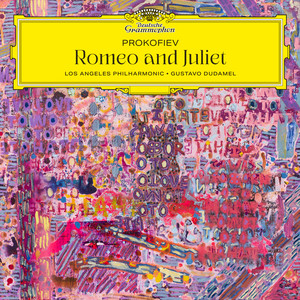 | Romeo and Juliet, Op. 64, Act I: No. 15, Mercutio | Sergei Prokofiev, Los Angeles Philharmonic, Gustavo Dudamel | C Minor | 0 | 5A | 84 BPM | |
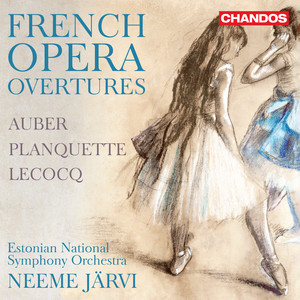 | Suite from Mam’zelle Angot, Act I: VII. Allegretto | Alexandre Lecocq, Estonian National Symphony Orchestra, Neeme Järvi | G Major | 1 | 9B | 80 BPM | |
 | Frauenherz | Walzer Orchestra | E♭ Major | 3 | 5B | 139 BPM | |
 | Gaite Parisienne (after J. Offenbach): 23. Barcarolle | Manuel Rosenthal, Monte-Carlo Philharmonic Orchestra | D Major | 0 | 10B | 113 BPM | |
 | Wedgwood Blue | Albert Ketèlbey, Royal Philharmonic Orchestra, Royal Philharmonic Chorus, Eric Rogers | B♭ Major | 2 | 6B | 128 BPM | |
 | Prends-moi matelot - Instrumental from Borsalino & Co | Claude Bolling | G Major | 2 | 9B | 86 BPM |
- ISRC
- This song does not have an ISRC.
- Label
- L-M Records/RCA Records