- BPM
- 118
- Key
- D Major
- Camelot
- 10B
Wichtige Begebenheit (An Important Event) by Robert Schumann, Jacques Loussier Trio Song Details
Robert Schumann, Jacques Loussier Trio's 'Wichtige Begebenheit (An Important Event)' had a release date set for January 1, 2011. The duration of This song is about two minutes long, specifically at 2:54. This song does not appear to have any foul language. Wichtige Begebenheit (An Important Event)'s duration is considered a little bit shorter than the average duration of a typical track. There are a total of 13 in the song's album "Schumann: Kinderszenen (Scenes From Childhood)". In this album, this song's track order is #6. Furthermore, we believe that the track originated from United States. In terms of popularity, Wichtige Begebenheit (An Important Event) is currently unknown. Although the tone can be danceable to some, this track does projects more of a negative sound rather than a postive one.
BPM and Tempo
With Wichtige Begebenheit (An Important Event) by Robert Schumann, Jacques Loussier Trio having a BPM of 118 with a half-time of 59 BPM and a double-time of 236 BPM, we would consider this track to have a Moderato (at a moderate speed) tempo marking. Because of this, we believe that the song has an overall moderate tempo. Looking at the BPM of this song, this song might go great with walking. The time signature for this track is 4/4.
Music Key
This song has a musical key of D Major. Or for those who are familiar with the camelot wheel, this song has a camelot key of 10B. So, the perfect camelot match for 10B would be either 10B or 11A. While, 11B can give you a low energy boost. For moderate energy boost, you would use 7B and a high energy boost can either be 12B or 5B. Though, if you want a low energy drop, you should looking for songs with either a camelot key of 10A or 9B will give you a low energy drop, 1B would be a moderate one, and 8B or 3B would be a high energy drop. Lastly, 7A allows you to change the mood.
Want to find the BPM and music key for other songs? Check out our BPM and Key Finder page!
- Popularity
- 0%
- Loudness
- -18.959 dB
- Acousticness
- 86%
- Danceability
- 43%
- Energy
- 21%
- Instrumentalness
- 88%
- Liveness
- 12%
- Loudness
- 68%
- Speechiness
- 4%
- Valence
- 27%
Recommendations
| Track | Artist | Key | Energy | Camelot | BPM | ||
|---|---|---|---|---|---|---|---|
 | Nocturne in D minor op.19, no.4 - arr. Tchaikovsky for cello and piano | Pyotr Ilyich Tchaikovsky, Mischa Maisky, Pavel Gililov | D Minor | 1 | 7A | 88 BPM | |
 | 7 Preludes, Op. 17: No. 3 in D-Flat Major | Alexander Scriabin, Maria Lettberg | B Major | 0 | 1B | 72 BPM | |
 | Notturno in G Minor | Fanny Mendelssohn, Heather Schmidt | G Minor | 1 | 6A | 125 BPM | |
 | Waltz in F Minor | Vladimir Horowitz, Valery Kuleshov | B♭ Minor | 0 | 3A | 75 BPM | |
 | Gluck / Arr Siloti: Orphée et Eurydice, Wq. 41, Act I: Dance of the Blessed Spirits | Christoph Willibald Gluck, Alexandre Tharaud | B♭ Minor | 0 | 3A | 77 BPM | |
 | Albumblatter, Op. 124: Schlummerlied | Dénes Várjon, Robert Schumann | D Major | 0 | 10B | 123 BPM | |
 | Young Birches, Op. 128, No. 2 | Amy Beach, Joanne Polk | F♯ Minor | 1 | 11A | 170 BPM | |
 | Oboe Quartet in F Major, K. 370: II. Adagio | Wolfgang Amadeus Mozart, Alexei Ogrintchouk, Boris Brovtsyn, Maxim Rysanov, Kristine Blaumane | D Minor | 0 | 7A | 84 BPM | |
 | Intermezzo In E Flat Major, Op. 117 No. 1 | Johannes Brahms, Kun-Woo Paik | D♭ Major | 0 | 3B | 71 BPM | |
 | Étude No. 3: Ballade | Marie Awadis | D♭ Major | 0 | 3B | 127 BPM | |
 | Canción | Manuel de Falla, Javier Perianes | C Minor | 0 | 5A | 76 BPM | |
 | The Seasons, Op. 37b: X. October (Autumn Song) | Pyotr Ilyich Tchaikovsky, Khatia Buniatishvili | D Minor | 0 | 7A | 72 BPM | |
 | Nocturne No. 5 In F Sharp, Op. 15 No. 2 | Frédéric Chopin, Maurizio Pollini | F♯ Major | 0 | 2B | 125 BPM | |
 | 8 Etudes, Op. 42: No. 5 in C-Sharp Minor. Affannato | Alexander Scriabin, Evgeny Kissin | D♭ Minor | 2 | 12A | 132 BPM | |
 | Lieder ohne Worte, Book 2, Op. 30: No. 6 in F-Sharp Minor, MWV U 110 "Venetianisches Gondellied" | Felix Mendelssohn, Denis Kozhukhin | F♯ Minor | 0 | 11A | 67 BPM | |
 | Piano Concerto No. 2 Op. 102 in F Major: II. Andante | Dmitri Shostakovich, Alexander Melnikov, Mahler Chamber Orchestra, Teodor Currentzis | C Minor | 0 | 5A | 78 BPM | |
 | Stille Musik: III. Augenblicke der Serenade | Valentin Silvestrov | C Major | 0 | 8B | 86 BPM | |
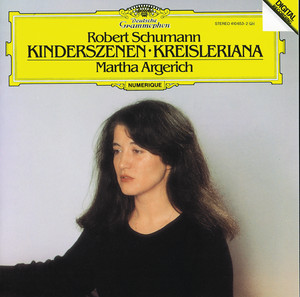 | Kinderszenen, Op. 15: X. Fast zu ernst | Robert Schumann, Martha Argerich | A♭ Minor | 0 | 1A | 67 BPM | |
 | Mahler Adagietto Variation (From Symphony No. 5 in C-Sharp Minor, Arr. for Violin and Piano by Jan-Peter Klöpfel) | Gustav Mahler, Gabriele Bagnati, Esther Abrami | F Major | 2 | 7B | 82 BPM | |
 | Etudes-Tableaux, Op. 33, No. 4 in D Minor | Hélène Grimaud | D Minor | 2 | 7A | 94 BPM | |
 | 12 Songs, Op. 21: V. Lilacs (Transcr. Rachmaninoff for Solo Piano) | Sergei Rachmaninoff, Sergei Babayan | A♭ Major | 0 | 4B | 78 BPM | |
 | 3 Liebesträume, S. 541/3: No. 3, O lieb, so lang du lieben kannst (Arr. for Harp by Nora von Marschall) | Franz Liszt, Nora von Marschall | B♭ Major | 0 | 6B | 85 BPM | |
 | Bagatelle, Op. 1: No. 1, Allegretto | Valentin Silvestrov, Natalya Pasichnyk | E♭ Major | 0 | 5B | 72 BPM | |
 | 4 Lieder, Op. 27, TrV 170: IV. Morgen! (Arr. for Cello and Piano by Julian Riem) | Richard Strauss, Raphaela Gromes, Julian Riem | F Major | 0 | 7B | 174 BPM | |
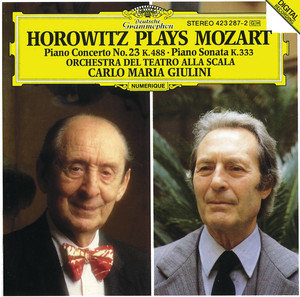 | Piano Concerto No. 23 in A Major, K. 488: II. Adagio | Wolfgang Amadeus Mozart, Vladimir Horowitz, Orchestra Del Teatro Alla Scala, Milano, Carlo Maria Giulini | F♯ Minor | 0 | 11A | 108 BPM |
- ISRC
- USTE11100006
- Label
- L-M Records/RCA Records