- BPM
- 135
- Key
- B♭ Minor
- Camelot
- 3A
The Rite of Spring: Part One: Adoration of the Earth: Spring Rounds by Igor Stravinsky, Teodor Currentzis, musicAeterna Song Details
"The Rite of Spring: Part One: Adoration of the Earth: Spring Rounds" by Igor Stravinsky, Teodor Currentzis, musicAeterna had its release date on October 9, 2015. With this song being around four minutes long, at 4:04, the duration of this song is pretty average compared to other songs. This track is safe for children and doesn't appear to contain any foul language, since the "Explicit" tag was not present in this track. There are a total of 14 in the song's album "Stravinsky: Le Sacre du Printemps". In this album, this song's track order is #4. Furthermore, we believe that the track originated from United States. Based on our statistics, The Rite of Spring: Part One: Adoration of the Earth: Spring Rounds's popularity is below average in popularity right now. In our opinion, the overall tone is not very danceable and projects negative sounds, such as being sad, depressed, or angry.
BPM and Tempo
With The Rite of Spring: Part One: Adoration of the Earth: Spring Rounds by Igor Stravinsky, Teodor Currentzis, musicAeterna having a BPM of 135 with a half-time of 68 BPM and a double-time of 270 BPM, we would consider this track to have a Allegro (fast, quick, and bright) tempo marking. Because of this, we believe that the song has an overall fast tempo. Looking at the BPM of this song, this song might go great with walking. The time signature for this track is 5/4.
Music Key
This song is in the music key of B♭ Minor. Which also means that the camelot key for this song is 3A. So, the perfect camelot match for 3A would be either 3A or 2B. While, a low energy boost can consist of either 3B or 4A. For moderate energy boost, you would use 12A and a high energy boost can either be 5A or 10A. However, if you are looking for a low energy drop, finding a song with a camelot key of 2A would be a great choice. Where 6A would give you a moderate drop, and 1A or 8A would be a high energy drop. Lastly, 6B allows you to change the mood.
Want to find the BPM and music key for other songs? Check out our BPM and Key Finder page!
- Popularity
- 26%
- Loudness
- -19.826 dB
- Acousticness
- 94%
- Danceability
- 20%
- Energy
- 3%
- Instrumentalness
- 87%
- Liveness
- 11%
- Loudness
- 67%
- Speechiness
- 4%
- Valence
- 6%
Recommendations
| Track | Artist | Key | Energy | Camelot | BPM | ||
|---|---|---|---|---|---|---|---|
 | Nocturnes, L. 91: I. Nuages (Arr. by Denis Herlin) | Claude Debussy, Denis Herlin, Hallé, Sir Mark Elder | A♭ Major | 3 | 4B | 113 BPM | |
 | Pelléas et Mélisande, CD 93, Suite (Arr. Leinsdorf): I. Act I. Opening - Interlude 1 - Interlude 2 | Claude Debussy, Berliner Philharmoniker, Claudio Abbado | D Minor | 0 | 7A | 141 BPM | |
 | Peer Gynt Suite No. 2, Op. 55: I. The Abduction of the Bride. Ingrid's Lament | Edvard Grieg, Berliner Philharmoniker, Herbert von Karajan | G Minor | 1 | 6A | 135 BPM | |
 | Must the Devil Have All the Good Tunes?: III. Piú mosso: Obsession / Swing | John Adams, Yuja Wang, Los Angeles Philharmonic, Gustavo Dudamel | C Minor | 5 | 5A | 125 BPM | |
 | Elgar: Cello Concerto in E Minor, Op. 85: III. Adagio | Edward Elgar, Jacqueline du Pré, London Symphony Orchestra, Sir John Barbirolli | B♭ Major | 1 | 6B | 93 BPM | |
 | The Firebird, K10, 1919 Suite: I. Introduction | Igor Stravinsky, Orchestre de l'Opéra National de Paris, Myung-Whun Chung | G Minor | 0 | 6A | 85 BPM | |
 | Aleko: Intermezzo | Sergei Rachmaninoff, Berliner Philharmoniker, Lorin Maazel | B♭ Major | 0 | 6B | 90 BPM | |
 | The Planets, Op. 32: II. Venus, the Bringer of Peace | Gustav Holst, Berliner Philharmoniker, Herbert von Karajan | F Minor | 0 | 4A | 85 BPM | |
 | Sibelius: Symphony No. 5 in E-Flat Major, Op. 82: III. Allegro molto | Jean Sibelius, Sakari Oramo, City Of Birmingham Symphony Orchestra | A♭ Major | 1 | 4B | 149 BPM | |
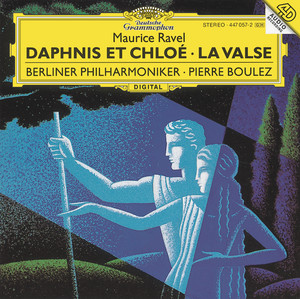 | Daphnis et Chloé, M. 57 / Troisième partie: Lever du jour | Maurice Ravel, Berliner Philharmoniker, Pierre Boulez, Rundfunkchor Berlin | E Minor | 0 | 9A | 79 BPM | |
 | 3 Pieces in Old Style: No. 1, Aria | Krzysztof Penderecki, Warsaw Philharmonic Chamber Orchestra, Antoni Wit | B♭ Major | 0 | 6B | 75 BPM | |
| Daphnis et Chloé, M. 57, Pt. 3: XIa-b. Pantomime. Daphnis et Chloé miment l'aventure de Pan et de Syrinx | Maurice Ravel, Berliner Philharmoniker, Pierre Boulez | F♯ Minor | 0 | 11A | 169 BPM | |
 | Romeo and Juliet Suite No. 2, Op. 64ter: I. Montagues and Capulets (Live) | Sergei Prokofiev, Riccardo Muti, Chicago Symphony Orchestra | A Minor | 1 | 8A | 93 BPM | |
 | Symphony No. 5 In C Sharp Minor: 4. Adagietto (Sehr langsam) | Gustav Mahler, Gyeonggi Philharmonic Orchestra, Shi-Yeon Sung | F Major | 0 | 7B | 82 BPM | |
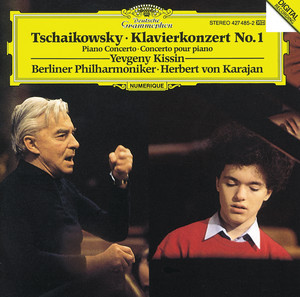 | 8 Etudes, Op. 42: No. 5 in C-Sharp Minor. Affannato | Alexander Scriabin, Evgeny Kissin | D♭ Minor | 2 | 12A | 132 BPM | |
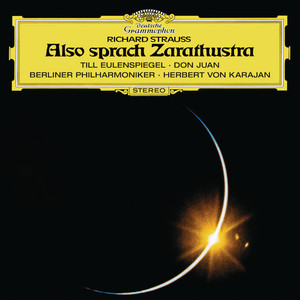 | Salome, Op. 54: Dance of the Seven Veils | Richard Strauss, Berliner Philharmoniker, Herbert von Karajan | F Major | 1 | 7B | 67 BPM | |
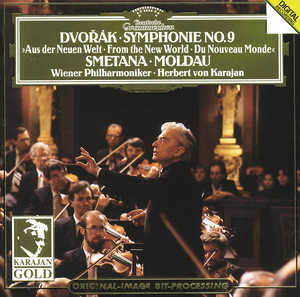 | Symphony No. 9 in E Minor, Op. 95, B. 178 "From the New World": I. Adagio – Allegro molto | Antonín Dvořák, Wiener Philharmoniker, Herbert von Karajan | E Minor | 1 | 9A | 115 BPM | |
 | Tristan & Isolde: Isoldes Liebesverlangen | Richard Wagner, Edo de Waart | B♭ Major | 1 | 6B | 77 BPM | |
| The Planets, Op. 32: 5. Saturn, the Bringer of Old Age | Gustav Holst, Berliner Philharmoniker, Herbert von Karajan | C Major | 0 | 8B | 106 BPM | |
 | Mavra (arr. S. Dushkin): Mavra: Russian Maiden's Song, "Parasha's Aria" (arr. S. Dushkin for violin and piano) | Samuel Dushkin, Igor Stravinsky, Livia Sohn, Benjamin Loeb | G Minor | 0 | 6A | 140 BPM | |
 | 9 Preludes, Op. 1: No. 7 in C Minor. Moderato | Karol Szymanowski, Krystian Zimerman | D♭ Major | 0 | 3B | 67 BPM | |
 | Piano Trio No. 2 in E flat, Op. 100 D.929: 2. Andante con moto | Franz Schubert, Beaux Arts Trio | C Minor | 0 | 5A | 84 BPM | |
 | Movement I | Philip Glass, Dennis Russell Davies, Bruckner Orchester Linz | F Major | 1 | 7B | 120 BPM | |
 | La Mer, L.109: 3. Dialogue Of The Wind And The Sea | Claude Debussy, Orchestre Symphonique de Montréal, Charles Dutoit | D♭ Major | 2 | 3B | 83 BPM | |
 | Ligeti: Requiem: II. Kyrie. Molto espressivo | György Ligeti, Jonathan Nott, London Voices, Berliner Philharmoniker | G Minor | 2 | 6A | 67 BPM |
- ISRC
- USSM11504522
- Label
- L-M Records/RCA Records