- BPM
- 113
- Key
- C Major
- Camelot
- 8B
Labyrinths: II. Moderato by Alfred Schnittke, Malmö Symphony Orchestra Chamber Ensemble, Lev Markiz Song Details
"Labyrinths: II. Moderato" by Alfred Schnittke, Malmö Symphony Orchestra Chamber Ensemble, Lev Markiz had its release date on March 31, 1992. With this song being around four minutes long, at 3:37, the duration of this song is pretty average compared to other songs. This track is safe for children and doesn't appear to contain any foul language, since the "Explicit" tag was not present in this track. There are a total of 13 in the song's album "Schnittke: Gogol Suite / Labyrinths". In this album, this song's track order is #10. Furthermore, we believe that the track originated from Sweden. In terms of popularity, Labyrinths: II. Moderato is currently unknown. In our opinion, the overall tone is not very danceable and projects negative sounds, such as being sad, depressed, or angry.
BPM and Tempo
With Labyrinths: II. Moderato by Alfred Schnittke, Malmö Symphony Orchestra Chamber Ensemble, Lev Markiz having a BPM of 113 with a half-time of 56 BPM and a double-time of 226 BPM, we would consider this track to have a Moderato (at a moderate speed) tempo marking. Because of this, we believe that the song has an overall moderate tempo. The time signature for this track is 4/4.
Music Key
C Major is the music key of this track. Or for those who are familiar with the camelot wheel, this song has a camelot key of 8B. So, the perfect camelot match for 8B would be either 8B or 9A. While, 9B can give you a low energy boost. For moderate energy boost, you would use 5B and a high energy boost can either be 10B or 3B. Though, if you want a low energy drop, you should looking for songs with either a camelot key of 8A or 7B will give you a low energy drop, 11B would be a moderate one, and 6B or 1B would be a high energy drop. Lastly, 5A allows you to change the mood.
Want to find the BPM and music key for other songs? Check out our BPM and Key Finder page!
- Popularity
- 0%
- Loudness
- -18.589 dB
- Acousticness
- 73%
- Danceability
- 19%
- Energy
- 3%
- Instrumentalness
- 72%
- Liveness
- 9%
- Loudness
- 69%
- Speechiness
- 5%
- Valence
- 3%
Recommendations
| Track | Artist | Key | Energy | Camelot | BPM | ||
|---|---|---|---|---|---|---|---|
 | Schnittke: String Quartet No. 3: I. Andante | Alfred Schnittke, Borodin Quartet | G Major | 1 | 9B | 85 BPM | |
 | Suite in the Old Style: II. Ballet - Arr. for Flugelhorn and Piano by Sergei Nakariakov and Maria Meerovitch | Alfred Schnittke, Sergei Nakariakov, Maria Meerovitch | D Major | 2 | 10B | 116 BPM | |
 | I. Prélude. Andantino | César Franck, Jean-Pierre Armengaud | D Major | 0 | 10B | 66 BPM | |
 | Kleine Dreigroschenmusik: VI. Tango-Ballade | Kurt Weill, Munich Radio Orchestra, Gerd Müller-Lorenz | D♭ Minor | 6 | 12A | 122 BPM | |
 | Poulenc: Concerto for Two Pianos in D Minor, FP 61: I. Allegro ma non troppo | Francis Poulenc, James Conlon, Rotterdam Philharmonic Orchestra | E♭ Major | 1 | 5B | 103 BPM | |
 | La separation, Nocturne in F Minor | Mikhail Glinka, Victor Ryabchikov | F Minor | 1 | 4A | 73 BPM | |
 | Deux Sérénades (Written for Hilary Hahn): No. 1. Sérénade pour mon amour. Moderato | Einojuhani Rautavaara, Hilary Hahn, Orchestre Philharmonique de Radio France, Mikko Franck | A Minor | 1 | 8A | 92 BPM | |
 | Marco Rosano: Requiem | Andreas Scholl | B♭ Major | 2 | 6B | 59 BPM | |
 | Concerto for Choir: IV. Complete this Work Which I Began in Hope and with Your Name | Alfred Schnittke, Elena Dof-Donskaya, Valery Polyansky, USSR Ministry of Culture Chamber Choir | G Major | 1 | 9B | 92 BPM | |
 | Sonata For Solo Cello: I. Dialogo: Adagio, rubato, cantabile | György Ligeti, Miklós Perényi | G Major | 0 | 9B | 69 BPM | |
 | Piano Concerto No. 3, Sz. 119: II. Adagio religioso | Béla Bartók, Géza Anda, Deutsches Symphonie-Orchester Berlin, Ferenc Fricsay | B Major | 2 | 1B | 150 BPM | |
 | Mille regretz | Josquin des Prez, Dudok Quartet Amsterdam | A Minor | 0 | 8A | 93 BPM | |
 | Gayane Suite No. 3: IV. Gayane's Adagio | Aram Khachaturian, St. Petersburg State Symphony Orchestra, Andre Anichanov | F Minor | 1 | 4A | 74 BPM | |
 | 7 Papillons: No. 5, — | Kaija Saariaho, Anssi Karttunen | D Major | 2 | 10B | 61 BPM | |
 | Quatuor pour la fin du Temps: VIII. Louange à l'immortalité de Jésus | Olivier Messiaen, Lucas Debargue | E Major | 0 | 12B | 76 BPM | |
 | Requiem: 1. Requiem | Alfred Schnittke, Московский государственный академический камерный хор, Timofei Golberg, Alexei Zavolokin, Sergei Sokuler, Marianna Vysotskaya, Elena Ilyina, Percussion ensemble of the Moscow Philharmonic Orchestra | F Major | 0 | 7B | 111 BPM | |
 | Symphony in C Major, Op. 46: II. Sehr langsam - | Hans Pfitzner, Seattle Symphony Orchestra, Gerard Schwarz | F Major | 0 | 7B | 87 BPM | |
 | Requiem: I. Requiem | Alfred Schnittke, Valeri Kuzmich Polyansky, Russian State Symphony Orchestra, State Symphony Capella of Russia | E Major | 0 | 12B | 79 BPM | |
![For Children, Vol. 1, Sz. 42 (Excerpts): No. 17, The Young Bride. Adagio [Original Version] by Béla Bartók, Fülöp Ránki](https://i.scdn.co/image/ab67616d00001e02aeba6c849907df66f813d3d6) | For Children, Vol. 1, Sz. 42 (Excerpts): No. 17, The Young Bride. Adagio [Original Version] | Béla Bartók, Fülöp Ránki | E Minor | 0 | 9A | 74 BPM | |
 | Piano Quartet: Nicht zu schnell | Gustav Mahler, Wiener Klaviertrio | F Major | 1 | 7B | 137 BPM | |
 | Sacred Concerto No. 15, "Priidite, vospoim lyudiye" (Come, let us praise in song, O people): II. Adagio | Dmitry Bortniansky, Ensemble Cherubim, Marika Kuzma | E♭ Major | 0 | 5B | 77 BPM | |
 | Paradis: Sicilienne 파라디스 시실리안느 | 김준영 | E♭ Major | 0 | 5B | 137 BPM | |
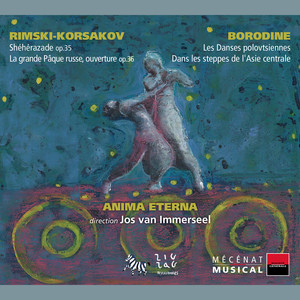 | Shéhérazade, Op. 35: I. La mer et le bateau de Simbad | Nikolai Rimsky-Korsakov, Anima Eterna, Jos Van Immerseel, Midori Seiler | E Major | 0 | 12B | 56 BPM | |
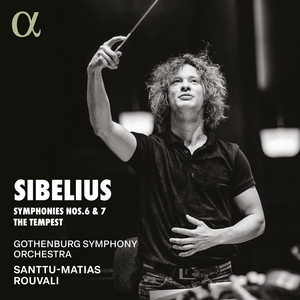 | The Tempest, Op. 109: III. Allegretto grazioso | Jean Sibelius, Santtu-Matias Rouvali, Gothenburg Symphony Orchestra | G Major | 3 | 9B | 110 BPM | |
 | Stille Musik: I. Walzer des Augenblicks | Valentin Silvestrov, Munich Chamber Orchestra | A Minor | 0 | 8A | 60 BPM |
- ISRC
- SEAEF9257100
- Label
- L-M Records/RCA Records