- BPM
- 99
- Key
- E Minor
- Camelot
- 9A
Orff: Carmina Burana, Pt. 2, In Taberna: In taberna quando sumus by Carl Orff, Sir Simon Rattle, Rundfunkchor Berlin, Berliner Philharmoniker Song Details
"Orff: Carmina Burana, Pt. 2, In Taberna: In taberna quando sumus" by Carl Orff, Sir Simon Rattle, Rundfunkchor Berlin, Berliner Philharmoniker had its release date on January 5, 2005. The duration of This song is about 3 minutes long, at 3:03. Based on our data, This song appears to be safe for all ages and is not considered explicit. This track is about the average length of a typical track. There are a total of 25 in the song's album "Orff: Carmina Burana". In this album, this song's track order is #14. Furthermore, we believe that the track originated from United Kingdom. In terms of popularity, Orff: Carmina Burana, Pt. 2, In Taberna: In taberna quando sumus is currently not that popular. In our opinion, the overall tone is not very danceable and projects negative sounds, such as being sad, depressed, or angry.
BPM and Tempo
With Orff: Carmina Burana, Pt. 2, In Taberna: In taberna quando sumus by Carl Orff, Sir Simon Rattle, Rundfunkchor Berlin, Berliner Philharmoniker having a BPM of 99 with a half-time of 50 BPM and a double-time of 198 BPM, we would consider this track to have a Andante (at a walking pace) tempo marking. Because of this, we believe that the song has an overall slow tempo. The time signature for this track is 4/4.
Music Key
E Minor is the music key of this track. Which also means that the camelot key for this song is 9A. So, the perfect camelot match for 9A would be either 9A or 8B. While, a low energy boost can consist of either 9B or 10A. For moderate energy boost, you would use 6A and a high energy boost can either be 11A or 4A. However, if you are looking for a low energy drop, finding a song with a camelot key of 8A would be a great choice. Where 12A would give you a moderate drop, and 7A or 2A would be a high energy drop. Lastly, 12B allows you to change the mood.
Want to find the BPM and music key for other songs? Check out our BPM and Key Finder page!
- Popularity
- 14%
- Loudness
- -15.433 dB
- Acousticness
- 91%
- Danceability
- 19%
- Energy
- 22%
- Instrumentalness
- 45%
- Liveness
- 70%
- Loudness
- 74%
- Speechiness
- 3%
- Valence
- 8%
Recommendations
| Track | Artist | Key | Energy | Camelot | BPM | ||
|---|---|---|---|---|---|---|---|
 | Bellini: I puritani, Act 1, Scene 1: A festa! (Coro) | Vincenzo Bellini, Riccardo Muti, Philharmonia Orchestra | B♭ Major | 3 | 6B | 88 BPM | |
 | Symphony No. 8 in E-Flat Major "Symphony of a Thousand": Er überwächst uns schon | Gustav Mahler, Izabella Kłosińska, Cardinal Stefan Wyszynski University Choir, Polish Radio Choir, Warsaw Boys Choir, Warsaw Philharmonic Choir, Warsaw Philharmonic Orchestra, Antoni Wit | A♭ Major | 2 | 4B | 85 BPM | |
 | Der Freischütz, Op. 77, J. 277: Jägerchor | Carl Maria von Weber, Radio Kamer Filharmonie, Groot Omroepkoor, Michael Schønwandt, Michael Gläser | D♭ Major | 2 | 3B | 123 BPM | |
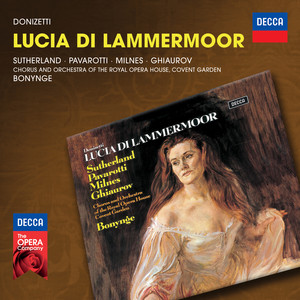 | Lucia di Lammermoor / Act 1: "La pietade in suo favore" | Gaetano Donizetti, Sherrill Milnes, Nicolai Ghiaurov, Chorus of the Royal Opera House, Covent Garden, Orchestra of the Royal Opera House, Covent Garden, Richard Bonynge | C Major | 2 | 8B | 123 BPM | |
 | La Gioconda / Act 1: Carneval! Baccanal! | Amilcare Ponchielli, Rodney Macann, Montserrat Caballé, Alfreda Hodgson, The London Opera Chorus, National Philharmonic Orchestra, Bruno Bartoletti | D♭ Major | 2 | 3B | 77 BPM | |
| Symphony No. 8 in E-Flat Major "Symphony of a Thousand": Gloria sit Patri Domin | Gustav Mahler, Barbara Kubiak, Izabella Kłosińska, Jadwiga Rappe, Ewa Marciniec, Timothy Bentch, Wojtek Drabowicz, Piotr Nowacki, Warsaw Philharmonic Choir, Polish Radio Choir, Cardinal Stefan Wyszynski University Choir, Warsaw Boys Choir, Warsaw Philharmonic Orchestra, Antoni Wit | A♭ Major | 2 | 4B | 85 BPM | |
 | Schoenberg: Gurre-Lieder, Melodram: "Seht die Sonne farbenfroh am Himmelssaum" (Chorus) | Arnold Schoenberg, Sir Simon Rattle, Berliner Philharmoniker, Karita Mattila, Thomas Moser, Anne Sofie von Otter, Thomas Quasthoff | F Major | 3 | 7B | 86 BPM | |
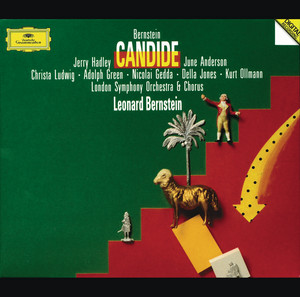 | Candide / Act I: 9. Auto-da-fé | Leonard Bernstein, Adolph Green, John Treleavan, Neil Jenkins, Jerry Hadley, Lindsay Benson, Richard Suart, Clive Bayley, London Symphony Chorus, London Symphony Orchestra | C Major | 4 | 8B | 125 BPM | |
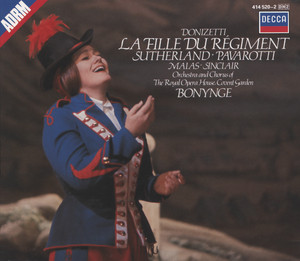 | La fille du régiment, Act I: La la la – chacun le sait, chacun le dit | Gaetano Donizetti, Dame Joan Sutherland, Luciano Pavarotti, Spiro Malas, Chorus of the Royal Opera House, Covent Garden, Orchestra of the Royal Opera House, Covent Garden, Richard Bonynge | F Major | 2 | 7B | 180 BPM | |
 | Boito: Mefistofele, Prologue: "Ave, Signor degli angeli e dei santi" (Coro) | Arrigo Boito, Julius Rudel, Ambrosian Opera Chorus, London Symphony Orchestra | E Major | 1 | 12B | 86 BPM | |
 | Brahms: Ein deutsches Requiem, Op. 45: II. Denn alles Fleisch es ist wie Gras | Johannes Brahms, Sir Simon Rattle, Berliner Philharmoniker, Rundfunkchor Berlin | B♭ Major | 1 | 6B | 71 BPM | |
 | La bohème, Act I: Abasso, abbasso l'autor! | Giacomo Puccini, Luciano Pavarotti, Rolando Panerai, Nicolai Ghiaurov, Gianni Maffeo, Berliner Philharmoniker, Herbert von Karajan | E Minor | 1 | 9A | 85 BPM | |
 | Wagner: Lohengrin, Act 2: "Des Königs Wort und Will' tu ich euch kund" (Herald, Frederick, Chorus) | Richard Wagner, Daniel Barenboim, Chor der Deutschen Staatsoper Berlin, Falk Struckmann, Roman Trekel, Staatskapelle Berlin | D Major | 3 | 10B | 93 BPM | |
| Wagner: Lohengrin, Act 3: "Weh, nun ist aller Glück dahin!" (Lohengrin, Elsa) | Richard Wagner, Daniel Barenboim, Emily Magee, Peter Seiffert, Staatskapelle Berlin | C Major | 0 | 8B | 68 BPM | |
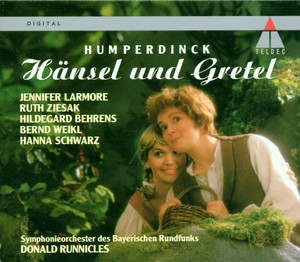 | Humperdinck : Hänsel und Gretel : Act 1 "Rallalala, rallalala" [Father] | Engelbert Humperdinck, Donald Runnicles, Bavarian Radio Symphony Orchestra | E Minor | 0 | 9A | 75 BPM | |
 | Eugene Onegin, Op. 24, TH 5 / Act III: (Scene 2) Closing Scene. "O! Kak mnye tyazhelo!" | Pyotr Ilyich Tchaikovsky, Mirella Freni, Thomas Allen, Staatskapelle Dresden, James Levine | E Minor | 2 | 9A | 78 BPM | |
 | Tannhäuser - Paris version / Act 1: "Geliebter, sag, wo weilt dein Sinn?" | Richard Wagner, Plácido Domingo, Agnes Baltsa, Philharmonia Orchestra, Giuseppe Sinopoli | A Minor | 1 | 8A | 77 BPM | |
 | Cavalleria rusticana: Part II: A casa, a casa (Men, Women, Turiddu, Lola) | Pietro Mascagni, Maria Callas, Giuseppe Di Stefano, Rolando Panerai, Anna Maria Canali, Ebe Ticozzi, Vittore Veneziani, Milan La Scala Chorus, Orchestra Del Teatro Alla Scala, Milano, Tullio Serafin | E♭ Major | 2 | 5B | 108 BPM | |
 | Wiec gdy sie rozstaniem, przed slonca switaniem (Zbigniew/Chór/Stefan/Maciej) | Stanisław Moniuszko, Jacek Parol, Jacek Kaspszyk | G Major | 3 | 9B | 125 BPM | |
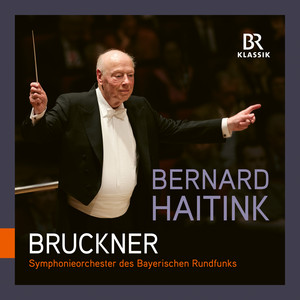 | Te Deum, Wab 45: I. Te Deum laudamus | Anton Bruckner, Bernard Haitink, Bavarian Radio Symphony Orchestra, Krassimira Stoyanova, Yvonne Naef, Christoph Strehl, Bavarian Radio Chorus | D Minor | 1 | 7A | 115 BPM | |
 | Carmina Burana: XVI. Dies, nox et omnia | Carl Orff, Dietrich Fischer-Dieskau, Orchester der Deutschen Oper Berlin, Eugen Jochum | D Major | 0 | 10B | 140 BPM | |
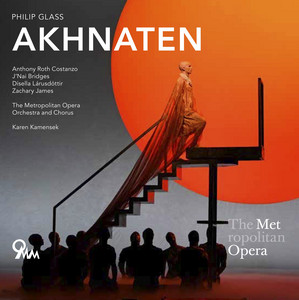 | Akhnaten, Act III Scene 2: Attack and Fall | Philip Glass, Metropolitan Opera Orchestra and Chorus, Karen Kamensek, Aaron Blake, Will Liverman, Richard Bernstein, Metropolitan Opera Orchestra | F Major | 5 | 7B | 84 BPM | |
| Candide / Act II: 24. Bon Voyage | Leonard Bernstein, Nicolai Gedda, London Symphony Orchestra, London Symphony Chorus | B♭ Major | 4 | 6B | 95 BPM | |
| Wagner: Lohengrin, Act 3: "Heil! König Heinrich!" (Chorus) | Richard Wagner, Daniel Barenboim, Chor der Deutschen Staatsoper Berlin, Staatskapelle Berlin | F Minor | 0 | 4A | 83 BPM | |
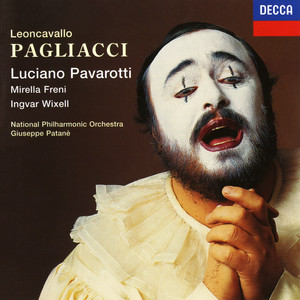 | Pagliacci / Act 2: "Pagliaccio, mio marito" | Ruggero Leoncavallo, Mirella Freni, Vincenzo Bello, National Philharmonic Orchestra, Giuseppe Patanè | C Major | 0 | 8B | 110 BPM |
- ISRC
- GBAYC0402192
- Label
- L-M Records/RCA Records