- BPM
- 78
- Key
- B Major
- Camelot
- 1B
Tannhäuser, WWV 70: Overture by Richard Wagner, Chicago Symphony Orchestra, Sir Georg Solti Song Details
"Tannhäuser, WWV 70: Overture" by Richard Wagner, Chicago Symphony Orchestra, Sir Georg Solti had its release date on January 1, 1998. This song appears to be safe for all ages as it is not explicit. This song is part of Wagner: Favourite Overtures by Richard Wagner, Chicago Symphony Orchestra, Wiener Philharmoniker, Sir Georg Solti. The song's track number on the album is #6 out of 7 tracks. Based on our data, United Kingdom was the country where this track was produced or recorded. Tannhäuser, WWV 70: Overture is below average in popularity right now. In our opinion, the overall tone is not very danceable and projects negative sounds, such as being sad, depressed, or angry.
BPM and Tempo
Since Tannhäuser, WWV 70: Overture by Richard Wagner, Chicago Symphony Orchestra, Sir Georg Solti has a tempo of 78 beats per a minute, the tempo markings of this song would be Andante (at a walking pace). With Tannhäuser, WWV 70: Overture being at 78 BPM, the half-time would be 39 BPM with a double-time of 156 BPM.In addition, we consider the tempo speed to be pretty slow for this song. The time signature for this track is 4/4.
Music Key
This song has a musical key of B Major. Or for those who are familiar with the camelot wheel, this song has a camelot key of 1B. So, the perfect camelot match for 1B would be either 1B or 2A. While, 2B can give you a low energy boost. For moderate energy boost, you would use 10B and a high energy boost can either be 3B or 8B. Though, if you want a low energy drop, you should looking for songs with either a camelot key of 1A or 12B will give you a low energy drop, 4B would be a moderate one, and 11B or 6B would be a high energy drop. Lastly, 10A allows you to change the mood.
Want to find the BPM and music key for other songs? Check out our BPM and Key Finder page!
- Popularity
- 33%
- Loudness
- -16.377 dB
- Acousticness
- 91%
- Danceability
- 9%
- Energy
- 16%
- Instrumentalness
- 84%
- Liveness
- 13%
- Loudness
- 73%
- Speechiness
- 4%
- Valence
- 6%
Recommendations
| Track | Artist | Key | Energy | Camelot | BPM | ||
|---|---|---|---|---|---|---|---|
 | Symphonie fantastique, Op. 14: II. Un bal | Hector Berlioz, Swedish Radio Symphony Orchestra, Daniel Harding | A Major | 1 | 11B | 107 BPM | |
 | Schoenberg: Verklärte Nacht, Op. 4: V. Adagio, molto tranquilo | Arnold Schoenberg, Daniel Barenboim, Chicago Symphony Orchestra, Charles Pikler, John Sharp, Joseph Golan, Li-Kuo Chang, Ruben Gonzalez, Stephen Balderston | E Minor | 1 | 9A | 125 BPM | |
 | Les Contes d'Hoffmann / Act III: Barcarolle (Arr. for Violin, Cello, Piano and String Ensemble by Aleksandar Sedlar) | Jacques Offenbach, Nemanja Radulović, Camille Thomas, Double Sens | D Major | 0 | 10B | 73 BPM | |
 | Orchestral Suite No. 3 in D major, BWV 1068: II. Air | Johann Sebastian Bach, Joshua Bell, Academy of St. Martin in the Fields | D Major | 2 | 10B | 91 BPM | |
 | Symphony No. 6 in B Minor, Op. 74 "Pathétique": III. Allegro molto vivace | Pyotr Ilyich Tchaikovsky, Teodor Currentzis, Musica Aeterna | G Major | 5 | 9B | 82 BPM | |
 | Ladies In Lavender - Main Theme - (Ladies in Lavender) | Nigel Hess, Nicola Benedetti, Bournemouth Symphony Orchestra, Kirill Karabits | D Major | 2 | 10B | 87 BPM | |
 | Mandolin Concerto in C Major, RV 425: I. Allegro | Antonio Vivaldi, London Musici, Mark Stephenson, Nigel Woodhouse | C Major | 6 | 8B | 97 BPM | |
 | Parsifal: Prelude to Act I | Richard Wagner, Polish National Radio Symphony Orchestra, Johannes Wildner | A♭ Major | 0 | 4B | 140 BPM | |
 | Symphonie Fantastique, Op.14, H 48: 5b. Songe d'une nuit du Sabbat - Dies irae | Hector Berlioz, Chicago Symphony Orchestra, Claudio Abbado | G Minor | 1 | 6A | 63 BPM | |
 | Lieder ohne Worte (Songs without Words), Book 2, Op. 30: No. 7 in E-Flat Major, Op. 30, No. 1, MWV U103 | Felix Mendelssohn, Péter Nagy | E♭ Major | 0 | 5B | 65 BPM | |
 | 4 Letzte Lieder, TrV 296: No. 4, Im Abendrot | Richard Strauss, Jessye Norman, Gewandhausorchester, Kurt Masur | B♭ Major | 1 | 6B | 78 BPM | |
 | Sibelius: Finlandia, Op. 26 | Jean Sibelius, Sir John Barbirolli, Hallé | D Minor | 2 | 7A | 171 BPM | |
 | Hungarian Dances, WoO 1: No. 1 in G Minor | Johannes Brahms, Cristian Mandeal, George Enescu Philharmonic Orchestra, Bucharest | G Minor | 2 | 6A | 73 BPM | |
 | Madama Butterfly / Act 2: "Coro a bocca chiusa" (Humming Chorus) | Giacomo Puccini, Coro dell'Accademia Nazionale Di Santa Cecilia, Orchestra dell'Accademia Nazionale di Santa Cecilia, Tullio Serafin | G Major | 2 | 9B | 139 BPM | |
 | On the Beautiful Blue Danube, Op. 314 | Johann Strauss II, Carl Michalski, Vienna Volksoper Orchestra | D Major | 0 | 10B | 94 BPM | |
| Symphony No. 6 in B Minor, Op. 74 "Pathétique": II. Allegro con grazia | Pyotr Ilyich Tchaikovsky, Teodor Currentzis, musicAeterna | D Major | 2 | 10B | 66 BPM | |
 | Wagner: Tannhäuser: Overture | Richard Wagner, Mariss Jansons, Oslo Philharmonic Orchestra | E Major | 1 | 12B | 86 BPM | |
 | Danse macabre, Op. 40 | Camille Saint-Saëns, Royal Concertgebouw Orchestra, Charles Münch | D Major | 2 | 10B | 81 BPM | |
 | Adagio - Spartacus | Aram Khachaturian, Royal Liverpool Philharmonic Orchestra, Libor Pešek | A♭ Major | 1 | 4B | 116 BPM | |
 | The Magic Flute, K. 620: Overture | Wolfgang Amadeus Mozart, Wilfried Gahmlich, Anna Gonda, Hungarian Festival Chorus, Budapest Failoni Chamber Orchestra, Michael Halasz, Hellen Kwon, Lotte Leitner, Herbert Lippert, Elizabeth Norberg-Schulz, Kurt Rydl, Georg Tichy, Julia Faulkner, Waltraud Winsauer | E♭ Major | 1 | 5B | 90 BPM | |
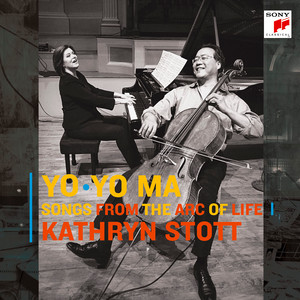 | Ave Maria | Charles Gounod, Yo-Yo Ma, Kathryn Stott | C Major | 0 | 8B | 87 BPM | |
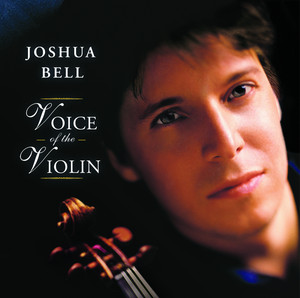 | Rusalka, Op. 114: Song to the Moon (Arranged for Violin & Orchestra by Joshua Bell) | Antonín Dvořák, Joshua Bell, Michael Stern, Orchestra of St. Luke's | F♯ Major | 1 | 2B | 137 BPM | |
 | Tristan und Isolde, Act III: Prelude | Richard Wagner, Staatskapelle Dresden, Carlos Kleiber | F Minor | 0 | 4A | 73 BPM | |
 | The Peasant and The Poet | Franz von Suppé, Stefan Rachon Orchestra, Stefan Rachon | D Major | 2 | 10B | 86 BPM | |
 | The Blue Danube Waltz, Op. 314 | Johann Strauss II, Leonard Bernstein, New York Philharmonic | D Major | 1 | 10B | 84 BPM |
- ISRC
- GBF077700152
- Label
- L-M Records/RCA Records