- BPM
- 132
- Key
- B♭ Minor
- Camelot
- 3A
A Maré Encheu by Heitor Villa-Lobos, Sergio Barcelos Song Details
Heitor Villa-Lobos, Sergio Barcelos's 'A Maré Encheu' had a release date set for January 1, 2010. With This song being less than two minutes long, at 1:54, we are fairly confident that this song is not explicit and is safe for all ages. Based on the duration of this song, this song duration is much smaller than the average song duration. The song is number 11 out of 14 in El Piano En Brasil by Sergio Barcelos. Going off of the ISRC code of this track, we detected that the origin of this track is from Spain. Based on our statistics, A Maré Encheu's popularity is not that popular right now. Although the tone can be danceable to some, this track does projects more of a negative sound rather than a postive one.
BPM and Tempo
The tempo marking of A Maré Encheu by Heitor Villa-Lobos, Sergio Barcelos is Allegro (fast, quick, and bright), since this song has a tempo of 132 BPM. With that information, we can conclude that the song has a fast tempo. This song can go great with walking. The time signature for this track is 1/4.
Music Key
This song is in the music key of B♭ Minor. Because this track belongs in the B♭ Minor key, the camelot key is 3A. So, the perfect camelot match for 3A would be either 3A or 2B. While, a low energy boost can consist of either 3B or 4A. For moderate energy boost, you would use 12A and a high energy boost can either be 5A or 10A. However, if you are looking for a low energy drop, finding a song with a camelot key of 2A would be a great choice. Where 6A would give you a moderate drop, and 1A or 8A would be a high energy drop. Lastly, 6B allows you to change the mood.
Want to find the BPM and music key for other songs? Check out our BPM and Key Finder page!
- Popularity
- 12%
- Loudness
- -17.838 dB
- Acousticness
- 100%
- Danceability
- 57%
- Energy
- 14%
- Instrumentalness
- 90%
- Liveness
- 14%
- Loudness
- 70%
- Speechiness
- 8%
- Valence
- 32%
Recommendations
| Track | Artist | Key | Energy | Camelot | BPM | ||
|---|---|---|---|---|---|---|---|
 | Quintet in A Major for Clarinet and Strings, K. 581: II. Larghetto | Endres Quartet, Jost Michaels | D Major | 0 | 10B | 74 BPM | |
 | Die Meistersinger von Nürnberg (the Mastersingers of Nuremberg), Act III Scene 5: Aufzug der Meistersinger | Richard Wagner, Sofia Symphony Orchestra, Vassil Kazandjiev | B Major | 0 | 1B | 78 BPM | |
 | Pelléas et Mélisande Suite, Op.46 (Version for Piano): No. 5, Pastorale | Jean Sibelius, Henri Sigfridsson | A♭ Major | 0 | 4B | 98 BPM | |
 | Moment Exotique | Vladimir Horowitz | F Major | 3 | 7B | 130 BPM | |
 | Le carnaval des animaux, R. 125: V. L'Eléphant | Camille Saint-Saëns, Alfons Kontarsky, Aloys Kontarsky, Wiener Philharmoniker, Karl Böhm | E Major | 0 | 12B | 60 BPM | |
 | 16 Waltzes, Op. 39: No. 15 In A Flat Major | Johannes Brahms, Idil Biret | A♭ Major | 0 | 4B | 68 BPM | |
 | Copland: Appalachian Spring: VII. Doppio movimento (Variations on a Shaker Hymn - Simple Gifts) | Aaron Copland, Aurora Orchestra, Nicholas Collon | D♭ Major | 1 | 3B | 82 BPM | |
 | Piano Concerto in A Minor, Op. 16: II. Adagio - Remastered | Edvard Grieg, Arthur Rubinstein, RCA Victor Symphony Orchestra, Alfred Wallenstein | D♭ Major | 0 | 3B | 86 BPM | |
 | Bachianas brasileiras No. 1: III. Fugue. Conversa (Conversation) | Heitor Villa-Lobos, Nashville Symphony Orchestra Cellos, Andrew Mogrelia | C Minor | 1 | 5A | 91 BPM | |
 | Prelude in C Minor, Op. 28, No. 20 | Season Of Glass | A♭ Major | 2 | 4B | 82 BPM | |
 | Gymnopédie (From the World of Eugène Atget) | Jeremy Cullen | E Minor | 0 | 9A | 76 BPM | |
| Bachianas brasileiras No. 5, W389: I. Cantilena | Heitor Villa-Lobos, Rosana Lamosa, Nashville Symphony Orchestra Cellos, Kenneth Schermerhorn | F Major | 1 | 7B | 85 BPM | |
 | Moment musical No. 3, Op. 94 | Franz Schubert, Tristan Pfaff | C Minor | 3 | 5A | 124 BPM | |
| Bachianas brasileiras No. 1: I. Introduction. Embolada | Heitor Villa-Lobos, Nashville Symphony Orchestra Cellos, Andrew Mogrelia | G Minor | 1 | 6A | 92 BPM | |
 | 24 Preludes, Op. 53: Prelude No. 23 in F Major | Nikolai Kapustin, Catherine Gordeladze | B♭ Major | 2 | 6B | 81 BPM | |
 | Bachianas Brasileiras: No. 5, 1. Aria (arr. Jenkins) | Heitor Villa-Lobos, Adiemus, Karl Jenkins, The Adiemus Singers, London Philharmonic Orchestra | F Minor | 2 | 4A | 110 BPM | |
 | 25 Études faciles et progressives, Op. 100: No. 3, La pastorale | Friedrich Burgmüller, Carl Petersson | C Minor | 2 | 5A | 98 BPM | |
 | Ojos Brujos | Leo Brouwer | A Minor | 2 | 8A | 114 BPM | |
 | Keyboard Sonata No. 50 in D Major, Hob.XVI:37: I. Allegro con brio | Joseph Haydn, Jenő Jandó | D Major | 2 | 10B | 139 BPM | |
 | Serenade - Tchaikovsky: Serenade in C major for String Orchestra, Op. 48; Valse: Moderato. Tempo di Valse | Pyotr Ilyich Tchaikovsky, NEW YORK CITY BALLET ORCHESTRA/ROBERT IRVING, CONDUCTOR | D Major | 1 | 10B | 176 BPM | |
 | 3 Preludes: II. Andante con moto e poco rubato | George Gershwin, Jon Nakamatsu | F♯ Major | 0 | 2B | 72 BPM | |
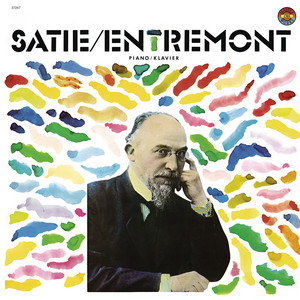 | Gymnopédie No. 2 | Erik Satie, Philippe Entremont | D Minor | 0 | 7A | 67 BPM | |
 | Couperin: Les Baricades mistérieuses | François Couperin, Aurora Orchestra, Nicholas Collon | B♭ Major | 0 | 6B | 65 BPM | |
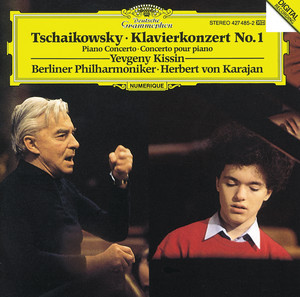 | 4 Pieces, Op. 51: No. 4, Danse languide | Alexander Scriabin, Evgeny Kissin | E♭ Major | 0 | 5B | 74 BPM | |
 | Schumann: Kinderszenen, Op. 15: I Von fremden Ländern und Menschen | Robert Schumann, Maria João Pires | G Major | 0 | 9B | 67 BPM |
- ISRC
- ESAAI0133795
- Label
- L-M Records/RCA Records