- BPM
- 81
- Key
- D Major
- Camelot
- 10B
Tchaikovsky: Swan Lake, Op. 20, Act 1: No. 5, Pas de deux for Two Merry-Makers by Pyotr Ilyich Tchaikovsky, André Previn, London Symphony Orchestra Song Details
"Tchaikovsky: Swan Lake, Op. 20, Act 1: No. 5, Pas de deux for Two Merry-Makers" by Pyotr Ilyich Tchaikovsky, André Previn, London Symphony Orchestra had its release date on January 1, 1976. This song appears to be safe for all ages as it is not explicit. There are a total of 31 in the song's album "Tchaikovsky: Swan Lake". In this album, this song's track order is #5. Furthermore, we believe that the track originated from United Kingdom. Tchaikovsky: Swan Lake, Op. 20, Act 1: No. 5, Pas de deux for Two Merry-Makers is average in popularity right now. In our opinion, the overall tone is not very danceable and projects negative sounds, such as being sad, depressed, or angry.
BPM and Tempo
With Tchaikovsky: Swan Lake, Op. 20, Act 1: No. 5, Pas de deux for Two Merry-Makers by Pyotr Ilyich Tchaikovsky, André Previn, London Symphony Orchestra having a BPM of 81 with a half-time of 40 BPM and a double-time of 162 BPM, we would consider this track to have a Andante (at a walking pace) tempo marking. Because of this, we believe that the song has an overall slow tempo. The time signature for this track is 4/4.
Music Key
This song has a musical key of D Major. Or for those who are familiar with the camelot wheel, this song has a camelot key of 10B. So, the perfect camelot match for 10B would be either 10B or 11A. While, 11B can give you a low energy boost. For moderate energy boost, you would use 7B and a high energy boost can either be 12B or 5B. Though, if you want a low energy drop, you should looking for songs with either a camelot key of 10A or 9B will give you a low energy drop, 1B would be a moderate one, and 8B or 3B would be a high energy drop. Lastly, 7A allows you to change the mood.
Want to find the BPM and music key for other songs? Check out our BPM and Key Finder page!
- Popularity
- 45%
- Loudness
- -20.051 dB
- Acousticness
- 92%
- Danceability
- 22%
- Energy
- 13%
- Instrumentalness
- 68%
- Liveness
- 19%
- Loudness
- 67%
- Speechiness
- 6%
- Valence
- 12%
Recommendations
| Track | Artist | Key | Energy | Camelot | BPM | ||
|---|---|---|---|---|---|---|---|
 | Act III: №28. Pas de deux / Aurore et Prince Desire / Adagio | Moscow New Philharmonic Orchestra, Vladimir Ponkin | C Major | 1 | 8B | 78 BPM | |
 | Caprice Russe (Russian Capriccio), Op. 102 | Anton Rubinstein, USSR State Symphony Orchestra, Yevgeny Svetlanov | E♭ Major | 3 | 5B | 108 BPM | |
 | Tchaikovsky: Swan Lake, Op. 20, Act 4: No. 26, Scene. Allegro ma non troppo | Pyotr Ilyich Tchaikovsky, André Previn, London Symphony Orchestra | B Major | 0 | 1B | 111 BPM | |
 | Piano Concerto No. 2 in C Minor, Op. 18: 3. Allegro scherzando | Sergei Rachmaninoff, Valentina Lisitsa, London Symphony Orchestra, Michael Francis | C Minor | 1 | 5A | 135 BPM | |
 | Béatrice et Bénédict, Op. 27, H 138: Ouverture | Hector Berlioz, London Symphony Orchestra, Sir Colin Davis | G Major | 0 | 9B | 101 BPM | |
 | Prélude in E minor, Op. 28, No. 4 | Frédéric Chopin, Janusz Olejniczak | E Minor | 0 | 9A | 63 BPM | |
 | Prokofiev: Cinderella, Op. 87, Act 2: No. 36, Duet of the Prince and Cinderella | Sergei Prokofiev, André Previn, London Symphony Orchestra | C Major | 1 | 8B | 90 BPM | |
 | Miroirs: III. Une barque sur l'océan | Maurice Ravel, André Laplante | D Major | 0 | 10B | 76 BPM | |
 | Fantasie-impromptu in C-Sharp Minor, Op. 66 No. 4 | Frédéric Chopin, Arthur Rubinstein | D♭ Major | 1 | 3B | 82 BPM | |
 | Masquerade: Waltz | Aram Khachaturian, London Symphony Orchestra, Yuri Ahronovitch | C Major | 3 | 8B | 95 BPM | |
 | Petite suite de concert, Op. 77: III. Un sonnet d'amour | Samuel Coleridge-Taylor, Chicago Sinfonietta, Paul Freeman | A Major | 0 | 11B | 70 BPM | |
 | The Sleeping Beauty, Op. 66, Act I: No. 6, Valse "Garland Dance" | Pyotr Ilyich Tchaikovsky, Royal Concertgebouw Orchestra, Antal Doráti | B♭ Major | 2 | 6B | 102 BPM | |
 | Piano Concerto No. 3 in D Minor, Op. 30: III. Finale. Alla breve | Sergei Rachmaninoff, Valentina Lisitsa, London Symphony Orchestra, Michael Francis | F Major | 0 | 7B | 114 BPM | |
 | Vocalise, Op. 34, No. 14 | Sergei Rachmaninoff, Berliner Philharmoniker, Lorin Maazel | E Minor | 1 | 9A | 76 BPM | |
 | Waltz from Faust | London Symphony Orchestra | E Major | 1 | 12B | 70 BPM | |
 | The Firebird (Original Version): No. 20, Lullaby | Igor Stravinsky, City Of Birmingham Symphony Orchestra, Andris Nelsons | E♭ Minor | 0 | 2A | 172 BPM | |
 | Coppelia: Act I - Mazurka | Léo Delibes, Slovak Radio Symphony Orchestra, Andrew Mogrelia | G Major | 2 | 9B | 82 BPM | |
 | Le roi de Lahore, Opera in five Acts: Entr'acte Act V & Adagio & Waltz, Ballet Act III | Jules Massenet, London Symphony Orchestra, Richard Bonynge | E♭ Major | 2 | 5B | 64 BPM | |
 | Giselle: Giselle's variation | Adolphe Adam, Michael Tilson Thomas, London Symphony Orchestra | B♭ Major | 1 | 6B | 133 BPM | |
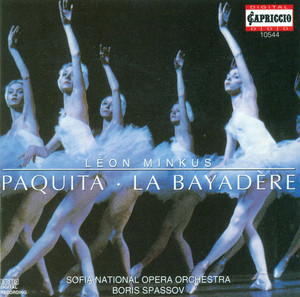 | Paquita: Variation 4: Allegro | Ludwig Minkus, Anna Takova-Baynova, Valentina Raicheva, Sofia National Opera Orchestra, Boris Spassov | A Major | 2 | 11B | 140 BPM | |
 | Don Quixote: Act III: Coda | Ludwig Minkus, Sofia National Opera Orchestra, Nayden Todorov | G Major | 3 | 9B | 75 BPM | |
| Tchaikovsky: Swan Lake, Op. 20, Act 3: No. 17, Entrance of the Guests and Waltz | Pyotr Ilyich Tchaikovsky, André Previn, London Symphony Orchestra | A♭ Major | 1 | 4B | 91 BPM | |
 | Symphony in B Minor (arr. T. Finno for orchestra): Ii. Un poco lento, cantabile | Claude Debussy, フランス国立リヨン管弦楽団, 準・メルクル | E♭ Major | 1 | 5B | 92 BPM | |
 | Giselle - Act 2: No. 10 Apparition et scène de Myrtha: c) Pas de Myrtha (Andantino) | Adolphe Adam, London Symphony Orchestra, Anatole Fistoulari | E♭ Major | 1 | 5B | 113 BPM | |
 | Voices of Spring, Op. 410 | Johann Strauss II, Leonard Bernstein | B♭ Major | 2 | 6B | 110 BPM |
- ISRC
- GBAYC0702135
- Label
- L-M Records/RCA Records