- BPM
- 100
- Key
- A Major
- Camelot
- 11B
La damnation de Faust, Op. 24: Rákóczy March "Hungarian March" by Hector Berlioz, Leonard Bernstein, New York Philharmonic Song Details
Hector Berlioz, Leonard Bernstein, New York Philharmonic's ' "La damnation de Faust, Op. 24: Rákóczy March "Hungarian March"" was released on its scheduled release date, 1961. With this song being about 5 minutes long, at This song is fairly a long song compared to the average song length. This song does not have an "Explicit" tag, making it safe for all ages. The song is number 10 out of 10 in Berlioz: Benvenuto Cellini Overure, Op. 23 & Le carnaval romain Overture, Op. 9 & Roméo et Juliet, Op. 17 & Rákóczy March by Hector Berlioz, Leonard Bernstein, New York Philharmonic. Going off of the ISRC code of this track, we detected that the origin of this track is from United States. In terms of popularity, La damnation de Faust, Op. 24: Rákóczy March "Hungarian March" is currently not that popular. The overall mood can be danceable to some, especially with it's high amount of postive energy.
BPM and Tempo
The tempo marking of La damnation de Faust, Op. 24: Rákóczy March "Hungarian March" by Hector Berlioz, Leonard Bernstein, New York Philharmonic is Andante (at a walking pace), since this song has a tempo of 100 BPM. With that information, we can conclude that the song has a slow tempo. The time signature for this track is 4/4.
Music Key
This song is in the music key of A Major. This also means that this song has a camelot key of 11B. So, the perfect camelot match for 11B would be either 11B or 12A. While, 12B can give you a low energy boost. For moderate energy boost, you would use 8B and a high energy boost can either be 1B or 6B. Though, if you want a low energy drop, you should looking for songs with either a camelot key of 11A or 10B will give you a low energy drop, 2B would be a moderate one, and 9B or 4B would be a high energy drop. Lastly, 8A allows you to change the mood.
Want to find the BPM and music key for other songs? Check out our BPM and Key Finder page!
- Popularity
- 11%
- Loudness
- -13.912 dB
- Acousticness
- 91%
- Danceability
- 49%
- Energy
- 32%
- Instrumentalness
- 91%
- Liveness
- 13%
- Loudness
- 77%
- Speechiness
- 3%
- Valence
- 62%
Recommendations
| Track | Artist | Key | Energy | Camelot | BPM | ||
|---|---|---|---|---|---|---|---|
 | Symphony No. 1 in C Minor, Op. 68: II. Andante sostenuto | Johannes Brahms, Berliner Philharmoniker, Herbert von Karajan | E Major | 1 | 12B | 85 BPM | |
 | Symphonie fantastique, Op. 14: Marche au supplice (Allegro non troppo) | Hector Berlioz, Swedish Radio Symphony Orchestra, Daniel Harding | B♭ Major | 2 | 6B | 147 BPM | |
 | Concerto for Orchestra, Sz. 116: 1. Introduzione (Andante non troppo - Allegro vivace | Béla Bartók, Berliner Philharmoniker, Herbert von Karajan | D♭ Major | 1 | 3B | 90 BPM | |
![Berlioz: 8 Scènes de Faust, Op. 1, H 33: No. 4, Écot de joyeux compagnons (Histoire d'un rat) [Brander, Chorus] by Hector Berlioz, Yutaka Sado, Choeur de Radio France, Frédéric Caton, Orchestre Philharmonique de Radio France](https://i.scdn.co/image/ab67616d00001e020da731409e7c27f7d33d326d) | Berlioz: 8 Scènes de Faust, Op. 1, H 33: No. 4, Écot de joyeux compagnons (Histoire d'un rat) [Brander, Chorus] | Hector Berlioz, Yutaka Sado, Choeur de Radio France, Frédéric Caton, Orchestre Philharmonique de Radio France | F♯ Major | 0 | 2B | 168 BPM | |
 | Symphony No. 1 in D Major: 2. Kräftig bewegt - Live | Gustav Mahler, Berliner Philharmoniker, Claudio Abbado | A Major | 1 | 11B | 96 BPM | |
 | Les Troyens, Op. 29, H 133, Act IV: No. 35b. "O pudeur! Tout conspire" | Hector Berlioz, London Symphony Orchestra, Ben Heppner, Sir Colin Davis, Michelle DeYoung | D♭ Major | 1 | 3B | 91 BPM | |
 | Violin Concerto in D Minor, Op. 47: III. Allegro, ma non tanto | Jean Sibelius, Anne-Sophie Mutter, Staatskapelle Dresden, André Previn | D Major | 2 | 10B | 112 BPM | |
 | La Damnation de Faust, Op. 24, H 111 / Pt. 2: Choeur de buveurs: Oh! qu'il fait bon | Hector Berlioz, Malcolm King, Chicago Symphony Chorus, Chicago Symphony Orchestra, Sir Georg Solti | A♭ Major | 3 | 4B | 143 BPM | |
 | Scheherazade, Op. 35: III. Andantino quasi allegretto "The Young Prince and The Young Princess" | Nikolai Rimsky-Korsakov, New York Philharmonic, Alan Gilbert, Lawrence Rock | G Major | 1 | 9B | 97 BPM | |
 | Die Walküre: Magic Fire Music | Richard Wagner, George Szell, Cleveland Orchestra | G Major | 2 | 9B | 80 BPM | |
 | Macbeth, Act III: Ballet Music | Giuseppe Verdi, Berliner Philharmoniker, Claudio Abbado | F Major | 1 | 7B | 102 BPM | |
 | Piano Concerto No. 2 in F Major, Op. 102: I. Allegro | Dmitri Shostakovich, Leonard Bernstein, New York Philharmonic | F Major | 6 | 7B | 154 BPM | |
 | Saint-Saëns: Piano Concerto No. 2 in G Minor, Op. 22: III. Presto | Camille Saint-Saëns, Bertrand Chamayou, Emmanuel Krivine, Orchestre National De France | C Minor | 4 | 5A | 110 BPM | |
 | In the Steppes of Central Asia | Alexander Borodin, Royal Philharmonic Orchestra, Vladimir Ashkenazy | A Major | 0 | 11B | 69 BPM | |
 | Hänsel und Gretel: Overture (Prelude) | Engelbert Humperdinck, Wiener Philharmoniker, Sir Georg Solti | C Major | 1 | 8B | 91 BPM | |
 | Symphonie fantastique, H. 48: II. Un bal. Valse | Hector Berlioz, Orchestre de Paris, Klaus Mäkelä | A Major | 1 | 11B | 100 BPM | |
 | Symphony No. 1 in C Minor, Op. 11, MWV N 13: I. Allegro di molto - Live | Felix Mendelssohn, Chamber Orchestra of Europe, Yannick Nézet-Séguin | C Minor | 2 | 5A | 127 BPM | |
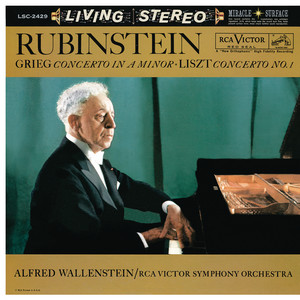 | Piano Concerto in A Minor, Op. 16: II. Adagio - Remastered | Edvard Grieg, Arthur Rubinstein, RCA Victor Symphony Orchestra, Alfred Wallenstein | D♭ Major | 0 | 3B | 86 BPM | |
 | Piano Concerto No.2 In B Flat, Op.83: 4. Allegretto grazioso - Un poco più presto | Johannes Brahms, Krystian Zimerman, Wiener Philharmoniker, Leonard Bernstein | B♭ Major | 2 | 6B | 107 BPM | |
 | Sibelius: Symphony No. 5 in E-Flat Major, Op. 82: III. Allegro molto | Jean Sibelius, Sakari Oramo, City Of Birmingham Symphony Orchestra | A♭ Major | 1 | 4B | 149 BPM | |
 | Symphony No. 3 in C Minor, Op. 78 "Organ": Allegro moderato | Camille Saint-Saëns, Eugene Ormandy, Philadelphia Orchestra | A♭ Major | 1 | 4B | 109 BPM | |
 | Symphony No. 8 in C Minor, WAB 108: II. Scherzo: Allegro moderato - Trio. Langsam | Anton Bruckner, Wiener Philharmoniker, Pierre Boulez | D♭ Major | 1 | 3B | 125 BPM | |
 | Symphony No. 7 in E Major, WAB 107 (Ed. Haas): III. Scherzo. Sehr schnell - Trio. Etwas langsamer | Anton Bruckner, Wiener Philharmoniker, Herbert von Karajan | F Major | 2 | 7B | 74 BPM | |
 | Bizet: Petite suite des "Jeux d'enfants", Op. 22, WD 39: II. Berceuse "La poupée" | Georges Bizet, Scottish National Orchestra, Alexander Gibson | F Minor | 5 | 4A | 164 BPM | |
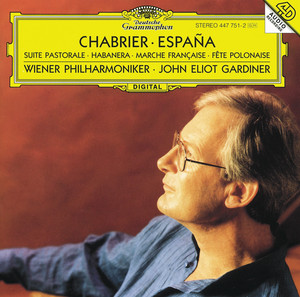 | Suite pastorale: II. Danse villageoise | Emmanuel Chabrier, Wiener Philharmoniker, John Eliot Gardiner | A Major | 1 | 11B | 126 BPM |
- ISRC
- USSM16700178
- Label
- L-M Records/RCA Records