- BPM
- 76
- Key
- A Major
- Camelot
- 11B
Sextet in D Minor, Op. 70, TH. 118 - "Souvenir de Florence" - Version For Orchestra: I. Allegro con spirito by Pyotr Ilyich Tchaikovsky, Orpheus Chamber Orchestra Song Details
Pyotr Ilyich Tchaikovsky, Orpheus Chamber Orchestra's 'Sextet in D Minor, Op. 70, TH. 118 - "Souvenir de Florence" - Version For Orchestra: I. Allegro con spirito' had a release date set for January 1, 1997. This song appears to be safe for all ages as it is not explicit. There are a total of 17 in the song's album "Tchaikovsky: Rococo Variations; Souvenir de Florence; Lensky's Aria From "Eugen Onegin"; Nocturne In D Minor (From Op. 19, No. 4); Andante Cantabile, Op. 11". In this album, this song's track order is #14. Furthermore, we believe that the track originated from Germany. Sextet in D Minor, Op. 70, TH. 118 - "Souvenir de Florence" - Version For Orchestra: I. Allegro con spirito is not that popular right now. In our opinion, the overall tone is not very danceable and projects negative sounds, such as being sad, depressed, or angry.
BPM and Tempo
With Sextet in D Minor, Op. 70, TH. 118 - "Souvenir de Florence" - Version For Orchestra: I. Allegro con spirito by Pyotr Ilyich Tchaikovsky, Orpheus Chamber Orchestra having a BPM of 76 with a half-time of 38 BPM and a double-time of 152 BPM, we would consider this track to have a Adagio (slowly with great expression) tempo marking. Because of this, we believe that the song has an overall slow tempo. The time signature for this track is 4/4.
Music Key
This song has a musical key of A Major. Or for those who are familiar with the camelot wheel, this song has a camelot key of 11B. So, the perfect camelot match for 11B would be either 11B or 12A. While, 12B can give you a low energy boost. For moderate energy boost, you would use 8B and a high energy boost can either be 1B or 6B. Though, if you want a low energy drop, you should looking for songs with either a camelot key of 11A or 10B will give you a low energy drop, 2B would be a moderate one, and 9B or 4B would be a high energy drop. Lastly, 8A allows you to change the mood.
Want to find the BPM and music key for other songs? Check out our BPM and Key Finder page!
- Popularity
- 3%
- Loudness
- -17.927 dB
- Acousticness
- 94%
- Danceability
- 24%
- Energy
- 20%
- Instrumentalness
- 83%
- Liveness
- 7%
- Loudness
- 70%
- Speechiness
- 5%
- Valence
- 20%
Recommendations
| Track | Artist | Key | Energy | Camelot | BPM | ||
|---|---|---|---|---|---|---|---|
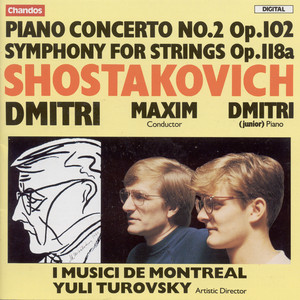 | Piano Concerto No. 2 in F Major, Op. 102: II. Andante | Dmitri Shostakovich, I Musici de Montréal, Maxim Shostakovich | C Minor | 0 | 5A | 177 BPM | |
 | Verdi: Ballet (Otello): Verdi: Ballet (Otello) | Giuseppe Verdi, Munich Radio Orchestra, Ivan Repušić | A Minor | 0 | 8A | 120 BPM | |
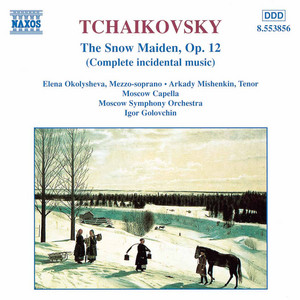 | The Snow Maiden, Op. 12: I. Introduction | Moscow Symphony Orchestra, Moscow Capella, Elena Okolysheva, Arkady Mishenkin, Pyotr Ilyich Tchaikovsky | C Major | 0 | 8B | 91 BPM | |
 | The Sleeping Beauty, Op. 66 : Valse | Pyotr Ilyich Tchaikovsky, Slovak State Philharmonic Orchestra, Kosice | B♭ Major | 2 | 6B | 100 BPM | |
 | Variations on a Rococo Theme, Op. 33, TH 57: Var: VI. Andante | Pyotr Ilyich Tchaikovsky, Jean-Guihen Queyras, BBC Symphony Orchestra, Jiří Bělohlávek | D Major | 0 | 10B | 114 BPM | |
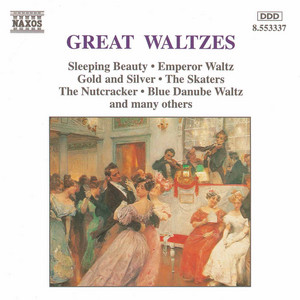 | Masquerade Suite: Maskarad (Masquerade): I. Waltz | St. Petersburg State Symphony Orchestra, Aram Khachaturian | C Major | 3 | 8B | 94 BPM | |
 | Romeo and Juliette, Op. 64 (Arr. for Viola and Piano by Vadim Borisovsky, Orchestration for Viola and String Orchestra by François Vallières): Introduction | Sergei Prokofiev, Elvira Misbakhova, I Musici de Montréal, Jean-François Rivest | D Major | 1 | 10B | 99 BPM | |
 | Sorochintsi Fair, Act I: Gopak (Hopak) | Modest Mussorgsky, Slovak Philharmonic, Kenneth Jean | G Major | 2 | 9B | 127 BPM | |
 | The Planets, Op. 32: II. Venus, the Bringer of Peace | Gustav Holst, Lorin Maazel, L'Orchestre National de France, Orchestre National De France | A♭ Major | 0 | 4B | 139 BPM | |
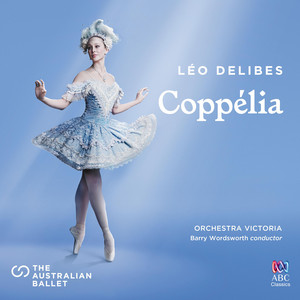 | Coppélia, Tableau 1: No. 1 Valse | Léo Delibes, Orchestra Victoria, Barry Wordsworth | E♭ Major | 2 | 5B | 142 BPM | |
 | Masquerade Suite: Mazurka | Aram Khachaturian, St. Petersburg State Symphony Orchestra, Andre Anichanov | A♭ Major | 3 | 4B | 178 BPM | |
 | Waltz No. 19 in A Minor, KK IVb (Version for Harp in A Flat Minor) | Frédéric Chopin, Magdalena Hoffmann | A♭ Minor | 1 | 1A | 127 BPM | |
 | Adagio in E Major, K. 261 | Wolfgang Amadeus Mozart, Pinchas Zukerman, Saint Paul Chamber Orchestra | E Major | 1 | 12B | 100 BPM | |
 | Carmen Suite No. 1 (Arr. E. Guiraud): IV. Séguedille | Georges Bizet, Orquestra Simfònica de Barcelona i Nacional de Catalunya, Pablo González | G Minor | 0 | 6A | 66 BPM | |
 | Pelléas et Mélisande Suite, Op. 80: III. Sicilienne. Allegretto molto moderato | Gabriel Fauré, Berliner Philharmoniker, Daniel Barenboim | E♭ Major | 0 | 5B | 56 BPM | |
 | Symphony No. 40 in G Minor, K. 550: I. Molto allegro | Wolfgang Amadeus Mozart, Mozarteum Orchestra Salzburg, Ivor Bolton | G Minor | 2 | 6A | 105 BPM | |
 | Spartacus: Adagio of Spartacus and Phrygia | Aram Khachaturian, Wiener Philharmoniker | A♭ Major | 1 | 4B | 129 BPM | |
 | Polonaise in A-Flat Major, Op. 53 | Frédéric Chopin, Evgeny Kissin | A♭ Major | 3 | 4B | 85 BPM | |
 | Skater's Waltz | Norddeutsche Philharmonie Symphony | D Major | 2 | 10B | 105 BPM | |
 | The Four Seasons, Violin Concerto No. 2 in G Minor, RV 315 "L'estate": III. Tempo impetuoso d'estate | Antonio Vivaldi, Europa Galante, Fabio Biondi | F♯ Major | 6 | 2B | 85 BPM | |
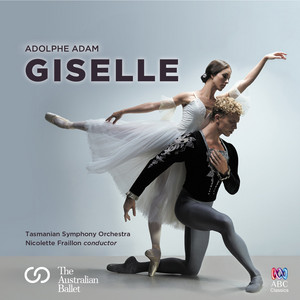 | Giselle, Act 2: No. 12 Ensemble Dance of the Wilis, Lead Wilis’ Variations, Myrtha’s Second, Variation, Lead Wilis and ensemble | Adolphe Adam, Tasmanian Symphony Orchestra, Nicolette Fraillon | A♭ Major | 1 | 4B | 129 BPM | |
 | Scènes de ballet, Op. 52: II. Marionnettes | Alexander Glazunov, Moscow Philharmonic Orchestra, Alexander Anissimov | D Major | 0 | 10B | 69 BPM | |
 | Peer Gynt Suite No. 1, Op. 46: II. Åse's Death | Edvard Grieg, Wiener Philharmoniker, Zubin Mehta | G Major | 0 | 9B | 99 BPM | |
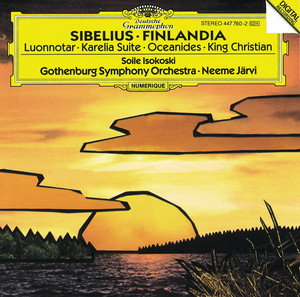 | Andante Festivo | Jean Sibelius, Gothenburg Symphony Orchestra, Neeme Järvi | G Major | 1 | 9B | 86 BPM | |
 | Khachaturian: Spartacus (Highlights from the Ballet): Adagio of Spartacus and Phrygia | Aram Khachaturian, London Symphony Orchestra | A♭ Major | 1 | 4B | 88 BPM |
- ISRC
- DEF059602991
- Label
- L-M Records/RCA Records