- BPM
- 86
- Key
- A♭ Major
- Camelot
- 4B
Pictures at an Exhibition: II. Il vecchio castello by Modest Mussorgsky, Leonard Bernstein, New York Philharmonic Song Details
"Pictures at an Exhibition: II. Il vecchio castello" by Modest Mussorgsky, Leonard Bernstein, New York Philharmonic had its release date on 1962. With this song being around four minutes long, at 4:03, the duration of this song is pretty average compared to other songs. This track is safe for children and doesn't appear to contain any foul language, since the "Explicit" tag was not present in this track. The track order of this song in Modest Mussorgsky, Leonard Bernstein's "Mussorgsky: Pictures at an Exhibition & Night on Bald Mountain" album is number 4 out of 16. Pictures at an Exhibition: II. Il vecchio castello is not that popular right now. In our opinion, the overall tone is not very danceable and projects negative sounds, such as being sad, depressed, or angry.
BPM and Tempo
We consider the tempo marking of Pictures at an Exhibition: II. Il vecchio castello by Modest Mussorgsky, Leonard Bernstein, New York Philharmonic to be Andante (at a walking pace) because the track has a tempo of 86 BPM, a half-time of 43BPM, and a double-time of 172 BPM. Based on that, the speed of the song's tempo is slow. Activities such as, yoga or pilates, can go well with this song. The time signature for this track is 4/4.
Music Key
This song is in the music key of A♭ Major. This also means that this song has a camelot key of 4B. So, the perfect camelot match for 4B would be either 4B or 5A. While, 5B can give you a low energy boost. For moderate energy boost, you would use 1B and a high energy boost can either be 6B or 11B. Though, if you want a low energy drop, you should looking for songs with either a camelot key of 4A or 3B will give you a low energy drop, 7B would be a moderate one, and 2B or 9B would be a high energy drop. Lastly, 1A allows you to change the mood.
Want to find the BPM and music key for other songs? Check out our BPM and Key Finder page!
- Popularity
- 11%
- Loudness
- -33.863 dB
- Acousticness
- 98%
- Danceability
- 15%
- Energy
- 1%
- Instrumentalness
- 89%
- Liveness
- 19%
- Loudness
- 44%
- Speechiness
- 4%
- Valence
- 5%
Recommendations
| Track | Artist | Key | Energy | Camelot | BPM | ||
|---|---|---|---|---|---|---|---|
 | Ein Heldenleben, Op. 40: II. Des Helden Widersacher | Richard Strauss, Berliner Philharmoniker, Herbert von Karajan | G Minor | 2 | 6A | 143 BPM | |
 | Scheherazade, Op. 35: IV. Allegro molto "Festival at Baghdad" | Nikolai Rimsky-Korsakov, New York Philharmonic, Alan Gilbert, Lawrence Rock | C Major | 2 | 8B | 84 BPM | |
 | Symphonie fantastique, H. 48: IV. Marche au supplice | Hector Berlioz, Chicago Symphony Orchestra, Claudio Abbado | G Minor | 2 | 6A | 166 BPM | |
 | Symphony No. 3 in F Major, Op. 90: I. Allegro con brio | Johannes Brahms, Berliner Philharmoniker, Claudio Abbado | G Minor | 1 | 6A | 151 BPM | |
 | Cello Concerto in B Minor, Op. 104, B. 191: II. Adagio ma non troppo | Antonín Dvořák, Mstislav Rostropovich, Berliner Philharmoniker, Herbert von Karajan | C Major | 1 | 8B | 70 BPM | |
 | Symphony No. 1, Op. 9: III. Andante tranquillo | Samuel Barber, Leonard Slatkin, St. Louis Symphony | B♭ Major | 3 | 6B | 93 BPM | |
 | Borodin - String Quartet No.2 in D major: Finale: Andante-Vivace | Alexander Borodin, Borodin Quartet | D Major | 3 | 10B | 125 BPM | |
 | Elégie, Op.24: Molto adagio | Gabriel Fauré, Jules Eskin, Boston Symphony Orchestra, Seiji Ozawa | A♭ Major | 0 | 4B | 107 BPM | |
 | Prelude in C Sharp Minor, Op. 3, No. 2 (Arr. Orchestra) - Live | Sergei Rachmaninoff, Czech Philharmonic, Leopold Stokowski | E♭ Major | 4 | 5B | 124 BPM | |
 | Capriccio, Op. 85, TrV 279: Mondscheinmusik | Richard Strauss, Wiener Philharmoniker, André Previn | A Major | 1 | 11B | 100 BPM | |
 | Symphony No. 2 in B Minor: I. Allegro | Alexander Borodin, Gennady Rozhdestvensky, Royal Stockholm Philharmonic Orchestra | G Major | 1 | 9B | 121 BPM | |
 | Tchaikovsky: Symphony No. 5 in E Minor, Op. 64: III. Valse. Allegro moderato | Pyotr Ilyich Tchaikovsky, Daniel Barenboim, Chicago Symphony Orchestra | A Major | 1 | 11B | 146 BPM | |
 | Rhapsody on a Theme of Paganini, Op. 43: Variation No. 18, Andante cantabile | Sergei Rachmaninoff, Leonard Bernstein, New York Philharmonic | D♭ Major | 1 | 3B | 64 BPM | |
 | Pini di Roma, P. 141: IV. I pini della Via Appia | Ottorino Respighi, New York Philharmonic, Giuseppe Sinopoli, Johannes Geffert | E♭ Major | 4 | 5B | 124 BPM | |
 | Symphony No.7 in E Major, WAB 107: 3. Scherzo (Sehr schnell) | Anton Bruckner, Concertgebouworkest, Bernard Haitink | A Minor | 1 | 8A | 78 BPM | |
 | Prince Igor (Knyaz Igor), Act II: Dance of the Polovtsian Maidens | Alexander Borodin, Angelina Shvachka, Dmytro Popov, Mykola Koval, Taras Shtonda, Kiev Chamber Choir, Ukraine National Radio Symphony Orchestra, Theodore Kuchar | F Major | 2 | 7B | 95 BPM | |
 | Ives / Orch. Brant: A Concord Symphony: III. The Alcotts | Charles Ives, Henry Brant, San Francisco Symphony, Michael Tilson Thomas | E♭ Major | 1 | 5B | 91 BPM | |
 | Boris Godunov | Modest Mussorgsky, Choir of the Bolshoi Theater, Alexandr Ognivcev, Orchestra of The Bolshoi Theater, Vladimir Atlantov, Mark Ermler, Yevgeny Nesterenko, Yelena Obratsova, Yuri Mazurok | C Major | 2 | 8B | 80 BPM | |
 | String Quartet No. 1 in D Major, Op. 11, TH 111: II. Andante cantabile (Version for String Orchestra) | Pyotr Ilyich Tchaikovsky, Leonard Bernstein, New York Philharmonic | B♭ Major | 1 | 6B | 93 BPM | |
 | Symphony No. 6 In B Minor, Op. 74, TH.30: 4. Finale: Adagio lamentoso - Andante | Pyotr Ilyich Tchaikovsky, New York Philharmonic, Leonard Bernstein | B Minor | 1 | 10A | 80 BPM | |
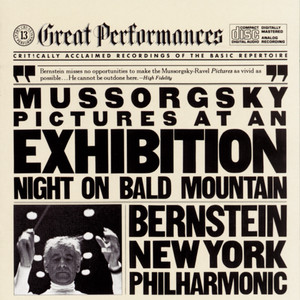 | Pictures at an Exhibition: I. Gnomus | Modest Mussorgsky, Leonard Bernstein, New York Philharmonic | A♭ Minor | 2 | 1A | 76 BPM | |
 | Prokofiev: Suite No. 1 from Romeo and Juliet, Op. 64bis: VII. Death of Tybalt | Sergei Prokofiev, Oslo Philharmonic Orchestra, Mariss Jansons | G Major | 1 | 9B | 122 BPM | |
 | The Planets, Op. 32: 6. Uranus, the Magician | Gustav Holst, Orchestre Symphonique de Montréal, Charles Dutoit | C Major | 2 | 8B | 115 BPM | |
 | Violin Concerto No. 1 in G Minor, Op. 26: II. Adagio | Max Bruch, Itzhak Perlman, Bernard Haitink, Royal Concertgebouw Orchestra | E♭ Major | 1 | 5B | 87 BPM | |
 | Symphony No. 7 in C Major, Op. 105: Vivacissimo - Adagio | Jean Sibelius, Berliner Philharmoniker, Sir Simon Rattle | C Major | 2 | 8B | 121 BPM |
- ISRC
- This song does not have an ISRC.
- Label
- L-M Records/RCA Records