- BPM
- 102
- Key
- E♭ Major
- Camelot
- 5B
Don Quixote, Op. 35: VII. Var. 4, Unfortunate Adventure with a Procession of Penitents. Etwas breiter by Richard Strauss, Pierre Fournier, Giusto Cappone, Berliner Philharmoniker, Herbert von Karajan Song Details
Richard Strauss, Pierre Fournier, Giusto Cappone, Berliner Philharmoniker, Herbert von Karajan's ' "Don Quixote, Op. 35: VII. Var. 4, Unfortunate Adventure with a Procession of Penitents. Etwas breiter" was released on its scheduled release date, January 1, 1998. With This song being less than two minutes long, at 1:55, we are fairly confident that this song is not explicit and is safe for all ages. Based on the duration of this song, this song duration is much smaller than the average song duration. There are a total of 16 in the song's album "Strauss, R.: Don Quixote; Horn Concerto No.2". In this album, this song's track order is #6. Furthermore, we believe that the track originated from Germany. In terms of popularity, Don Quixote, Op. 35: VII. Var. 4, Unfortunate Adventure with a Procession of Penitents. Etwas breiter is currently not that popular. Based on the vibe, this track doesn't seem to be that danceable, however its valence properties can make this some somewhat danceable.
BPM and Tempo
With Don Quixote, Op. 35: VII. Var. 4, Unfortunate Adventure with a Procession of Penitents. Etwas breiter by Richard Strauss, Pierre Fournier, Giusto Cappone, Berliner Philharmoniker, Herbert von Karajan having a BPM of 102 with a half-time of 51 BPM and a double-time of 204 BPM, we would consider this track to have a Andante (at a walking pace) tempo marking. Because of this, we believe that the song has an overall slow tempo. The time signature for this track is 3/4.
Music Key
This song has a musical key of E♭ Major. Or for those who are familiar with the camelot wheel, this song has a camelot key of 5B. So, the perfect camelot match for 5B would be either 5B or 6A. While, 6B can give you a low energy boost. For moderate energy boost, you would use 2B and a high energy boost can either be 7B or 12B. Though, if you want a low energy drop, you should looking for songs with either a camelot key of 5A or 4B will give you a low energy drop, 8B would be a moderate one, and 3B or 10B would be a high energy drop. Lastly, 2A allows you to change the mood.
Want to find the BPM and music key for other songs? Check out our BPM and Key Finder page!
- Popularity
- 12%
- Loudness
- -17.157 dB
- Acousticness
- 98%
- Danceability
- 36%
- Energy
- 26%
- Instrumentalness
- 78%
- Liveness
- 23%
- Loudness
- 71%
- Speechiness
- 4%
- Valence
- 40%
Recommendations
| Track | Artist | Key | Energy | Camelot | BPM | ||
|---|---|---|---|---|---|---|---|
 | Orchestervorspiel | Berliner Philharmoniker, Chor der Deutschen Oper Berlin | A Major | 2 | 11B | 119 BPM | |
 | 6 Consolations, S. 172: No. 3 in D-Flat Major (Lento, placido) | Franz Liszt, Daniel Barenboim | D♭ Major | 0 | 3B | 69 BPM | |
 | Parsifal Wagner - Good Friday Spell | Gerard Schwarz | D Major | 0 | 10B | 75 BPM | |
 | Piano Concerto in C-Sharp Minor, FP 146: I. Allegretto commodo - Live | Francis Poulenc, Yannick Nézet-Séguin, London Philharmonic Orchestra, Alexandre Tharaud | A♭ Major | 1 | 4B | 86 BPM | |
 | Songs My Mother Taught Me (from "Gypsy Songs", Op. 55, No. 4) | Antonín Dvořák, Yo-Yo Ma, Kathryn Stott | B Minor | 0 | 10A | 92 BPM | |
 | Symphonie fantastique, H. 48: IV. Marche au supplice | Hector Berlioz, Chicago Symphony Orchestra, Claudio Abbado | G Minor | 2 | 6A | 166 BPM | |
 | 2 Elegiac Melodies, Op. 34: No. 1, The Wounded Heart | Edvard Grieg, Malmö Symphony Orchestra, Bjarte Engeset | G Major | 2 | 9B | 72 BPM | |
 | Enigma Variations, Op. 36: Var. 1. L'istesso tempo "C.A.E." | Edward Elgar, BBC Symphony Orchestra, Leonard Bernstein | G Minor | 0 | 6A | 81 BPM | |
 | Orfeo ed Euridice, Wq. 30: Dance of the Blessed Spirits "Melody" (Arr. Sgambati for Piano) | Christoph Willibald Gluck, Yuja Wang | D Minor | 0 | 7A | 70 BPM | |
 | Andante Festivo | Jean Sibelius, Gothenburg Symphony Orchestra, Neeme Järvi | G Major | 1 | 9B | 86 BPM | |
 | String Quartet No. 2 in D Major: I. Allegro moderato | Alexander Borodin, Budapest Haydn Quartet | D Major | 1 | 10B | 75 BPM | |
 | Ma mère l'oye, Ballet, M. 62: XI. Apothéose. Le jardin féerique | Maurice Ravel, Berliner Philharmoniker, Pierre Boulez | C Major | 0 | 8B | 83 BPM | |
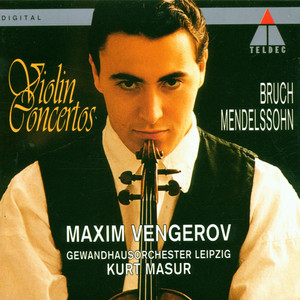 | Mendelssohn: Violin Concerto in E Minor, Op. 64, MWV O14: II. Andante | Felix Mendelssohn, Maxim Vengerov, Kurt Masur, Gewandhausorchester | C Major | 1 | 8B | 96 BPM | |
 | Manon Lescaut: Act II: Intermezzo | Giacomo Puccini, Lucienne van Deyck, Miriam Gauci, Donald George, Ludwig van Gijzegem, Kaludi Kaludov, Henk Lauwers, Marcel Rosca, Vicente Sardinero, BRT Philharmonic Chorus, Jaak Gregoor Choir, Belgian Radio and Television Philharmonic Orchestra, Alexander Rahbari | D Major | 0 | 10B | 83 BPM | |
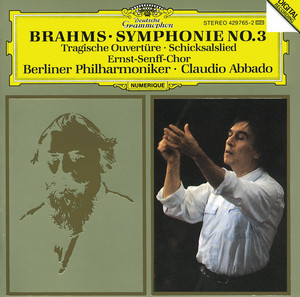 | Symphony No. 3 in F Major, Op. 90: IV. Allegro | Johannes Brahms, Berliner Philharmoniker, Claudio Abbado | C Major | 1 | 8B | 79 BPM | |
| Tragic Overture, Op. 81 | Johannes Brahms, Berliner Philharmoniker, Claudio Abbado | D Minor | 1 | 7A | 85 BPM | |
 | Vier letzte Lieder: 1. Frühling | Richard Strauss, Renée Fleming, Munich Philharmonic Orchestra, Christian Thielemann | D Major | 0 | 10B | 98 BPM | |
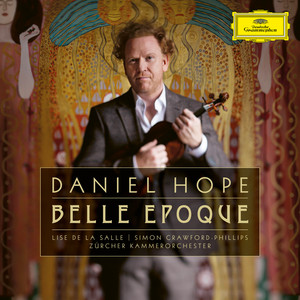 | Notturno for Strings and Harp | Arnold Schoenberg, Daniel Hope, Zürcher Kammerorchester, Jane Berthe | A♭ Major | 1 | 4B | 75 BPM | |
 | Le carnaval des animaux, R. 125: Le cygne | Camille Saint-Saëns, Mischa Maisky, Orpheus Chamber Orchestra | C Major | 0 | 8B | 83 BPM | |
 | Poulenc: Concerto for Two Pianos in D Minor, FP 61: I. Allegro ma non troppo | Francis Poulenc, James Conlon, Rotterdam Philharmonic Orchestra | E♭ Major | 1 | 5B | 103 BPM | |
 | Romanze in F Major, TrV 118: Romance for Cello and Orchestra | Richard Strauss, Alexander Rudin, RTÉ National Symphony Orchestra, Gerhard Markson | C Major | 1 | 8B | 91 BPM | |
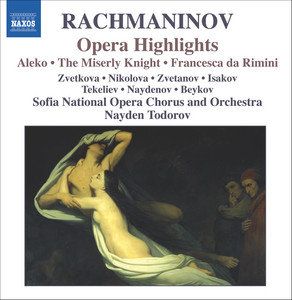 | Aleko: Introduction | Sergei Rachmaninoff, Mariana Zvetkova, Andreana Nikolova, Boiko Zvetanov, Alexander Tekeliev, Peter Naydenov, Sofia National Opera Chorus, Sofia National Opera Orchestra, Nayden Todorov | A Major | 0 | 11B | 177 BPM | |
 | Symphony No. 1 in D Major: 2. Kräftig bewegt - Live | Gustav Mahler, Berliner Philharmoniker, Claudio Abbado | A Major | 1 | 11B | 96 BPM | |
 | La Mer, L.109: 1. From Dawn Till Noon On The Sea (De l'aube à midi sur la mer) | Claude Debussy, Orchestre Symphonique de Montréal, Charles Dutoit | F♯ Major | 1 | 2B | 61 BPM | |
 | Pelléas et Mélisande Suite, Op. 80: III. Sicilienne. Allegretto molto moderato | Gabriel Fauré, Berliner Philharmoniker, Daniel Barenboim | E♭ Major | 0 | 5B | 56 BPM |
- ISRC
- DEF056500876
- Label
- L-M Records/RCA Records