- BPM
- 98
- Key
- C Major
- Camelot
- 8B
Paganini: 24 Caprices, Op. 1: No. 7 in A Minor by Niccolò Paganini, Augustin Hadelich Song Details
Niccolò Paganini, Augustin Hadelich's 'Paganini: 24 Caprices, Op. 1: No. 7 in A Minor' had a release date set for January 12, 2018. With this song being around four minutes long, at 4:25, the duration of this song is pretty average compared to other songs. This track is safe for children and doesn't appear to contain any foul language, since the "Explicit" tag was not present in this track. There are a total of 24 in the song's album "Paganini: 24 Caprices, Op. 1". In this album, this song's track order is #7. Furthermore, we believe that the track originated from United Kingdom. In terms of popularity, Paganini: 24 Caprices, Op. 1: No. 7 in A Minor is currently not that popular. Although the tone can be danceable to some, this track does projects more of a negative sound rather than a postive one.
BPM and Tempo
With Paganini: 24 Caprices, Op. 1: No. 7 in A Minor by Niccolò Paganini, Augustin Hadelich having a BPM of 98 with a half-time of 49 BPM and a double-time of 196 BPM, we would consider this track to have a Andante (at a walking pace) tempo marking. Because of this, we believe that the song has an overall slow tempo. The time signature for this track is 3/4.
Music Key
This song has a musical key of C Major. Or for those who are familiar with the camelot wheel, this song has a camelot key of 8B. So, the perfect camelot match for 8B would be either 8B or 9A. While, 9B can give you a low energy boost. For moderate energy boost, you would use 5B and a high energy boost can either be 10B or 3B. Though, if you want a low energy drop, you should looking for songs with either a camelot key of 8A or 7B will give you a low energy drop, 11B would be a moderate one, and 6B or 1B would be a high energy drop. Lastly, 5A allows you to change the mood.
Want to find the BPM and music key for other songs? Check out our BPM and Key Finder page!
- Popularity
- 9%
- Loudness
- -21.407 dB
- Acousticness
- 98%
- Danceability
- 43%
- Energy
- 12%
- Instrumentalness
- 53%
- Liveness
- 8%
- Loudness
- 64%
- Speechiness
- 5%
- Valence
- 26%
Recommendations
| Track | Artist | Key | Energy | Camelot | BPM | ||
|---|---|---|---|---|---|---|---|
 | Paganini: Cantabile in D Major, Op. 17 | Niccolò Paganini, Vilde Frang, Michail Lifits | A Major | 1 | 11B | 109 BPM | |
 | L'invitation au château, FP 138: Acte 2: Tango | Francis Poulenc, Eric Le Sage | F Minor | 0 | 4A | 97 BPM | |
 | La ronde des Lutins | Antonio Bazzini, Christian Li, Timothy Young | G Major | 5 | 9B | 98 BPM | |
 | Triakontameron: No. 11, Alt-Wien (Arr. J. Heifetz for Violin & Piano) | Leopold Godowsky, Nazrin Rashidova, Roderick Chadwick | E Minor | 1 | 9A | 86 BPM | |
 | Violin Concerto No. 2 in B Minor, Op. 7, "La campanella": III. Rondo | Niccolò Paganini, Netherlands Symphony Orchestra, Rudolf Koelman, Jan Willem de Vriend | B Minor | 2 | 10A | 105 BPM | |
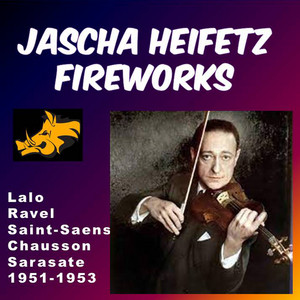 | Zigeunerweisen, Op. 20 (version for violin and orchestra): III. Allegro molto vivace | RCA Victor Symphony Orchestra & William Steinberg | A♭ Major | 1 | 4B | 88 BPM | |
 | Solfeggio, H. 220 | Carl Philipp Emanuel Bach, Rebecca Chambers | C Minor | 2 | 5A | 125 BPM | |
 | Lalo: Cello Concerto in D Minor: II. Intermezzo - Allegro presto | Édouard Lalo, André Navarra, Charles Münch, Orchestre des Concerts Lamoureux | C Minor | 1 | 5A | 75 BPM | |
 | Le grand cahier: X. L'incendie | Alexander Litvinovsky, Metamorphose String Orchestra, Pavel Lyubomudrov | B Major | 3 | 1B | 122 BPM | |
 | Csardas | Vittorio Monti, Clara Cernat, Thierry Huillet | D Major | 1 | 10B | 157 BPM | |
 | L'oiseau de feu, K. 10. Suite 1919: V. Danse infernale du roi Kastchei | Igor Stravinsky, Budapest Festival Orchestra, Iván Fischer | C Major | 5 | 8B | 130 BPM | |
 | Vier Jahreszeiten - Winter - III. Allegro | I Solisti di Zagreb, Alexander Perovsky | F Minor | 0 | 4A | 76 BPM | |
 | Concerto for 2 Violins in D Major, RV 511: II. Largo | Antonio Vivaldi, Viktoria Mullova, Giuliano Carmignola, Venice Baroque Orchestra, Andrea Marcon | E Minor | 0 | 9A | 75 BPM | |
 | 21 Hungarian Dances, WoO 1: Hungarian Dance No. 5 in F-Sharp Minor | Johannes Brahms, Seattle Symphony Orchestra, Gerard Schwarz | E Major | 1 | 12B | 102 BPM | |
 | Orientale No. 9, Op. 50 from Kaleidoscope | César Cui, Midori, Robert McDonald | G Minor | 1 | 6A | 106 BPM | |
 | Carmen Concert Fantasy, Op. 25: IV. Allegro moderato | Pablo de Sarasate, Tianwa Yang, Navarre Symphony Orchestra, Ernest Martinez Izquierdo | D Major | 1 | 10B | 111 BPM | |
 | Elegie, Op. 24 | Gabriel Fauré, Maria Kliegel, Nina Tichman | A♭ Major | 0 | 4B | 72 BPM | |
 | Cantabile, MS 109/Op. 17 (Arr. for Cello and Guitar) | Niccolò Paganini, Jan Vogler | D Major | 3 | 10B | 124 BPM | |
 | Morceaux de fantaisie, Op. 3: 5 Morceaux de fantasie, Op. 3: No. 2. Prelude in C-Sharp Minor | Sergei Rachmaninoff, Eldar Nebolsin | A Major | 1 | 11B | 91 BPM | |
 | Cello Concerto in C Minor (spuriously attrib. to Johann Christian Bach): I. Allegro molto ma maestoso | Henri Casadesus, Yuli Turovsky, I Musici de Montréal | C Minor | 1 | 5A | 80 BPM | |
 | String Quartet No. 3 in F Major, Op. 73: III. Allegro non troppo - Live at Harris Concert Hall, Aspen, 1999 | Dmitri Shostakovich, Emerson String Quartet | E♭ Major | 3 | 5B | 157 BPM | |
 | Fantasie-impromptu in C-Sharp Minor, Op. 66 No. 4 | Frédéric Chopin, Arthur Rubinstein | D♭ Major | 1 | 3B | 82 BPM | |
 | The 4 Seasons: Violin Concerto in F minor, Op. 8, No. 4, RV 297, "L'inverno" (Winter): I. Allegro non molto | Karoly Botvay | F Minor | 1 | 4A | 151 BPM | |
 | The Four Seasons, Violin Concerto No. 2 in G Minor, RV 315 "L'estate": III. Tempo impetuoso d'estate | Antonio Vivaldi, Europa Galante, Fabio Biondi | F♯ Major | 6 | 2B | 85 BPM | |
 | Violin Concerto in E Minor, Op. 64, MWV O14: I. Allegro molto appassionato | Felix Mendelssohn, Hilary Hahn, Hugh Wolff, Oslo Philharmonic Orchestra, Oslo-Filharmonien | A Minor | 2 | 8A | 63 BPM |
- ISRC
- GBAYC1702646
- Label
- L-M Records/RCA Records