- BPM
- 87
- Key
- G Major
- Camelot
- 9B
Die Winterreise, Op. 89: Rückblick - Arr. for Baritone, Choir and Piano by Franz Schubert, Gregor Meyer, Vocalconsort Leipzig, Cristian Paix, Daniel Ochoa Song Details
"Die Winterreise, Op. 89: Rückblick - Arr. for Baritone, Choir and Piano" by Franz Schubert, Gregor Meyer, Vocalconsort Leipzig, Cristian Paix, Daniel Ochoa had its release date on September 1, 2017. The duration of This song is about two minutes long, specifically at 2:17. This song does not appear to have any foul language. Die Winterreise, Op. 89: Rückblick - Arr. for Baritone, Choir and Piano's duration is considered a little bit shorter than the average duration of a typical track. The song is number 8 out of 24 in Franz Schubert: Winterreise, Op. 89 (Version for Baritone, Choir and Piano) by Gregor Meyer, Franz Schubert, Cristian Paix, Vocalconsort Leipzig. Going off of the ISRC code of this track, we detected that the origin of this track is from Germany. Die Winterreise, Op. 89: Rückblick - Arr. for Baritone, Choir and Piano is not that popular right now. In our opinion, the overall tone is not very danceable and projects negative sounds, such as being sad, depressed, or angry.
BPM and Tempo
The tempo marking of Die Winterreise, Op. 89: Rückblick - Arr. for Baritone, Choir and Piano by Franz Schubert, Gregor Meyer, Vocalconsort Leipzig, Cristian Paix, Daniel Ochoa is Andante (at a walking pace), since this song has a tempo of 87 BPM. With that information, we can conclude that the song has a slow tempo. This song can go great with yoga or pilates. The time signature for this track is 4/4.
Music Key
G Major is the music key of this track. This also means that this song has a camelot key of 9B. So, the perfect camelot match for 9B would be either 9B or 10A. While, 10B can give you a low energy boost. For moderate energy boost, you would use 6B and a high energy boost can either be 11B or 4B. Though, if you want a low energy drop, you should looking for songs with either a camelot key of 9A or 8B will give you a low energy drop, 12B would be a moderate one, and 7B or 2B would be a high energy drop. Lastly, 6A allows you to change the mood.
Want to find the BPM and music key for other songs? Check out our BPM and Key Finder page!
- Popularity
- 3%
- Loudness
- -26.868 dB
- Acousticness
- 98%
- Danceability
- 21%
- Energy
- 4%
- Instrumentalness
- 1%
- Liveness
- 6%
- Loudness
- 55%
- Speechiness
- 4%
- Valence
- 7%
Recommendations
| Track | Artist | Key | Energy | Camelot | BPM | ||
|---|---|---|---|---|---|---|---|
 | La lisonjera, Op. 50 | Cécile Chaminade, Péter Nagy | D♭ Major | 1 | 3B | 132 BPM | |
 | Les Contes d'Hoffmann / Act III: Barcarolle (Arr. for Violin, Cello, Piano and String Ensemble by Aleksandar Sedlar) | Jacques Offenbach, Nemanja Radulović, Camille Thomas, Double Sens | D Major | 0 | 10B | 73 BPM | |
 | Schubert: Piano Sonata No. 20 in A Major, D. 959: II. Andantino | Franz Schubert, Eric Lu | F♯ Minor | 0 | 11A | 66 BPM | |
 | 13 Pieces for Piano, Op. 76: Elegiaco, No. 10 | Jean Sibelius, Leif Ove Andsnes | E Major | 0 | 12B | 169 BPM | |
 | Liebestraum | Franz Liszt, Arthur Rubinstein | A♭ Major | 2 | 4B | 95 BPM | |
 | Melody from « Orfeo » | Christoph Willibald Gluck, Roberto Giordano | G Minor | 2 | 6A | 115 BPM | |
 | 10 Preludes, Op. 23: No. 5. Alla marcia in G Minor | Sergei Rachmaninoff, Nikolai Lugansky | G Minor | 2 | 6A | 106 BPM | |
 | Thaïs: Méditation | Jules Massenet, Bomsori, NFM Wrocław Philharmonic, Giancarlo Guerrero | D Major | 0 | 10B | 84 BPM | |
 | Kol Nidrei, Op. 47 | Max Bruch, Jan Vogler, Helmut Branny | D Major | 1 | 10B | 136 BPM | |
 | Les chemins de l'amour, FP. 106 | Francis Poulenc, Mischa Maisky, Daria Hovora | E Major | 1 | 12B | 67 BPM | |
 | 14 Romances, Op. 34: No. 14 Vocalise (Arr. Kocsis for Piano) | Sergei Rachmaninoff, Yuja Wang | D♭ Minor | 0 | 12A | 62 BPM | |
 | Mazurka in A Minor, Op. 17 No. 4 | Frédéric Chopin, Khatia Buniatishvili | A Minor | 0 | 8A | 173 BPM | |
 | Orfeo ed Euridice, Wq. 30 / Act II: Dance of the Blessed Spirits (Arr. by Mathieu Herzog for Cello and Strings) | Christoph Willibald Gluck, Camille Thomas, Brussels Philharmonic, Mathieu Herzog | B Minor | 1 | 10A | 87 BPM | |
 | Chopin - 6 Chants Polonais, S480/R145: No. 2. Fruhling(Wiosna, Spring) | Joseph Banowetz, Franz Liszt | G Major | 1 | 9B | 108 BPM | |
 | Schubert / Transcr. Tharaud: Rosamunde, Op. 26, D. 797: No. 6, Entr'acte No. 3 | Franz Schubert, Alexandre Tharaud | B♭ Major | 1 | 6B | 79 BPM | |
 | Franck: Prélude, fugue et variation, Op. 18, FWV 30: Prélude | César Franck, Aldo Ciccolini | B Minor | 0 | 10A | 127 BPM | |
 | Piano Concerto No. 2 in F Major, Op. 102: II. Andante | Dmitri Shostakovich, Boris Giltburg, Royal Liverpool Philharmonic Orchestra, Vasily Petrenko | C Minor | 0 | 5A | 80 BPM | |
 | From the Bohemian Forest, Op. 68, B. 133: V. Silent Woods (Arr. Niefind & Ribke For Solo Cello and Cello Ensemble) | Antonín Dvořák, Kian Soltani, Staatskapelle Berlin, Cellists | D♭ Major | 0 | 3B | 85 BPM | |
 | 7 Variations on the Air Vien qua, Dorina bella by Bianchi, Op. 7, J. 53: Andante | Carl Maria von Weber, Michael Endres | E Major | 1 | 12B | 87 BPM | |
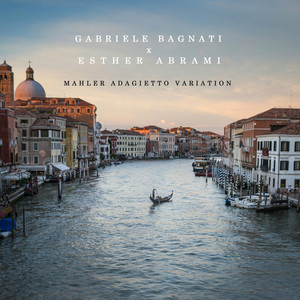 | Mahler Adagietto Variation (From Symphony No. 5 in C-Sharp Minor, Arr. for Violin and Piano by Jan-Peter Klöpfel) | Gustav Mahler, Gabriele Bagnati, Esther Abrami | F Major | 2 | 7B | 82 BPM | |
 | Clarinet Concerto in A major, K. 622: Clarinet Concerto in A major, K. 622: II. Adagio | Various Artists, David Shifrin, New York Chamber Symphony, Gerard Schwarz | C Major | 1 | 8B | 92 BPM | |
 | Piano Concerto No. 23 in A Major, K488: II. Adagio | Wolfgang Amadeus Mozart, Imogen Cooper, Royal Northern Sinfonia | F♯ Minor | 0 | 11A | 85 BPM | |
 | Piano Concerto No. 5 in E-Flat Major, Op. 73: II. Adagio un poco mosso | Ludwig van Beethoven, Berliner Philharmoniker, Sir Simon Rattle, Mitsuko Uchida | B Major | 0 | 1B | 81 BPM | |
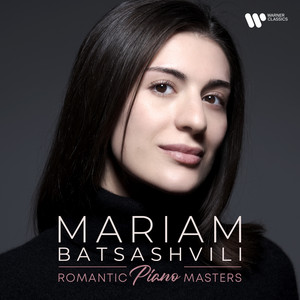 | Liszt: Lieder aus Franz Schubert's "Schwanengesang", S. 560: No. 7 Ständchen | Franz Liszt, Mariam Batsashvili | A Minor | 1 | 8A | 120 BPM | |
 | Nocturne No. 9 in E Minor, H. 46 | John Field, Alice Sara Ott | F Major | 0 | 7B | 67 BPM |
- ISRC
- DEX991792308
- Label
- L-M Records/RCA Records