- BPM
- 115
- Key
- C Minor
- Camelot
- 5A
Variations And Fugue On A Theme By Ludwig van Beethoven, Op. 86: 3. Var. II: Appassionato by Max Reger, Bamberg Symphony, Horst Stein Song Details
Max Reger, Bamberg Symphony, Horst Stein's 'Variations And Fugue On A Theme By Ludwig van Beethoven, Op. 86: 3. Var. II: Appassionato' had a release date set for June 29, 2018. With This song being less than two minutes long, at 1:22, we are fairly confident that this song is not explicit and is safe for all ages. Based on the duration of this song, this song duration is much smaller than the average song duration. The track order of this song in Max Reger, Various Artists's "Max Reger - Orchestral Edition - Variations, Suites, Romances" album is number 42 out of 56. On top of that, Germany appears to be the country where this track was created. In terms of popularity, Variations And Fugue On A Theme By Ludwig van Beethoven, Op. 86: 3. Var. II: Appassionato is currently unknown. In our opinion, the overall tone is not very danceable and projects negative sounds, such as being sad, depressed, or angry.
BPM and Tempo
We consider the tempo marking of Variations And Fugue On A Theme By Ludwig van Beethoven, Op. 86: 3. Var. II: Appassionato by Max Reger, Bamberg Symphony, Horst Stein to be Moderato (at a moderate speed) because the track has a tempo of 115 BPM, a half-time of 58BPM, and a double-time of 230 BPM. Based on that, the speed of the song's tempo is moderate. Activities such as, walking, can go well with this song. The time signature for this track is 4/4.
Music Key
This song is in the music key of C Minor. Because this track belongs in the C Minor key, the camelot key is 5A. So, the perfect camelot match for 5A would be either 5A or 4B. While, a low energy boost can consist of either 5B or 6A. For moderate energy boost, you would use 2A and a high energy boost can either be 7A or 12A. However, if you are looking for a low energy drop, finding a song with a camelot key of 4A would be a great choice. Where 8A would give you a moderate drop, and 3A or 10A would be a high energy drop. Lastly, 8B allows you to change the mood.
Want to find the BPM and music key for other songs? Check out our BPM and Key Finder page!
- Popularity
- 0%
- Loudness
- -19.38 dB
- Acousticness
- 98%
- Danceability
- 26%
- Energy
- 10%
- Instrumentalness
- 90%
- Liveness
- 29%
- Loudness
- 68%
- Speechiness
- 3%
- Valence
- 21%
Recommendations
| Track | Artist | Key | Energy | Camelot | BPM | ||
|---|---|---|---|---|---|---|---|
 | String Sextet in B-Flat Major, Op. 18: II. Andante, ma moderato | Johannes Brahms, Leipziger Streichquartett, Hartmut Rohde, Michael Sanderling | C Major | 1 | 8B | 178 BPM | |
 | Mass in E-Flat Major, Op. 109 "Cantus Missae": III. Credo | Josef Rheinberger, Kammerchor Stuttgart, Ensemble Stuttgart, Frieder Bernius | A♭ Major | 1 | 4B | 118 BPM | |
 | Liszt: 6 Polish Songs, S. 480: No. 4, Bacchanal (After Chopin, Op. 74 No. 4) | Franz Liszt, Mariam Batsashvili | C Major | 2 | 8B | 0 BPM | |
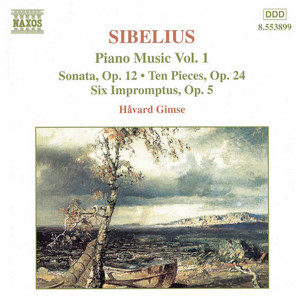 | 10 Pieces, Op. 24: 5. Valse | Jean Sibelius, Håvard Gimse | B♭ Minor | 0 | 3A | 126 BPM | |
 | Piano Quartet: Nicht zu schnell | Gustav Mahler, Wiener Klaviertrio | F Major | 1 | 7B | 137 BPM | |
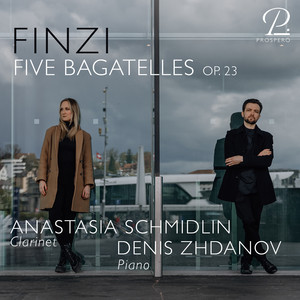 | 5 Bagatelles, Op. 23: No. 2, Romance | Gerald Finzi, Anastasia Schmidlin, Denis Zhdanov | E Minor | 1 | 9A | 73 BPM | |
 | 6 Melodies, Op. 4 - 6 melodies, Op. 5: Allegro molto quasi Presto | Fanny Mendelssohn, Beatrice Rauchs | E Minor | 1 | 9A | 114 BPM | |
 | 6 Romances russes: No. 6 in D Minor (After A. Dargomyzhsky) | Adolf von Henselt, Sergio Gallo | D♭ Major | 1 | 3B | 71 BPM | |
 | Pelléas et Mélisande, Op. 80 (Arr. C. Koechlin): V. Sicilienne. Allegretto molto moderato | Gabriel Fauré, Radio Sinfonieorchester Stuttgart des SWR, Heinz Holliger | G Minor | 0 | 6A | 91 BPM | |
 | 52 Chorale Preludes, Op. 67: No. 39, Vater unser im Himmelreich | Max Reger, Martin Welzel | A Minor | 0 | 8A | 70 BPM | |
 | Symphony in C Major, Op. 46: II. Sehr langsam - | Hans Pfitzner, Seattle Symphony Orchestra, Gerard Schwarz | F Major | 0 | 7B | 87 BPM | |
 | Variation 6: Sostenuto (quasi adagietto) | Max Reger, New Zealand Symphony Orchestra, Franz-Paul Decker | D Major | 1 | 10B | 74 BPM | |
 | Piano Concerto for the Left Hand No. 1: III. Var. 3 | Josef Labor, Oliver Triendl, Deutsche Staatsphilharmonie Rheinland-Pfalz, Eugene Tzigane | E♭ Major | 1 | 5B | 109 BPM | |
 | Soir - Matin, Op. 76: I. Soir. Andante cantabile | Mel Bonis, Trio Wanderer | E Minor | 1 | 9A | 73 BPM | |
 | Elegie I. In Memoriam: Adagio | Lodewijk Mortelmans, Brussels Philharmonic, Silveer Vandenbroeck | E Minor | 1 | 9A | 73 BPM | |
 | Trauermusik | Paul Hindemith, Kim Kashkashian, Dennis Russell Davies, Stuttgart Chamber Orchestra | E Minor | 1 | 9A | 99 BPM | |
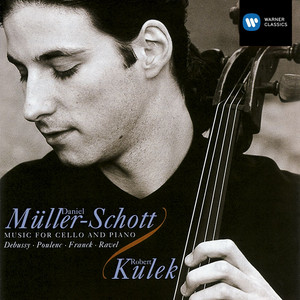 | Poulenc: Cello Sonata, FP 143: IV. Finale | Francis Poulenc, Daniel Müller-Schott/Robert Kulek | D♭ Minor | 1 | 12A | 171 BPM | |
 | Gypsy Songs, Op. 55: No. 4, Songs my mother taught Me - Arr. For Cello und Piano | Antonín Dvořák, Benedict Kloeckner, Danae Dörken | B Minor | 0 | 10A | 84 BPM | |
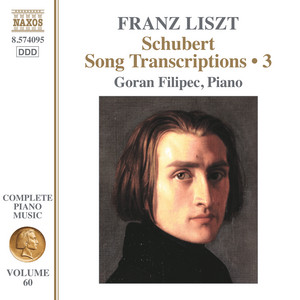 | 12 Lieder von Franz Schubert, S. 558 (Excerpts): No. 3, Du bist die Ruh | Franz Liszt, Goran Filipec | E♭ Major | 0 | 5B | 125 BPM | |
 | Webern - Langsamer Satz, M.78 | Anton Webern, Borodin Quartet | E♭ Major | 2 | 5B | 92 BPM | |
 | 3 Pieces for cello and piano: No. 2. Sans vitesse et a l'aise | Nadia Boulanger, Nicolas Altstaedt, José Gallardo | F Major | 0 | 7B | 83 BPM | |
 | Psalm 100, Op. 106: 1. "Jauchzet dem Herrn alle Welt" | Max Reger, Bamberg Symphony, Horst Stein, Chor der Bamberger Symphoniker, Fritz Walter-Lindquist | A Major | 2 | 11B | 92 BPM | |
 | Messe solennelle pour deux orgues et choeur, Op. 16: III. Sanctus | Louis Vierne, Michel Bouvard | E Major | 3 | 12B | 69 BPM | |
 | Piano Quintet in F-Sharp Minor, Op. 67: II. Adagio espressivo | Amy Beach, Ambache | D♭ Major | 0 | 3B | 60 BPM | |
 | Blumenleben, Op. 19: No. 2, Veilchen | Dora Pejačević, Natasa Veljkovic | B♭ Major | 0 | 6B | 171 BPM |
- ISRC
- DEN120504467
- Label
- L-M Records/RCA Records