- BPM
- 103
- Key
- G Major
- Camelot
- 9B
Mathis Der Maler: Vorspiel: Concert of Angels by Paul Hindemith, Rafael Kubelik, Bayerischer Rundfunk, Bavarian Radio Symphony Orchestra Song Details
"Mathis Der Maler: Vorspiel: Concert of Angels" by Paul Hindemith, Rafael Kubelik, Bayerischer Rundfunk, Bavarian Radio Symphony Orchestra had its release date on April 1, 1995. Since This song is still less than 10 minute long, it is still considered a pretty long duration song compared to the average song length. This song does not appear to be explicit due to the lack of the "E" tag. The track order of this song in Paul Hindemith, Rafael Kubelik's "Hindemith: Mathis der Maler" album is number 1 out of 61. On top of that, United Kingdom appears to be the country where this track was created. In terms of popularity, Mathis Der Maler: Vorspiel: Concert of Angels is currently not that popular. In our opinion, the overall tone is not very danceable and projects negative sounds, such as being sad, depressed, or angry.
BPM and Tempo
We consider the tempo marking of Mathis Der Maler: Vorspiel: Concert of Angels by Paul Hindemith, Rafael Kubelik, Bayerischer Rundfunk, Bavarian Radio Symphony Orchestra to be Andante (at a walking pace) because the track has a tempo of 103 BPM, a half-time of 52BPM, and a double-time of 206 BPM. Based on that, the speed of the song's tempo is slow. The time signature for this track is 4/4.
Music Key
This song has a musical key of G Major. This also means that this song has a camelot key of 9B. So, the perfect camelot match for 9B would be either 9B or 10A. While, 10B can give you a low energy boost. For moderate energy boost, you would use 6B and a high energy boost can either be 11B or 4B. Though, if you want a low energy drop, you should looking for songs with either a camelot key of 9A or 8B will give you a low energy drop, 12B would be a moderate one, and 7B or 2B would be a high energy drop. Lastly, 6A allows you to change the mood.
Want to find the BPM and music key for other songs? Check out our BPM and Key Finder page!
- Popularity
- 7%
- Loudness
- -20.631 dB
- Acousticness
- 96%
- Danceability
- 23%
- Energy
- 9%
- Instrumentalness
- 86%
- Liveness
- 37%
- Loudness
- 66%
- Speechiness
- 4%
- Valence
- 5%
Recommendations
| Track | Artist | Key | Energy | Camelot | BPM | ||
|---|---|---|---|---|---|---|---|
 | Violin Sonata No. 1, Op. 31: II. Sehr langsame Viertel | Paul Hindemith, Herwig Zack | G Minor | 1 | 6A | 81 BPM | |
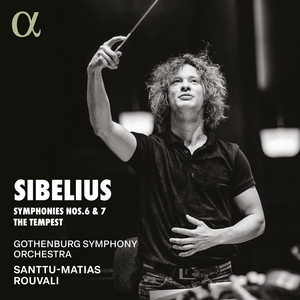 | Symphony No. 6 in D Major, Op. 104: IV. Allegro molto - Allegro assai - Doppio più lento | Jean Sibelius, Santtu-Matias Rouvali, Gothenburg Symphony Orchestra | G Major | 3 | 9B | 110 BPM | |
 | Trauermusik: IV. Choral (Arr. for Saxophone Quartet and Cello) | Paul Hindemith, Signum Saxophone Quartet, Hila Karni | B Minor | 0 | 10A | 70 BPM | |
 | Roussel: Le festin de l'araignée, Op. 17, Pt. 2: XIII. Funérailles de l'Éphémère | Albert Roussel, Jean Martinon, Orchestre National de l'O.R.T.F. | D♭ Major | 2 | 3B | 99 BPM | |
 | Piano Trio in G Minor, Op. 15, JB 1:64: III. Finale. Presto | Bedřich Smetana, Smetana Trio | A Major | 0 | 11B | 88 BPM | |
 | Gaspard de la nuit: I. Ondine (arr. M. Constant for orchestra) | Maurice Ravel, フランス国立リヨン管弦楽団, レナード・スラットキン | D♭ Major | 0 | 3B | 115 BPM | |
 | Concerto for Viola and Orchestra: I. Andante comodo | William Walton, Edward Gardner, BBC Symphony Orchestra, James Ehnes | A Minor | 1 | 8A | 103 BPM | |
 | Simple Symphony, Op. 4: III. Sentimental Sarabande | Benjamin Britten, Camerata Nordica, Terje Tonnesen | G Minor | 0 | 6A | 85 BPM | |
 | Piano Concerto in A Minor, Op. 7: III. Finale. Allegro non troppo - Allegro molto | Clara Schumann, Veronica Jochum, Bamberg Symphony, Joseph Silverstein | F Minor | 1 | 4A | 103 BPM | |
 | Children's Corner (arr. A. Caplet for orchestra): The Little Shepherd | Andre Caplet, Claude Debussy, Rheinland-Pfalz State Philharmonic Orchestra, Leif Segerstam | D Major | 0 | 10B | 78 BPM | |
 | Symphony No. 4, Op. 29 "The Inextinguishable": III. Poco adagio quasi andante | Carl Nielsen, Danish National Symphony Orchestra, Fabio Luisi | D♭ Major | 3 | 3B | 95 BPM | |
 | Concertino for Viola and Chamber Orchestra: II. Andante Espressivo | Menachem Wiesenberg, Yuval Gotlibovich, Chen Halevi, Thomas Rösner, Beethoven Philarmonie Orchestra | A♭ Minor | 1 | 1A | 80 BPM | |
 | Svanevit Suite, Op. 54: III. Tärnorna med rosor | Jean Sibelius, Finnish Radio Symphony Orchestra, Nicholas Collon | C Major | 1 | 8B | 85 BPM | |
 | String Quartet No. 4, Op. 25, "Suite": III. Adagietto (Adagio) | Alexander von Zemlinsky, Escher String Quartet | F♯ Major | 0 | 2B | 66 BPM | |
 | Suite, Op. 157b: II. Divertissement | Darius Milhaud, Jean-Marc Fessard, Frédéric Pélassy, Eliane Reyes | F♯ Major | 0 | 2B | 82 BPM | |
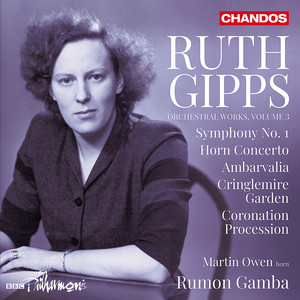 | Horn Concerto, Op. 58: II. Scherzo | Ruth Gipps, Martin Owen, BBC Philharmonic, Rumon Gamba | F Minor | 0 | 4A | 47 BPM | |
 | Danzas fantásticas, Op. 22: II. Ensueño | Joaquín Turina, Juanjo Mena, BBC Philharmonic | F Major | 1 | 7B | 128 BPM | |
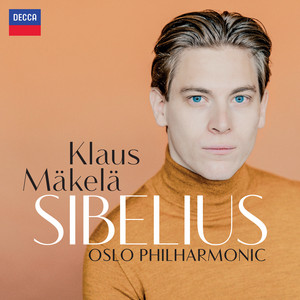 | Symphony No. 1 in E Minor, Op. 39: II. Andante (ma non troppo lento) | Jean Sibelius, Oslo Philharmonic Orchestra, Klaus Mäkelä | F♯ Minor | 1 | 11A | 66 BPM | |
 | Concerto for Oboe and Small Orchestra in D Major, Op. 144: III. Vivace - Allegro | Richard Strauss, François Leleux, Swedish Radio Symphony Orchestra, Daniel Harding | D Major | 2 | 10B | 126 BPM | |
 | Violin Concerto No. 4 in D Minor, Op. 31: III. Scherzo. Vivace - Trio. Meno mosso | Henri Vieuxtemps, Hilary Hahn, Deutsche Kammerphilharmonie Bremen, Paavo Järvi | D Major | 1 | 10B | 135 BPM | |
 | Mathis der Maler Symphony: II. Grablegung | Paul Hindemith, Berliner Philharmoniker, Claudio Abbado | A♭ Minor | 0 | 1A | 87 BPM | |
 | String Quintet in G Major, FS 5: II. Adagio | Carl Nielsen, Tim Frederiksen, Danish String Quartet | B♭ Major | 1 | 6B | 80 BPM | |
 | Schoenberg: Verklärte Nacht, Op. 4: I. Grave (1943 Version) | Arnold Schoenberg, Daniel Barenboim, Chicago Symphony Orchestra | D Minor | 1 | 7A | 174 BPM | |
 | Cello Concerto in C Minor, Op. 43: I. Adagio | Mieczysław Weinberg, Kristina Reiko Cooper, Constantine Orbelian, Kaunas City Symphony Orchestra | A♭ Major | 0 | 4B | 96 BPM | |
 | Music for Strings, Percussion & Celesta, Sz. 106: II. Allegro | Béla Bartók, Chicago Symphony Orchestra, Sir Georg Solti | D♭ Major | 2 | 3B | 142 BPM |
- ISRC
- GBAYC1000995
- Label
- L-M Records/RCA Records