- BPM
- 142
- Key
- B♭ Minor
- Camelot
- 3A
Variations on a Rococo Theme, Op. 33: Var. 2. Tempo della thema by Pyotr Ilyich Tchaikovsky, Mischa Maisky, Orpheus Chamber Orchestra Song Details
Pyotr Ilyich Tchaikovsky, Mischa Maisky, Orpheus Chamber Orchestra's 'Variations on a Rococo Theme, Op. 33: Var. 2. Tempo della thema' had a release date set for January 1, 1997. With This song being less than two minutes long, at 1:19, we are fairly confident that this song is not explicit and is safe for all ages. Based on the duration of this song, this song duration is much smaller than the average song duration. There are a total of 17 in the song's album "Tchaikovsky: Rococo Variations; Souvenir de Florence; Lensky's Aria From "Eugen Onegin"; Nocturne In D Minor (From Op. 19, No. 4); Andante Cantabile, Op. 11". In this album, this song's track order is #4. Furthermore, we believe that the track originated from Germany. Based on our statistics, Variations on a Rococo Theme, Op. 33: Var. 2. Tempo della thema's popularity is not that popular right now. In our opinion, the overall tone is not very danceable and projects negative sounds, such as being sad, depressed, or angry.
BPM and Tempo
With Variations on a Rococo Theme, Op. 33: Var. 2. Tempo della thema by Pyotr Ilyich Tchaikovsky, Mischa Maisky, Orpheus Chamber Orchestra having a BPM of 142 with a half-time of 71 BPM and a double-time of 284 BPM, we would consider this track to have a Allegro (fast, quick, and bright) tempo marking. Because of this, we believe that the song has an overall fast tempo. Looking at the BPM of this song, this song might go great with jogging or cycling. The time signature for this track is 3/4.
Music Key
This song has a musical key of B♭ Minor. Which also means that the camelot key for this song is 3A. So, the perfect camelot match for 3A would be either 3A or 2B. While, a low energy boost can consist of either 3B or 4A. For moderate energy boost, you would use 12A and a high energy boost can either be 5A or 10A. However, if you are looking for a low energy drop, finding a song with a camelot key of 2A would be a great choice. Where 6A would give you a moderate drop, and 1A or 8A would be a high energy drop. Lastly, 6B allows you to change the mood.
Want to find the BPM and music key for other songs? Check out our BPM and Key Finder page!
- Popularity
- 8%
- Loudness
- -16.435 dB
- Acousticness
- 97%
- Danceability
- 39%
- Energy
- 20%
- Instrumentalness
- 89%
- Liveness
- 10%
- Loudness
- 73%
- Speechiness
- 4%
- Valence
- 37%
Recommendations
| Track | Artist | Key | Energy | Camelot | BPM | ||
|---|---|---|---|---|---|---|---|
 | Waltz No.2 | Cihat Aşkın | G Major | 8 | 9B | 85 BPM | |
 | The Sleeping Beauty, Op. 66 : Valse | Pyotr Ilyich Tchaikovsky, Slovak State Philharmonic Orchestra, Kosice | B♭ Major | 2 | 6B | 100 BPM | |
 | Scènes de ballet, Op. 52: II. Marionnettes | Alexander Glazunov, Moscow Philharmonic Orchestra, Alexander Anissimov | D Major | 0 | 10B | 69 BPM | |
 | Serenade in B-Flat Major, K. 361 "Gran Partita": III. Adagio | Wolfgang Amadeus Mozart, Orpheus Chamber Orchestra | E♭ Major | 0 | 5B | 68 BPM | |
 | Sérénade mélancolique, Op. 26, TH 56: Serenade melancolique (Melancholy Serenade), Op. 26 | Pyotr Ilyich Tchaikovsky, Ilya Kaler, Russian Philharmonic Orchestra, Dmitry Yablonsky | B♭ Minor | 1 | 3A | 88 BPM | |
 | Souvenir de Florence, Op. 70, TH 118: I. Allegro con spirito - Live from Verbier Festival / 2013 | Pyotr Ilyich Tchaikovsky, Leonidas Kavakos, Lisa Batiashvili, Antoine Tamestit, Blythe Teh Engstroem, Gautier Capuçon, Stephan Koncz | D Major | 2 | 10B | 111 BPM | |
 | Les saisons (The Seasons), Op. 37b: XI. November: Troika | Ilya Rachkovsky | E Major | 0 | 12B | 74 BPM | |
 | Jeux D'Eau | Maurice Ravel, André Laplante | A Major | 1 | 11B | 128 BPM | |
 | Piano Sonata No. 14 in C-Sharp Minor, Op. 27 No. 2 - "Moonlight": III. Presto agitato | Ludwig van Beethoven, Daniel Barenboim | F♯ Minor | 1 | 11A | 157 BPM | |
 | Peer Gynt Suite No.1 op. 46 Morning (Allegro pastorale) | Academy of St. Martin in the Fields | E Major | 0 | 12B | 68 BPM | |
 | Overture "A Midsummer Night's Dream", Op. 21 | Felix Mendelssohn, Boston Symphony Orchestra, Seiji Ozawa | E Major | 1 | 12B | 139 BPM | |
 | Symphony No. 5: IV. Adagietto. Sehr langsam | Gustav Mahler, Berliner Philharmoniker, Claudio Abbado | F Major | 0 | 7B | 91 BPM | |
 | Scheherazade: The princess in a palanquin | Nikolai Rimsky-Korsakov, Lars Hjalmar Joakim | G Major | 1 | 9B | 166 BPM | |
 | Farandole | Georges Bizet, Semyon Bychkov, Wiener Philharmoniker | G Major | 5 | 9B | 156 BPM | |
 | Tale of Tsar Saltan, Op. 57: Flight of the Bumblebee: Flight of the Bumble-Bee | Nikolai Rimsky-Korsakov, Slovak Radio Symphony Orchestra, Anthony Bramall | D Minor | 0 | 7A | 77 BPM | |
 | Carmen Suite No. 2 (Arr. E. Guiraud): IV. Chanson du toréador | Georges Bizet, Orquestra Simfònica de Barcelona i Nacional de Catalunya, Pablo González | F Major | 1 | 7B | 109 BPM | |
 | Verdi: Ballet (Otello): Verdi: Ballet (Otello) | Giuseppe Verdi, Munich Radio Orchestra, Ivan Repušić | A Minor | 0 | 8A | 120 BPM | |
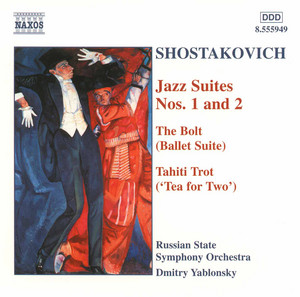 | Jazz Suite No. 1: I. Waltz | Dmitri Shostakovich, Russian State Symphony Orchestra, Dmitry Yablonsky | E♭ Major | 1 | 5B | 173 BPM | |
 | 21 Hungarian Dances, WoO 1: Hungarian Dance No. 5 in F-Sharp Minor | Johannes Brahms, Seattle Symphony Orchestra, Gerard Schwarz | E Major | 1 | 12B | 102 BPM | |
 | La Gioconda / Act 3: Dance of the Hours | Amilcare Ponchielli, Michaela Rózsa Růžičková, Czech Symphony Orchestra | E Major | 1 | 12B | 65 BPM | |
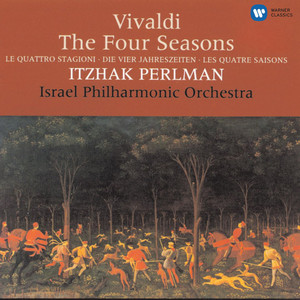 | Vivaldi: The Four Seasons, Violin Concerto in G Minor, Op. 8 No. 2, RV 315 "Summer": III. Presto | Antonio Vivaldi, Itzhak Perlman, Israel Philharmonic Orchestra | G Minor | 4 | 6A | 136 BPM | |
 | Hungarian Dance No.1 in G minor - Orchestrated by Brahms: Allegro molto | Johannes Brahms, Chicago Symphony Orchestra, Daniel Barenboim | G Minor | 2 | 6A | 65 BPM | |
 | Symphony No. 7 in A Major, Op. 92: III. Presto. Trio I und II. Assai meno presto | Ludwig van Beethoven, Berliner Philharmoniker, Kirill Petrenko | D Major | 2 | 10B | 105 BPM | |
 | Tales of Hoffmann - Barcarolle | Arthur Fiedler, Jacques Offenbach, Boston Pops Orchestra | D Major | 2 | 10B | 74 BPM | |
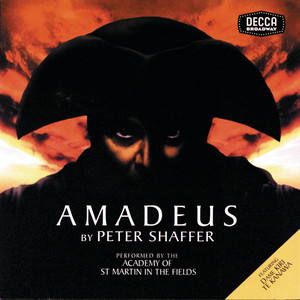 | Symphony No. 25 in G Minor, K. 183: I. Allegro con brio | Wolfgang Amadeus Mozart, Academy of St. Martin in the Fields, Sir Neville Marriner | G Minor | 2 | 6A | 80 BPM |
- ISRC
- DEF059630004
- Label
- L-M Records/RCA Records