- BPM
- 105
- Key
- G Major
- Camelot
- 9B
Barber: Adagio for Strings, Op. 11 by Samuel Barber, Johannes Moser Song Details
"Barber: Adagio for Strings, Op. 11" by Samuel Barber, Johannes Moser had its release date on June 17, 2022. Since This song is still less than 10 minute long, it is still considered a pretty long duration song compared to the average song length. This song does not appear to be explicit due to the lack of the "E" tag. The song is number 13 out of 17 in Alone Together by Johannes Moser. Going off of the ISRC code of this track, we detected that the origin of this track is from United States. In terms of popularity, Barber: Adagio for Strings, Op. 11 is currently not that popular. In our opinion, the overall tone is not very danceable and projects negative sounds, such as being sad, depressed, or angry.
BPM and Tempo
The tempo marking of Barber: Adagio for Strings, Op. 11 by Samuel Barber, Johannes Moser is Andante (at a walking pace), since this song has a tempo of 105 BPM. With that information, we can conclude that the song has a slow tempo. The time signature for this track is 3/4.
Music Key
This song has a musical key of G Major. This also means that this song has a camelot key of 9B. So, the perfect camelot match for 9B would be either 9B or 10A. While, 10B can give you a low energy boost. For moderate energy boost, you would use 6B and a high energy boost can either be 11B or 4B. Though, if you want a low energy drop, you should looking for songs with either a camelot key of 9A or 8B will give you a low energy drop, 12B would be a moderate one, and 7B or 2B would be a high energy drop. Lastly, 6A allows you to change the mood.
Want to find the BPM and music key for other songs? Check out our BPM and Key Finder page!
- Popularity
- 10%
- Loudness
- -18.832 dB
- Acousticness
- 97%
- Danceability
- 16%
- Energy
- 18%
- Instrumentalness
- 84%
- Liveness
- 7%
- Loudness
- 69%
- Speechiness
- 4%
- Valence
- 3%
Recommendations
| Track | Artist | Key | Energy | Camelot | BPM | ||
|---|---|---|---|---|---|---|---|
 | Gypsy Melodies, Op. 55, B. 104: IV. Songs My Mother Taught Me (Adapt. for Cello and Orchestra) | Antonín Dvořák, Camille Thomas, Brussels Philharmonic, Mathieu Herzog | C Minor | 1 | 5A | 100 BPM | |
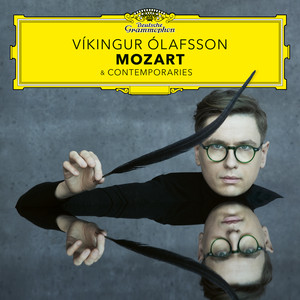 | Sonata No. 42 in D Minor (Arr. Ólafsson) | Domenico Cimarosa, Víkingur Ólafsson | D Minor | 0 | 7A | 61 BPM | |
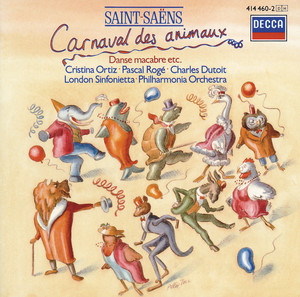 | Le carnaval des animaux, R. 125: VII. Aquarium | Camille Saint-Saëns, Pascal Rogé, Cristina Ortiz, London Sinfonietta, Charles Dutoit | A Minor | 0 | 8A | 136 BPM | |
 | Adagio For Strings And Organ | The Regency House Orchestra | C Minor | 2 | 5A | 81 BPM | |
 | Violin Concerto No. 1: Movement III | Philip Glass, Leonard Bernstein, Dennis Russell Davies, Bruckner Orchester Linz, Renaud Capuçon | C Minor | 1 | 5A | 64 BPM | |
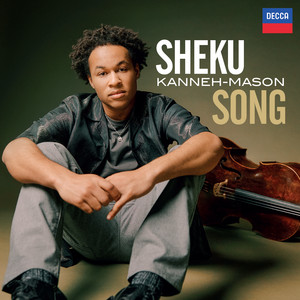 | Come, Sweet Death, BWV 478 (Arr. for 5 Cellos) | Sheku Kanneh-Mason, Hannah Roberts, Ben Davies, Desmond Neysmith, Max Ruisi | C Major | 0 | 8B | 122 BPM | |
 | Walton: Henry V: Passacaglia "The Death of Falstaff" | William Walton, Douglas Boyd, Chamber Orchestra of Europe | E Minor | 0 | 9A | 86 BPM | |
 | Scene Suspended (Arr. Lawson) | Jon Hopkins, VOCES8, Eleanor Turner | E Major | 0 | 12B | 66 BPM | |
 | Saint-Saëns: Le carnaval des animaux, R 125: XIII. Le cygne (Arr. for Cello and Harp) | Camille Saint-Saëns, Jacqueline du Pré, Osian Ellis | G Major | 0 | 9B | 60 BPM | |
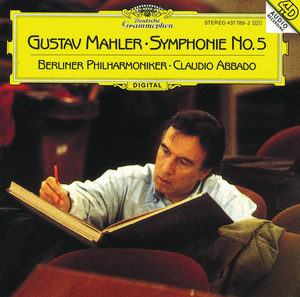 | Symphony No. 5: IV. Adagietto. Sehr langsam | Gustav Mahler, Berliner Philharmoniker, Claudio Abbado | F Major | 0 | 7B | 91 BPM | |
 | Passaggio | Ludovico Einaudi, Daniel Hope, Jacques Ammon | D Major | 5 | 10B | 92 BPM | |
 | Winter 3 - 2012 | Max Richter, Daniel Hope, Konzerthaus Kammerorchester Berlin, Andre de Ridder | F Minor | 3 | 4A | 111 BPM | |
 | Fauré: Pavane, Op. 50 (Instrumental Version) | Gabriel Fauré, Sir Neville Marriner, Academy of St. Martin in the Fields | F♯ Minor | 1 | 11A | 70 BPM | |
 | Piano Concerto No. 2 in F Major, Op. 102: II. Andante | Dmitri Shostakovich, Boris Giltburg, Royal Liverpool Philharmonic Orchestra, Vasily Petrenko | C Minor | 0 | 5A | 80 BPM | |
 | Nocturne No. 20 in C-Sharp Minor, Op. posth. (Arr. for Violin and Piano by Milstein) | Frédéric Chopin, Rafał Blechacz, Bomsori | D♭ Minor | 1 | 12A | 104 BPM | |
 | Rodrigo: Concierto de Aranjuez: II. Adagio (Excerpt) | Joaquín Rodrigo, Julian Bream, Sir Simon Rattle, City Of Birmingham Symphony Orchestra | C Major | 1 | 8B | 64 BPM | |
 | Les danses polovtsiennes (Extraits de l'opéra Le Prince Igor): II. Danse des hommes | Alexander Borodin, Anima Eterna, Jos Van Immerseel | A Major | 0 | 11B | 87 BPM | |
 | Barber: Agnus Dei (Adagio Op.11) | Samuel Barber, The Sixteen, Harry Christophers | F♯ Major | 1 | 2B | 135 BPM | |
 | 21 Hungarian Dances, WoO 1: Hungarian Dance No. 11 in D Minor | Johannes Brahms, Seattle Symphony Orchestra, Gerard Schwarz | A Minor | 0 | 8A | 104 BPM | |
 | Concerto en ré mineur, bwv974 - Adagio (d'après Marcello) | Élise Robineau | D Minor | 0 | 7A | 83 BPM | |
 | Gymnopédie No. 3 | Erik Satie, Philippe Entremont | A Minor | 0 | 8A | 131 BPM | |
 | Flute Sonata in E-Flat Major, BWV 1031: II. Siciliano (Arr. for Piano by Ignaz Friedman) | Johann Sebastian Bach, Joseph Banowetz | G Minor | 0 | 6A | 73 BPM | |
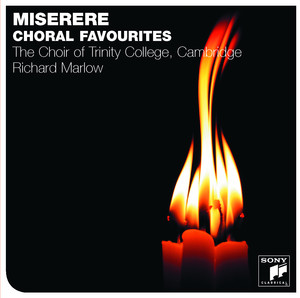 | Miserere mei, Deus | Gregorio Allegri, The Choir Of Trinity College, Cambridge, Richard Marlow | G Minor | 0 | 6A | 77 BPM | |
 | 2 Aquarelles: Lento, ma non troppo | Frederick Delius, Royal Northern Sinfonia, David Lloyd-Jones | F Major | 0 | 7B | 71 BPM | |
 | Brook Green Suite: II. Air | Gustav Holst, English Sinfonia, Howard Griffiths | E♭ Major | 0 | 5B | 128 BPM |
- ISRC
- US23A1548243
- Label
- L-M Records/RCA Records