- BPM
- 77
- Key
- F Major
- Camelot
- 7B
Arirang (Arr. Hough) by Anonymous, Stephen Hough Song Details
Anonymous, Stephen Hough's 'Arirang (Arr. Hough)' had a release date set for January 29, 2021. With This song being less than two minutes long, at 1:49, we are fairly confident that this song is not explicit and is safe for all ages. Based on the duration of this song, this song duration is much smaller than the average song duration. This song is part of Vida breve: Bach, Busoni, Chopin, Liszt, Hough, Gounod by Stephen Hough, Johann Sebastian Bach, Frédéric Chopin, Franz Liszt, Ferruccio Busoni, Charles Gounod. The song's track number on the album is #10 out of 11 tracks. Based on our data, United Kingdom was the country where this track was produced or recorded. Arirang (Arr. Hough) is not that popular right now. In our opinion, the overall tone is not very danceable and projects negative sounds, such as being sad, depressed, or angry.
BPM and Tempo
Since Arirang (Arr. Hough) by Anonymous, Stephen Hough has a tempo of 77 beats per a minute, the tempo markings of this song would be Andante (at a walking pace). With Arirang (Arr. Hough) being at 77 BPM, the half-time would be 38 BPM with a double-time of 154 BPM.In addition, we consider the tempo speed to be pretty slow for this song. The time signature for this track is 4/4.
Music Key
F Major is the music key of this track. Or for those who are familiar with the camelot wheel, this song has a camelot key of 7B. So, the perfect camelot match for 7B would be either 7B or 8A. While, 8B can give you a low energy boost. For moderate energy boost, you would use 4B and a high energy boost can either be 9B or 2B. Though, if you want a low energy drop, you should looking for songs with either a camelot key of 7A or 6B will give you a low energy drop, 10B would be a moderate one, and 5B or 12B would be a high energy drop. Lastly, 4A allows you to change the mood.
Want to find the BPM and music key for other songs? Check out our BPM and Key Finder page!
- Popularity
- 1%
- Loudness
- -11.073 dB
- Acousticness
- 90%
- Danceability
- 34%
- Energy
- 24%
- Instrumentalness
- 0%
- Liveness
- 12%
- Loudness
- 82%
- Speechiness
- 3%
- Valence
- 27%
Recommendations
| Track | Artist | Key | Energy | Camelot | BPM | ||
|---|---|---|---|---|---|---|---|
 | Nocturne No. 15 in D Minor, H. 59 “Song Without Words” | John Field, Alice Sara Ott | F Major | 0 | 7B | 67 BPM | |
 | La Lisonjera, Op. 50 | Cécile Chaminade, Eric Parkin | F♯ Major | 1 | 2B | 68 BPM | |
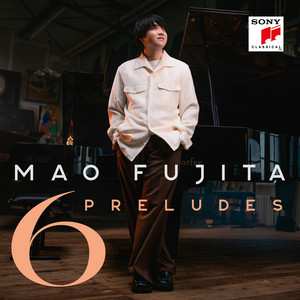 | Preludes, Op. 31: No. 15 Dans le genre gothique | Charles-Valentin Alkan, Mao Fujita | G Major | 1 | 9B | 82 BPM | |
 | 3 Romances sans paroles, Op. 17: No. 3, Andante moderato | Gabriel Fauré, Antoine Préat | A♭ Major | 0 | 4B | 69 BPM | |
 | 3 Romances, Op. 94: No. 2, Einfach, innig - Musical Moments | Robert Schumann, Andreas Ottensamer, José Gallardo | A Major | 0 | 11B | 105 BPM | |
 | 25 Preludes, Op. 64: No. 9 in E Major: Andantino | César Cui, Jeffrey Biegel | E Major | 0 | 12B | 66 BPM | |
 | 3 Piano Pieces, Op. 54: No. 1, Regndroppar | Selim Palmgren, Risto Lauriala | E Minor | 0 | 9A | 105 BPM | |
 | Night (Arr. for Cello & Piano by Tom Poster) | Florence Beatrice Price, Laura van der Heijden, Jâms Coleman | G Major | 0 | 9B | 86 BPM | |
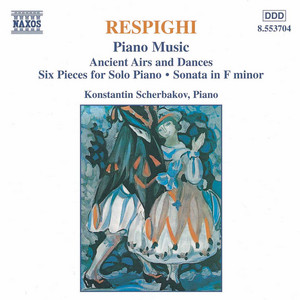 | 3 Preludi Sopra Melodie Gregoriane, P. 131: I. Molto Lento | Ottorino Respighi, Konstantin Scherbakov | A♭ Minor | 0 | 1A | 70 BPM | |
 | Dominica in Ramis Palmarum: O Domine Jesu Christe (Arr. Solo Piano by Del Corral) | Tomás Luis de Victoria, Manuel del Corral | C Major | 0 | 8B | 163 BPM | |
 | Couperin, F: Second livre de pièces de clavecin, Sixième ordre: V. Les baricades mistérieuses | François Couperin, David Fray | B♭ Major | 0 | 6B | 75 BPM | |
 | Premières valses: I. Avec élégance | Reynaldo Hahn, Pavel Kolesnikov | D♭ Major | 0 | 3B | 71 BPM | |
 | Petite suite en 15 images: IV. Berceuse aux etoiles | Jacques Ibert, Hae Won Chang | C Major | 0 | 8B | 73 BPM | |
 | 24 Dainas: Daina No. 6, Andante | Janis Medins, Arta Arnicane | B Minor | 1 | 10A | 73 BPM | |
 | No. 2, Shadow No More | William McClelland, Blair McMillen | C Minor | 0 | 5A | 104 BPM | |
| Royer: Premier livre de pièces de clavecin: No. 6, L'aimable | Joseph-Nicolas-Pancrace Royer, David Fray | G Minor | 1 | 6A | 69 BPM | |
 | 5 Stücke im Volkston, Op. 102: No. 2, Langsam | Robert Schumann, Gabriel Schwabe, Nicholas Rimmer | F Major | 0 | 7B | 173 BPM | |
 | Variations on a Polish Folk Theme, Op. 10: Tema. Andantino semplice | Karol Szymanowski, Krystian Zimerman | E♭ Major | 0 | 5B | 71 BPM | |
 | Haurren Irudiak: I. Oxiña | Beatriz Arzamendi, Noemí Teruel Serrano | E♭ Major | 0 | 5B | 73 BPM | |
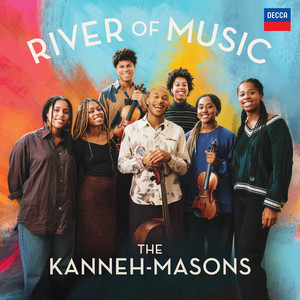 | Deep River (Arr. The Kanneh-Masons for Ensemble) | Samuel Coleridge-Taylor, The Kanneh-Masons | E Major | 1 | 12B | 82 BPM | |
 | Blumenleben, Op. 19: No. 2, Veilchen | Dora Pejačević, Natasa Veljkovic | B♭ Major | 0 | 6B | 171 BPM | |
 | Improviso No. 3 | Camargo Guarnieri, Max Barros | F♯ Major | 0 | 2B | 67 BPM | |
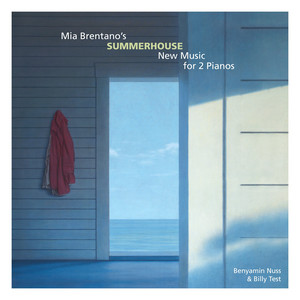 | I Was Seventeen | Mia Brentano, Benyamin Nuss, Billy Test | F♯ Major | 1 | 2B | 120 BPM | |
 | Quilter: 3 Songs, Op. 3: No. 2, Now Sleeps the Crimson Petal (Arr. Hough for Piano) | Roger Quilter, Stephen Hough | F♯ Major | 0 | 2B | 131 BPM | |
| Saint-Saëns: Le carnaval des animaux: XIII. Le cygne (Arr. Godowsky for Piano) | Camille Saint-Saëns, Stephen Hough | A♭ Minor | 0 | 1A | 65 BPM |
- ISRC
- GBAJY2026010
- Label
- L-M Records/RCA Records