- BPM
- 77
- Key
- F♯ Minor
- Camelot
- 11A
No. 2 in C-Sharp Minor by Sergei Rachmaninoff, Arthur Rubinstein Song Details
"No. 2 in C-Sharp Minor" by Sergei Rachmaninoff, Arthur Rubinstein had its release date on October 12, 1999. With this song being around four minutes long, at 4:14, the duration of this song is pretty average compared to other songs. This track is safe for children and doesn't appear to contain any foul language, since the "Explicit" tag was not present in this track. There are a total of 30 in the song's album "Rubinstein Collection, Vol. 35: Rachmaninoff: Piano Concerto No.2; Rhapsody on a Theme of Paganini; Prelude". In this album, this song's track order is #30. Furthermore, we believe that the track originated from United States. No. 2 in C-Sharp Minor is not that popular right now. Although the tone can be danceable to some, this track does projects more of a negative sound rather than a postive one.
BPM and Tempo
With No. 2 in C-Sharp Minor by Sergei Rachmaninoff, Arthur Rubinstein having a BPM of 77 with a half-time of 38 BPM and a double-time of 154 BPM, we would consider this track to have a Andante (at a walking pace) tempo marking. Because of this, we believe that the song has an overall slow tempo. The time signature for this track is 4/4.
Music Key
This song has a musical key of F♯ Minor. Or for those who are familiar with the camelot wheel, this song has a camelot key of 11A. So, the perfect camelot match for 11A would be either 11A or 10B. While, a low energy boost can consist of either 11B or 12A. For moderate energy boost, you would use 8A and a high energy boost can either be 1A or 6A. However, if you are looking for a low energy drop, finding a song with a camelot key of 10A would be a great choice. Where 2A would give you a moderate drop, and 9A or 4A would be a high energy drop. Lastly, 2B allows you to change the mood.
Want to find the BPM and music key for other songs? Check out our BPM and Key Finder page!
- Popularity
- 11%
- Loudness
- -15.755 dB
- Acousticness
- 99%
- Danceability
- 51%
- Energy
- 10%
- Instrumentalness
- 87%
- Liveness
- 9%
- Loudness
- 74%
- Speechiness
- 8%
- Valence
- 4%
Recommendations
| Track | Artist | Key | Energy | Camelot | BPM | ||
|---|---|---|---|---|---|---|---|
 | Piano Concerto No. 1 in C Minor, Op 33: I. Allegro | Nikolai Medtner, Geoffrey Tozer, Neeme Järvi, London Philharmonic Orchestra | G Major | 2 | 9B | 79 BPM | |
 | Orfeo ed Euridice, Wq. 30 / Act II: Dance of the Blessed Spirits (Arr. by Mathieu Herzog for Cello and Strings) | Christoph Willibald Gluck, Camille Thomas, Brussels Philharmonic, Mathieu Herzog | B Minor | 1 | 10A | 87 BPM | |
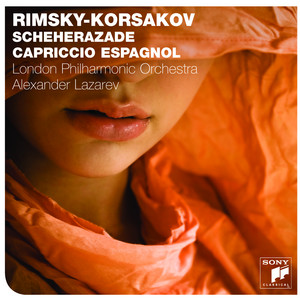 | Scheherazade: The Young Prince | Nikolai Rimsky-Korsakov, Lars Hjalmar Joakim | G Major | 1 | 9B | 91 BPM | |
 | Poulenc: Concerto for Two Pianos in D Minor, FP 61: I. Allegro ma non troppo | Francis Poulenc, James Conlon, Rotterdam Philharmonic Orchestra | E♭ Major | 1 | 5B | 103 BPM | |
 | Capriol Suite: 5. Pied-en- l'air | Peter Warlock, Academy of St. Martin in the Fields, Nicholas Kraemer, Sir Neville Marriner | G Major | 1 | 9B | 113 BPM | |
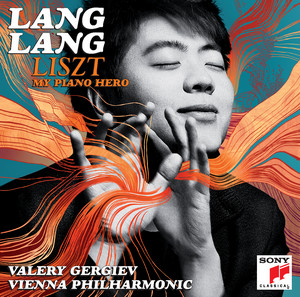 | Romance "O pourquoi donc" in E Minor, S. 169 | Franz Liszt, Lang Lang | E Minor | 0 | 9A | 67 BPM | |
 | Remember Me (Arr. Hough for Piano) - From "Coco" | Stephen Hough | F Major | 0 | 7B | 85 BPM | |
 | La forza del destino: Overture (Sinfonia) | Giuseppe Verdi, Berliner Philharmoniker, Claudio Abbado | E Minor | 2 | 9A | 80 BPM | |
 | Peer Gynt Suite No. 1, Op. 46: II. The Death of Åse - Recorded 1982 | Edvard Grieg, Berliner Philharmoniker, Herbert von Karajan | G Major | 0 | 9B | 45 BPM | |
 | Piano Quartet in E Flat, Op. 47: 3. Andante cantabile | Robert Schumann, Menahem Pressler, Emerson String Quartet | B♭ Major | 0 | 6B | 104 BPM | |
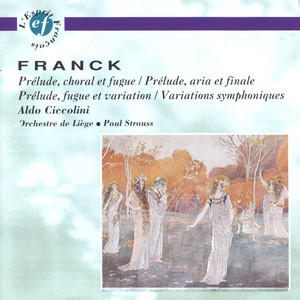 | Franck: Prélude, fugue et variation, Op. 18, FWV 30: Prélude | César Franck, Aldo Ciccolini | B Minor | 0 | 10A | 127 BPM | |
 | Piano Concerto in C-Sharp Minor, FP 146: I. Allegretto commodo - Live | Francis Poulenc, Yannick Nézet-Séguin, London Philharmonic Orchestra, Alexandre Tharaud | A♭ Major | 1 | 4B | 86 BPM | |
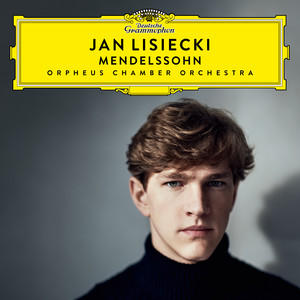 | Lieder ohne Worte, Op. 19: No. 6 in G Minor (Andante sostenuto) "Venetian Gondola Song", MWV U78 | Felix Mendelssohn, Jan Lisiecki | G Minor | 0 | 6A | 168 BPM | |
 | Symphony No. 8 in G Major, Op. 88, B. 163: III. Allegretto grazioso - Molto vivace | Antonín Dvořák, Los Angeles Philharmonic, Gustavo Dudamel | C Major | 1 | 8B | 127 BPM | |
 | 3 Études de Concert, S. 144: No. 3 in D-Flat Major "Un sospiro" | Franz Liszt, Daniil Trifonov | D♭ Major | 1 | 3B | 76 BPM | |
 | Rosa Mundi | Paul Lewis, Royal Ballet Sinfonia, Gavin Sutherland | E Major | 0 | 12B | 81 BPM | |
 | 6 Impromptus, Op. 5: Impromptu V | Jean Sibelius, Leif Ove Andsnes | B Minor | 0 | 10A | 72 BPM | |
 | Scriabin: 24 Preludes, Op. 11: No. 21 in B-Flat Major | Alexander Scriabin, Mikhail Pletnev | E♭ Major | 0 | 5B | 70 BPM | |
 | Carnival of the Animals, R. 125: The Swan | Camille Saint-Saëns, Philippe Entremont, Gaby Casadesus, Yo-Yo Ma, Michel Cerruti, Michel Cals, Régis Pasquier, Yan Pascal Tortelier, Gabin Lauridon, Gerard Causse, Alain Marion, Michel Arrignon | G Major | 0 | 9B | 118 BPM | |
 | Piano Concerto No. 2 in F Major, Op. 102: I. Allegro | Dmitri Shostakovich, I Musici de Montréal, Maxim Shostakovich | B♭ Major | 3 | 6B | 160 BPM | |
 | Lyric Pieces, Book 5, Op. 54: Nocturne | Edvard Grieg, Alessio Bax | C Major | 0 | 8B | 72 BPM | |
 | Nocturne No. 7 in Eb Major, FP. 56 | Francis Poulenc, Belle Chen | F Minor | 1 | 4A | 76 BPM | |
 | 6 Pieces for Piano, P. 44: No. 3. Notturno. Lento (Version for Harp) | Ottorino Respighi, Magdalena Hoffmann | F♯ Major | 0 | 2B | 88 BPM | |
 | Finlandia, Op. 26 | Jean Sibelius, Berliner Philharmoniker, Herbert von Karajan | A♭ Major | 3 | 4B | 67 BPM | |
 | Etude in D-Sharp Minor, Op. 8, No. 12: Patetico - Remastered | Alexander Scriabin, Vladimir Horowitz | D♭ Minor | 3 | 12A | 72 BPM |
- ISRC
- USBC19802617
- Label
- L-M Records/RCA Records