- BPM
- 114
- Key
- D Major
- Camelot
- 10B
L'Histoire du Soldat (The Soldier's Tale) - Part I: Narration by Igor Stravinsky, Eastman Wind Ensemble, Jan Opalach, Mark Scatterday Song Details
Igor Stravinsky, Eastman Wind Ensemble, Jan Opalach, Mark Scatterday's ' "L'Histoire du Soldat (The Soldier's Tale) - Part I: Narration" was released on its scheduled release date, February 12, 2013. With This song being less than two minutes long, at 1:18, we are fairly confident that this song is not explicit and is safe for all ages. Based on the duration of this song, this song duration is much smaller than the average song duration. There are a total of 28 in the song's album "Stravinsky: Octet & L'Histoire du Soldat". In this album, this song's track order is #9. Furthermore, we believe that the track originated from United Kingdom. In terms of popularity, L'Histoire du Soldat (The Soldier's Tale) - Part I: Narration is currently not that popular. The overall tone is very danceable, especially with its high energy, which produces more of a euphoric, cheerful, or happy vibe.
BPM and Tempo
With L'Histoire du Soldat (The Soldier's Tale) - Part I: Narration by Igor Stravinsky, Eastman Wind Ensemble, Jan Opalach, Mark Scatterday having a BPM of 114 with a half-time of 57 BPM and a double-time of 228 BPM, we would consider this track to have a Moderato (at a moderate speed) tempo marking. Because of this, we believe that the song has an overall moderate tempo. The time signature for this track is 4/4.
Music Key
This song is in the music key of D Major. Or for those who are familiar with the camelot wheel, this song has a camelot key of 10B. So, the perfect camelot match for 10B would be either 10B or 11A. While, 11B can give you a low energy boost. For moderate energy boost, you would use 7B and a high energy boost can either be 12B or 5B. Though, if you want a low energy drop, you should looking for songs with either a camelot key of 10A or 9B will give you a low energy drop, 1B would be a moderate one, and 8B or 3B would be a high energy drop. Lastly, 7A allows you to change the mood.
Want to find the BPM and music key for other songs? Check out our BPM and Key Finder page!
- Popularity
- 1%
- Loudness
- -13.598 dB
- Acousticness
- 88%
- Danceability
- 83%
- Energy
- 48%
- Instrumentalness
- 91%
- Liveness
- 10%
- Loudness
- 77%
- Speechiness
- 5%
- Valence
- 77%
Recommendations
| Track | Artist | Key | Energy | Camelot | BPM | ||
|---|---|---|---|---|---|---|---|
 | 3 Dance Episodes from On the Town: No. 2, Lonely Town | Leonard Bernstein, Bournemouth Symphony Orchestra, Marin Alsop | D Minor | 2 | 7A | 105 BPM | |
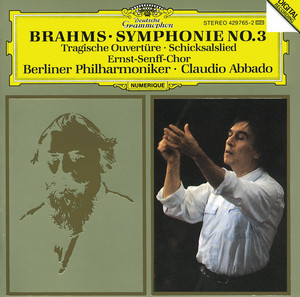 | Symphony No. 3 in F Major, Op. 90: I. Allegro con brio | Johannes Brahms, Berliner Philharmoniker, Claudio Abbado | G Minor | 1 | 6A | 151 BPM | |
 | Symphony No.2 in C minor - "Resurrection" / 1st Movement - Allegro maestoso (Totenfeier): Wie zu Anfang | Gustav Mahler, Wiener Philharmoniker, Gilbert Kaplan | E♭ Major | 1 | 5B | 82 BPM | |
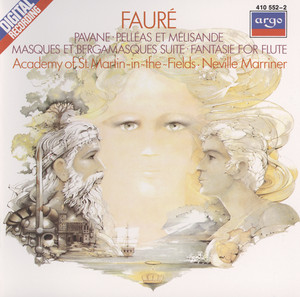 | Pelléas et Mélisande, Op.80: 3. Sicilienne | Gabriel Fauré, Academy of St. Martin in the Fields, Sir Neville Marriner | G Minor | 0 | 6A | 111 BPM | |
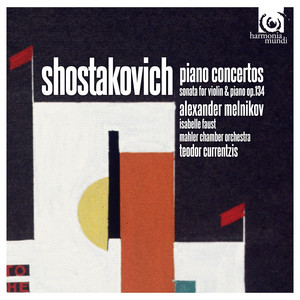 | Piano Concerto No. 2 Op. 102 in F Major: I. Allegro | Dmitri Shostakovich, Alexander Melnikov, Mahler Chamber Orchestra, Teodor Currentzis | B♭ Major | 2 | 6B | 73 BPM | |
 | Gayane Suite No. 3: I. The Hunt - Andante | Aram Khachaturian, St. Petersburg State Symphony Orchestra, Andre Anichanov | D Major | 2 | 10B | 92 BPM | |
 | Rachmaninov: Symphonic Dances, Op. 45: I. Non allegro | Sergei Rachmaninoff, Mariss Jansons, St. Petersburg Philharmonic Orchestra | F♯ Minor | 1 | 11A | 128 BPM | |
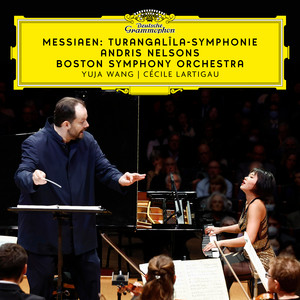 | Turangalîla-Symphonie: VIII. Développement de l'amour | Olivier Messiaen, Yuja Wang, Cécile Lartigau, Boston Symphony Orchestra, Andris Nelsons | D♭ Major | 5 | 3B | 87 BPM | |
 | Scheherazade: Calm at Sea | Nikolai Rimsky-Korsakov, Lars Hjalmar Joakim | E Major | 2 | 12B | 84 BPM | |
 | Aladdin Suite, Op. 34, FS 89: I. The Festival March | Carl Nielsen, South Jutland Symphony Orchestra, Niklas Willen | A♭ Major | 0 | 4B | 132 BPM | |
 | Mathis der Maler Symphony: II. Grablegung | Paul Hindemith, Berliner Philharmoniker, Claudio Abbado | A♭ Minor | 0 | 1A | 87 BPM | |
 | Ligeti : Romanian Concerto : IV Molto vivace | György Ligeti, Jonathan Nott, Berliner Philharmoniker | F Major | 2 | 7B | 96 BPM | |
 | Violin Concerto No. 2 In G Minor, Op. 63: 2. Andante assai | Sergei Prokofiev, Gil Shaham, André Previn, London Symphony Orchestra | G Major | 1 | 9B | 64 BPM | |
 | The Rite of Spring: Part One: Adoration of the Earth: Dance of the Earth | Igor Stravinsky, Teodor Currentzis, musicAeterna | G Major | 5 | 9B | 89 BPM | |
 | Sibelius: Symphony No. 1 in E Minor, Op. 39: III. Scherzo. Allegro | Jean Sibelius, Paavo Berglund, Helsinki Philharmonic Orchestra | C Major | 2 | 8B | 109 BPM | |
![Les Noces, Scene 1: The Tresses (At the Bride's House) [the Wedding] by Susan Bickley, Martyn Hill, Alan Ewing, Alison Wells, Simon Joly Chorale, International Piano Quartet, Tristan Fry Percussion Ensemble, Robert Craft](https://i.scdn.co/image/ab67616d00001e02946bbad1fa051db2cacde94d) | Les Noces, Scene 1: The Tresses (At the Bride's House) [the Wedding] | Susan Bickley, Martyn Hill, Alan Ewing, Alison Wells, Simon Joly Chorale, International Piano Quartet, Tristan Fry Percussion Ensemble, Robert Craft | E Major | 2 | 12B | 118 BPM | |
 | Symphonie fantastique, H. 48: IV. Marche au supplice | Hector Berlioz, Chicago Symphony Orchestra, Claudio Abbado | G Minor | 2 | 6A | 166 BPM | |
 | The Three-Cornered Hat: Suite No. 2 - Three Dances, I. The Neighbors' Dance - Seguidillas | Manuel de Falla, Philadelphia Orchestra, Raphael Frühbeck de Burgos | G Major | 2 | 9B | 78 BPM | |
 | Transfigured Night, Op. 4 (Version for String Orchestra): Pesante - Grave | Arnold Schoenberg, Berliner Philharmoniker, Kirill Petrenko | E Major | 0 | 12B | 73 BPM | |
 | Overture to "The School for Scandal", Op. 5 | Samuel Barber, Atlanta Symphony Orchestra, Yoel Levi | A Minor | 1 | 8A | 101 BPM | |
 | Prelude in C Sharp Minor, Op. 3, No. 2 (Arr. Orchestra) - Live | Sergei Rachmaninoff, Czech Philharmonic, Leopold Stokowski | E♭ Major | 4 | 5B | 124 BPM | |
![Etudes symphoniques (Symphonic Etudes), Op. 13, Adagio and Allegro brillante: Variation 11 [arr. P.I. Tchaikovsky for orchestra] by Robert Schumann, Seattle Symphony Orchestra, Gerard Schwarz](https://i.scdn.co/image/ab67616d00001e029057c124b554163ef1edd618) | Etudes symphoniques (Symphonic Etudes), Op. 13, Adagio and Allegro brillante: Variation 11 [arr. P.I. Tchaikovsky for orchestra] | Robert Schumann, Seattle Symphony Orchestra, Gerard Schwarz | A Minor | 0 | 8A | 104 BPM | |
 | Symphony No. 3 In C Minor, Op. 78 "Organ Symphony": 2b. Maestoso - Più allegro - Molto allegro | Camille Saint-Saëns, Simon Preston, Berliner Philharmoniker, James Levine | C Major | 3 | 8B | 106 BPM | |
 | Tchaikovsky: Symphony No. 4 in F Minor, Op. 36: II. Andantino in moto di canzone | Pyotr Ilyich Tchaikovsky, San Francisco Symphony, Michael Tilson Thomas | B♭ Minor | 0 | 3A | 82 BPM | |
 | Piano Concerto No. 1, BB 91, Sz. 83: I. Allegro moderato - Allegro | Béla Bartók, Géza Anda, Deutsches Symphonie-Orchester Berlin, Ferenc Fricsay | G Major | 3 | 9B | 124 BPM |
- ISRC
- GBELX1304605
- Label
- L-M Records/RCA Records