- BPM
- 118
- Key
- E Minor
- Camelot
- 9A
String Quartet No. 4 in E Minor, Op. 44 No. 2, MWV R26: I. Allegro assai appassionato by Felix Mendelssohn, New Zealand String Quartet Song Details
Felix Mendelssohn, New Zealand String Quartet's ' "String Quartet No. 4 in E Minor, Op. 44 No. 2, MWV R26: I. Allegro assai appassionato" was released on its scheduled release date, March 25, 2008. This song appears to be safe for all ages as it is not explicit. The track order of this song in Felix Mendelssohn, New Zealand String Quartet's "Mendelssohn, Felix: String Quartets, Vol. 1 - String Quartets Nos. 1, 4, 6" album is number 9 out of 12. On top of that, Hong Kong appears to be the country where this track was created. In terms of popularity, String Quartet No. 4 in E Minor, Op. 44 No. 2, MWV R26: I. Allegro assai appassionato is currently unknown. Based on the vibe, this track doesn't seem to be that danceable, however its valence properties can make this some somewhat danceable.
BPM and Tempo
We consider the tempo marking of String Quartet No. 4 in E Minor, Op. 44 No. 2, MWV R26: I. Allegro assai appassionato by Felix Mendelssohn, New Zealand String Quartet to be Moderato (at a moderate speed) because the track has a tempo of 118 BPM, a half-time of 59BPM, and a double-time of 236 BPM. Based on that, the speed of the song's tempo is moderate. Activities such as, walking, can go well with this song. The time signature for this track is 3/4.
Music Key
E Minor is the music key of this track. Because this track belongs in the E Minor key, the camelot key is 9A. So, the perfect camelot match for 9A would be either 9A or 8B. While, a low energy boost can consist of either 9B or 10A. For moderate energy boost, you would use 6A and a high energy boost can either be 11A or 4A. However, if you are looking for a low energy drop, finding a song with a camelot key of 8A would be a great choice. Where 12A would give you a moderate drop, and 7A or 2A would be a high energy drop. Lastly, 12B allows you to change the mood.
Want to find the BPM and music key for other songs? Check out our BPM and Key Finder page!
- Popularity
- 0%
- Loudness
- -18.486 dB
- Acousticness
- 97%
- Danceability
- 36%
- Energy
- 23%
- Instrumentalness
- 92%
- Liveness
- 14%
- Loudness
- 69%
- Speechiness
- 4%
- Valence
- 47%
Recommendations
| Track | Artist | Key | Energy | Camelot | BPM | ||
|---|---|---|---|---|---|---|---|
 | 4 Lieder, Op. 27, TrV 170: IV. Morgen! (Arr. for Cello and Piano by Julian Riem) | Richard Strauss, Raphaela Gromes, Julian Riem | F Major | 0 | 7B | 174 BPM | |
 | Sinfonia No. 4 in C Minor, MWV N4: II. Andante | Felix Mendelssohn, Northern Chamber Orchestra, Nicholas Ward | E Minor | 1 | 9A | 129 BPM | |
 | Violin Concerto No. 1 in G Minor, Op. 26: II. Adagio | Max Bruch, Itzhak Perlman, Bernard Haitink, Royal Concertgebouw Orchestra | E♭ Major | 1 | 5B | 87 BPM | |
 | Symphony No. 6 in B Minor, Op. 74 "Pathétique": II. Allegro con grazia | Pyotr Ilyich Tchaikovsky, Berliner Philharmoniker, Kirill Petrenko | D Major | 1 | 10B | 85 BPM | |
 | Mendelssohn: Rondo capriccioso in E Major, Op. 14 | Felix Mendelssohn, Doomin Kim | E Minor | 1 | 9A | 163 BPM | |
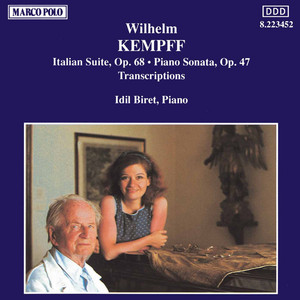 | Keyboard Suite No. 1 in B-Flat Major, HWV 434: IV. Minuet (Arr. W. Kempff for Piano) | George Frideric Handel, Idil Biret | G Minor | 0 | 6A | 73 BPM | |
 | Fantasia & Fugue in C Minor, Op. 86 (After J.S. Bach's BWV 537): Fantasia | Edward Elgar, Seattle Symphony Orchestra, Gerard Schwarz | F Minor | 1 | 4A | 143 BPM | |
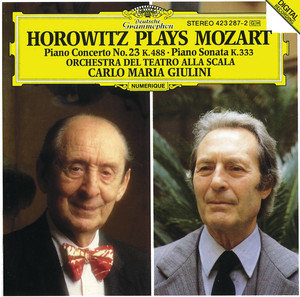 | Piano Sonata No. 13 in B-Flat Major, K. 333: III. Allegretto grazioso | Wolfgang Amadeus Mozart, Vladimir Horowitz | B♭ Major | 1 | 6B | 82 BPM | |
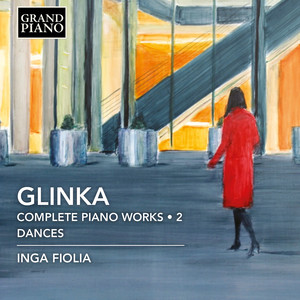 | Mazurka in C Minor | Mikhail Glinka, Inga Fiolia | C Minor | 0 | 5A | 111 BPM | |
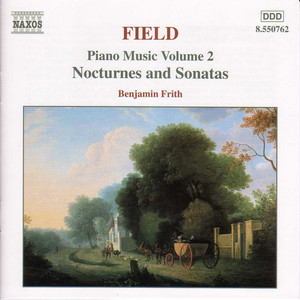 | Nocturne No. 16 In F Major, H. 62: Nocturne No. 16 In F Major | Benjamin Frith, John Field | F Major | 0 | 7B | 71 BPM | |
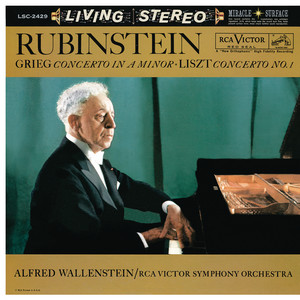 | Piano Concerto in A Minor, Op. 16: II. Adagio - Remastered | Edvard Grieg, Arthur Rubinstein, RCA Victor Symphony Orchestra, Alfred Wallenstein | D♭ Major | 0 | 3B | 86 BPM | |
 | Piano Sonata in G Minor: I. Allegro molto agitato | Fanny Mendelssohn, Heather Schmidt | B Minor | 3 | 10A | 87 BPM | |
 | Piano Concerto No.2 in G minor, Op.22: 1. Andante sostenuto | Camille Saint-Saëns, Jean-Yves Thibaudet, Orchestre de la Suisse Romande, Charles Dutoit | C Major | 3 | 8B | 78 BPM | |
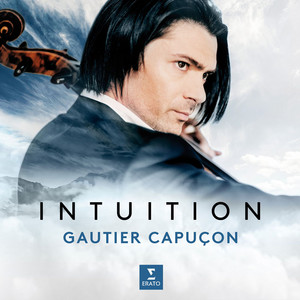 | Elgar / Orch. Walter: Salut d'amour, Op. 12 | Edward Elgar, Gautier Capuçon, Deborah Nemtanu, Douglas Boyd, Orchestre de chambre de Paris | E Major | 1 | 12B | 83 BPM | |
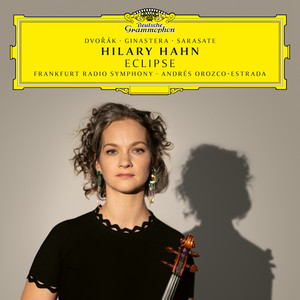 | Carmen Fantasy, Op. 25: III. Allegro moderato | Pablo de Sarasate, Hilary Hahn, Frankfurt Radio Symphony Orchestra, Andrés Orozco-Estrada | G Minor | 3 | 6A | 139 BPM | |
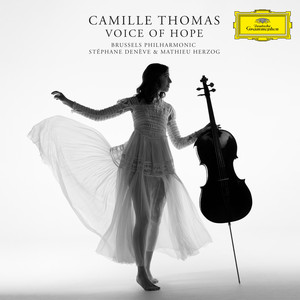 | Dido and Aeneas, Z. 626 / Act III: "When I Am Laid in Earth" Dido's Lamento (Arr. by Mathieu Herzog for Cello and Strings) | Henry Purcell, Camille Thomas, Brussels Philharmonic, Mathieu Herzog | G Minor | 1 | 6A | 77 BPM | |
 | 3 Romances sans paroles (from Six Romances sans paroles, Op. 76): No. 1, Souvenance. Andantino | Cécile Chaminade, Eric Parkin | B Minor | 0 | 10A | 87 BPM | |
 | Lied opus 34 no.2, transcription Franz Liszt: Auf Flügeln Des Gesanges | Felix Mendelssohn, Bertrand Chamayou | A♭ Major | 0 | 4B | 71 BPM | |
 | 6 Impromptus, Op. 5: Impromptu No. 5 in B Minor | Jean Sibelius, Håvard Gimse | B Minor | 0 | 10A | 84 BPM | |
 | 4 Pieces, Op. 51: No. 2. Prélude. Lugubre | Alexander Scriabin, Evgeny Kissin | F Major | 0 | 7B | 75 BPM | |
 | Violin Concerto No. 5 in A Major, K. 219 "Turkish": III. Rondeau. Tempo di Menuetto (Cadenza Joseph Joachim) | Wolfgang Amadeus Mozart, Itzhak Perlman, Wiener Philharmoniker, James Levine | G Major | 2 | 9B | 127 BPM | |
 | Sonatina No. 1, Op. 67: III. Allegro moderato | Jean Sibelius, Leif Ove Andsnes | F♯ Major | 1 | 2B | 94 BPM | |
 | Piano Concerto No. 2 in F Major, Op. 102: II. Andante | Dmitri Shostakovich, I Musici de Montréal, Maxim Shostakovich | C Minor | 0 | 5A | 177 BPM | |
 | Debussy: Piano Trio in G Major, CD 5, L. 3: III. Andante espressivo | Claude Debussy, Bertrand Chamayou, Edgar Moreau, Renaud Capuçon | C Major | 1 | 8B | 84 BPM | |
 | Mendelssohn: Venetian Boat Song Op.30 No.6 | Daniel Pollack | F♯ Minor | 0 | 11A | 73 BPM |
- ISRC
- HKI190782009
- Label
- L-M Records/RCA Records