- BPM
- 130
- Key
- G Major
- Camelot
- 9B
Le carnaval des animaux, R. 125: XIII. Le cygne by Camille Saint-Saëns, Christopher van Kampen, Pascal Rogé, Cristina Ortiz, London Sinfonietta, Charles Dutoit Song Details
"Le carnaval des animaux, R. 125: XIII. Le cygne" by Camille Saint-Saëns, Christopher van Kampen, Pascal Rogé, Cristina Ortiz, London Sinfonietta, Charles Dutoit had its release date on January 1, 1980. The duration of This song is about two minutes long, specifically at 2:45. This song does not appear to have any foul language. Le carnaval des animaux, R. 125: XIII. Le cygne's duration is considered a little bit shorter than the average duration of a typical track. There are a total of 17 in the song's album "Saint-Saëns: Le Carnaval des Animaux; Phaéton; Danse Macabre etc.". In this album, this song's track order is #13. Furthermore, we believe that the track originated from United Kingdom. Based on our statistics, Le carnaval des animaux, R. 125: XIII. Le cygne's popularity is average in popularity right now. In our opinion, the overall tone is not very danceable and projects negative sounds, such as being sad, depressed, or angry.
BPM and Tempo
With Le carnaval des animaux, R. 125: XIII. Le cygne by Camille Saint-Saëns, Christopher van Kampen, Pascal Rogé, Cristina Ortiz, London Sinfonietta, Charles Dutoit having a BPM of 130 with a half-time of 65 BPM and a double-time of 260 BPM, we would consider this track to have a Allegro (fast, quick, and bright) tempo marking. Because of this, we believe that the song has an overall fast tempo. Looking at the BPM of this song, this song might go great with walking. The time signature for this track is 4/4.
Music Key
G Major is the music key of this track. Or for those who are familiar with the camelot wheel, this song has a camelot key of 9B. So, the perfect camelot match for 9B would be either 9B or 10A. While, 10B can give you a low energy boost. For moderate energy boost, you would use 6B and a high energy boost can either be 11B or 4B. Though, if you want a low energy drop, you should looking for songs with either a camelot key of 9A or 8B will give you a low energy drop, 12B would be a moderate one, and 7B or 2B would be a high energy drop. Lastly, 6A allows you to change the mood.
Want to find the BPM and music key for other songs? Check out our BPM and Key Finder page!
- Popularity
- 58%
- Loudness
- -31.634 dB
- Acousticness
- 99%
- Danceability
- 17%
- Energy
- 2%
- Instrumentalness
- 93%
- Liveness
- 7%
- Loudness
- 47%
- Speechiness
- 4%
- Valence
- 4%
Recommendations
| Track | Artist | Key | Energy | Camelot | BPM | ||
|---|---|---|---|---|---|---|---|
 | Pavane, Op. 50 | Gabriel Fauré, Sinfonieorchester Basel, Ivor Bolton | F♯ Minor | 0 | 11A | 66 BPM | |
 | Liszt-Nocturne No.3 Liebestraum | Winter Flowers | C Minor | 2 | 5A | 68 BPM | |
 | 3 Romances sans paroles, Op. 17: No. 3 in A-Flat Major (Arr. P. Gouin for Cello & Piano) | Gabriel Fauré, Jesper Svedberg, Simon Crawford-Phillips | A Major | 0 | 11B | 79 BPM | |
 | 13 Pieces, Op. 76: No. 3 Carillon | Jean Sibelius, Håvard Gimse | F Major | 0 | 7B | 72 BPM | |
 | Love Dream No. 3 | Clair de Lune | D♭ Major | 0 | 3B | 73 BPM | |
 | Preghiera (Arr. by Fritz Kreisler from Piano Concerto No. 2 in C Minor, Op. 18, 2nd Movement) | Sergei Rachmaninoff, Gidon Kremer, Daniil Trifonov | C Major | 1 | 8B | 104 BPM | |
 | Deux Arabesques: No. 1 in E major | Peter Schmalfuss | F♯ Minor | 0 | 11A | 74 BPM | |
 | My Love, My Love | Million Eyes | D♭ Major | 0 | 3B | 112 BPM | |
 | Polovtsian Dances from Prince Igor (piano arr. by L. Faulkner) | Luke Faulkner, Alexander Borodin | A Major | 1 | 11B | 72 BPM | |
 | What Falling In Love Feels Like | Eoxinum | A♭ Minor | 1 | 1A | 83 BPM | |
 | 2 Arabesques, L. 66: I. Andantino con moto | Claude Debussy, Nikolai Lugansky | F♯ Minor | 0 | 11A | 67 BPM | |
 | Vocalise, Op. 34, No. 14 | Sergei Rachmaninoff, Berliner Philharmoniker, Lorin Maazel | E Minor | 1 | 9A | 76 BPM | |
 | Kinderszenen, Op. 15: No. 7, Träumerei | Robert Schumann, Vladimir Horowitz | F Major | 0 | 7B | 114 BPM | |
| A Bed of Flowers | Million Eyes | F♯ Major | 0 | 2B | 69 BPM | |
 | 2 Arabesques, L. 66: No. 1 in E Major | Claude Debussy, François-Joël Thiollier | F♯ Minor | 0 | 11A | 65 BPM | |
 | 8 Slavonic Dances, Op. 72, B. 147: 2. Dumka. Allegretto grazioso | Antonín Dvořák, Czech Philharmonic, Jiří Bělohlávek | C Major | 2 | 8B | 97 BPM | |
 | Nocturne No. 19 in E Minor, Op. 72 No. 1 | Frédéric Chopin, Benjamin Grosvenor | D Major | 0 | 10B | 138 BPM | |
 | Violin Concerto No. 1 in A minor, BWV 1041: I. (Allegro moderato) | Johann Sebastian Bach, Daniel Lozakovich, Chamber Orchestra of the Bavarian Radio, Radoslaw Szulc, Olga Watts | A Minor | 4 | 8A | 91 BPM | |
 | Waltz No. 19 in A Minor, B. 150 | Frédéric Chopin, Vittorio Forte | A Minor | 1 | 8A | 74 BPM | |
 | Threnody | Luke Faulkner | C Major | 2 | 8B | 72 BPM | |
 | Polovetsian Dances from Prince Igor: Introduzione | Alexander Borodin, George Szell, The Cleveland Orchestra | A Major | 1 | 11B | 83 BPM | |
 | Masquerade Suite: Nocturne | Aram Khachaturian, St. Petersburg State Symphony Orchestra, Andre Anichanov | A Major | 1 | 11B | 105 BPM | |
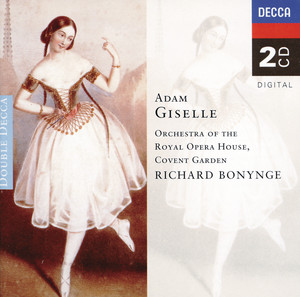 | Giselle / Act 2: Grand pas de deux: Adage | Adolphe Adam, Orchestra of the Royal Opera House, Covent Garden, Richard Bonynge | E♭ Major | 0 | 5B | 73 BPM | |
 | Giselle, Act I: Variation de Giselle | Adolphe Adam, Academy of St. Martin in the Fields, Sir Neville Marriner | E Major | 0 | 12B | 78 BPM | |
 | Morgen, Op. 27 No. 4 (Arr. Reger for Piano) | Richard Strauss, Angela Hewitt | A Major | 2 | 11B | 143 BPM |
- ISRC
- GBF078040313
- Label
- L-M Records/RCA Records