- BPM
- 100
- Key
- E Minor
- Camelot
- 9A
Tchaikovsky: The Nutcracker, Op. 71, Act II: No. 12d, Divertissement. Trepak, Russian Dance by Pyotr Ilyich Tchaikovsky, Berliner Philharmoniker, Sir Simon Rattle Song Details
"Tchaikovsky: The Nutcracker, Op. 71, Act II: No. 12d, Divertissement. Trepak, Russian Dance" by Pyotr Ilyich Tchaikovsky, Berliner Philharmoniker, Sir Simon Rattle had its release date on November 18, 2011. With This song being less than two minutes long, at 1:09, we are fairly confident that this song is not explicit and is safe for all ages. Based on the duration of this song, this song duration is much smaller than the average song duration. The song is number 9 out of 25 in De Notenkraker by Edwin Rutten, Sir Simon Rattle, Berliner Philharmoniker. Going off of the ISRC code of this track, we detected that the origin of this track is from United Kingdom. In terms of popularity, Tchaikovsky: The Nutcracker, Op. 71, Act II: No. 12d, Divertissement. Trepak, Russian Dance is currently not that popular. In our opinion, the overall tone is not very danceable and projects negative sounds, such as being sad, depressed, or angry.
BPM and Tempo
The tempo marking of Tchaikovsky: The Nutcracker, Op. 71, Act II: No. 12d, Divertissement. Trepak, Russian Dance by Pyotr Ilyich Tchaikovsky, Berliner Philharmoniker, Sir Simon Rattle is Andante (at a walking pace), since this song has a tempo of 100 BPM. With that information, we can conclude that the song has a slow tempo. The time signature for this track is 4/4.
Music Key
This song has a musical key of E Minor. Because this track belongs in the E Minor key, the camelot key is 9A. So, the perfect camelot match for 9A would be either 9A or 8B. While, a low energy boost can consist of either 9B or 10A. For moderate energy boost, you would use 6A and a high energy boost can either be 11A or 4A. However, if you are looking for a low energy drop, finding a song with a camelot key of 8A would be a great choice. Where 12A would give you a moderate drop, and 7A or 2A would be a high energy drop. Lastly, 12B allows you to change the mood.
Want to find the BPM and music key for other songs? Check out our BPM and Key Finder page!
- Popularity
- 4%
- Loudness
- -22.402 dB
- Acousticness
- 93%
- Danceability
- 23%
- Energy
- 11%
- Instrumentalness
- 92%
- Liveness
- 13%
- Loudness
- 63%
- Speechiness
- 4%
- Valence
- 6%
Recommendations
| Track | Artist | Key | Energy | Camelot | BPM | ||
|---|---|---|---|---|---|---|---|
 | Waltz No. 19 in A minor, Op. posth. | Frédéric Chopin, Peter Jablonski | A Minor | 0 | 8A | 69 BPM | |
 | The Sleeping Beauty, Ballet Suite, op. 66a: Pas d'action | New Philharmonia Orchestra London, Lawrence Siegel | E♭ Major | 1 | 5B | 77 BPM | |
 | In the Steppes of Central Asia | Alexander Borodin, Royal Philharmonic Orchestra, Vladimir Ashkenazy | A Major | 0 | 11B | 69 BPM | |
 | Waltz in A flat major, Op.39 No. 15 | Johannes Brahms, Radio Symphony Orchestra | A Major | 1 | 11B | 89 BPM | |
 | Finlandia, Op. 26 | Jean Sibelius, Berliner Philharmoniker, Herbert von Karajan | A♭ Major | 3 | 4B | 67 BPM | |
 | Brook Green Suite: II. Air | Gustav Holst, English Sinfonia, Howard Griffiths | E♭ Major | 0 | 5B | 128 BPM | |
 | Le roi s'amuse: Passepied | Léo Delibes, Slovak Philharmonic, Ondrej Lenard | A Major | 1 | 11B | 88 BPM | |
 | Prelude in C Sharp Minor, Op. 3, No. 2 (Arr. Orchestra) - Live | Sergei Rachmaninoff, Czech Philharmonic, Leopold Stokowski | E♭ Major | 4 | 5B | 124 BPM | |
 | Symphony No. 7 in A Major, Op. 92: II. Allegretto | Ludwig van Beethoven, Berliner Philharmoniker, Herbert von Karajan | E Minor | 0 | 9A | 77 BPM | |
 | La Princesse lontaine - Prelude | Nikolai Tcherepnin, Russian National Orchestra, Mikhail Pletnev | A Major | 0 | 11B | 69 BPM | |
 | Cello Concerto No. 1 in A Minor, Op. 33: I. Allegro non troppo | Camille Saint-Saëns, Mischa Maisky, Orpheus Chamber Orchestra | F Major | 2 | 7B | 131 BPM | |
 | Giselle, Act 1: Overture | Adolphe Adam, Tasmanian Symphony Orchestra, Nicolette Fraillon | E♭ Major | 1 | 5B | 88 BPM | |
 | Six Pieces, Op. 51, TH 143: VI. Valse sentimentale. Tempo di Valse | Pyotr Ilyich Tchaikovsky, Daniel Lozakovich, Stanislav Soloviev | D♭ Major | 1 | 3B | 108 BPM | |
 | Frühlingsstimmen, Op. 410 | Johann Strauss II, Slovak Philharmonic, Noriaki Kitamura | B♭ Major | 0 | 6B | 181 BPM | |
 | String Quartet No. 1 in D Major, Op. 11: II. Andante cantabile | Pyotr Ilyich Tchaikovsky, New Haydn Quartet | B♭ Major | 0 | 6B | 89 BPM | |
 | Peer Gynt, Op. 23: No. 16, Anitra's Dance | Edvard Grieg, San Francisco Symphony, Herbert Blomstedt | A Minor | 0 | 8A | 82 BPM | |
 | Serenade for Strings in E Major, Op. 22, B. 52: II. Tempo di valse | Antonín Dvořák, Prague Chamber Orchestra, Petr Skvor | A Major | 1 | 11B | 0 BPM | |
 | Tale of Tsar Saltan, Op. 57: Flight of the Bumblebee: Flight of the Bumble-Bee | Nikolai Rimsky-Korsakov, Slovak Radio Symphony Orchestra, Anthony Bramall | D Minor | 0 | 7A | 77 BPM | |
 | Sicilienne, Op. 78 (arr. for flute and harp) | Donald Sosin, Gabriel Fauré, Nora Shulman, Judy Loman | B♭ Major | 1 | 6B | 153 BPM | |
 | Serenade in C Major, Op. 48: IV. Finale (Tema Russo) | Pyotr Ilyich Tchaikovsky, Vienna Chamber Orchestra, Philippe Entremont | G Major | 3 | 9B | 146 BPM | |
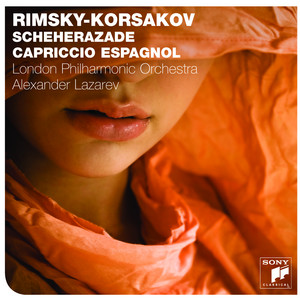 | Scheherazade: The Young Prince | Nikolai Rimsky-Korsakov, Lars Hjalmar Joakim | G Major | 1 | 9B | 91 BPM | |
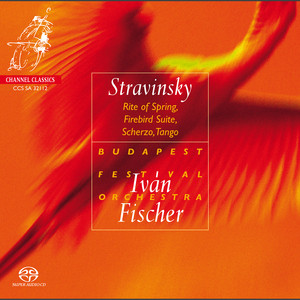 | L'oiseau de feu, K. 10. Suite 1919: V. Danse infernale du roi Kastchei | Igor Stravinsky, Budapest Festival Orchestra, Iván Fischer | C Major | 5 | 8B | 130 BPM | |
 | Dance of the goblins | Razvan Stoica | C Major | 4 | 8B | 177 BPM | |
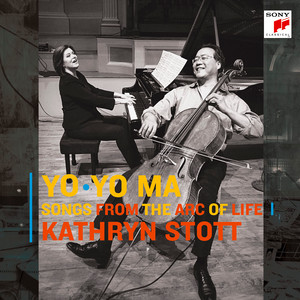 | Songs My Mother Taught Me (from "Gypsy Songs", Op. 55, No. 4) | Antonín Dvořák, Yo-Yo Ma, Kathryn Stott | B Minor | 0 | 10A | 92 BPM | |
| Le roi s'amuse: Pavane | Léo Delibes, Slovak Philharmonic, Ondrej Lenard | B♭ Major | 0 | 6B | 91 BPM |
- ISRC
- GBAYC1000872
- Label
- L-M Records/RCA Records