- BPM
- 124
- Key
- A♭ Major
- Camelot
- 4B
Риголетто: Cortigiani, vil razza dannata (Ария Риголетто) by Джузеппе Верди, Muslim Magomayev, Ниязи Тагизаде-Гаджибеков, Большой симфонический оркестр Центрального телевидения и Всесоюзного радио Song Details
Джузеппе Верди, Muslim Magomayev, Ниязи Тагизаде-Гаджибеков, Большой симфонический оркестр Центрального телевидения и Всесоюзного радио's ' "Риголетто: Cortigiani, vil razza dannata (Ария Риголетто)" was released on its scheduled release date, January 24, 2018. With this song being about 5 minutes long, at This song is fairly a long song compared to the average song length. This song does not have an "Explicit" tag, making it safe for all ages. There is only one song in Итальянское танго, so we believe that "Риголетто: Cortigiani, vil razza dannata (Ария Риголетто)" is a single. Based on our statistics, Риголетто: Cortigiani, vil razza dannata (Ария Риголетто)'s popularity is unknown right now. Since there is more of a neutral sound being played, this makes the track somewhat danceable.
BPM and Tempo
The tempo marking of Риголетто: Cortigiani, vil razza dannata (Ария Риголетто) by Джузеппе Верди, Muslim Magomayev, Ниязи Тагизаде-Гаджибеков, Большой симфонический оркестр Центрального телевидения и Всесоюзного радио is Allegro (fast, quick, and bright), since this song has a tempo of 124 BPM. With that information, we can conclude that the song has a fast tempo. This song can go great with walking. The time signature for this track is 4/4.
Music Key
A♭ Major is the music key of this track. This also means that this song has a camelot key of 4B. So, the perfect camelot match for 4B would be either 4B or 5A. While, 5B can give you a low energy boost. For moderate energy boost, you would use 1B and a high energy boost can either be 6B or 11B. Though, if you want a low energy drop, you should looking for songs with either a camelot key of 4A or 3B will give you a low energy drop, 7B would be a moderate one, and 2B or 9B would be a high energy drop. Lastly, 1A allows you to change the mood.
Want to find the BPM and music key for other songs? Check out our BPM and Key Finder page!
- Popularity
- 0%
- Loudness
- -7.135 dB
- Acousticness
- 96%
- Danceability
- 53%
- Energy
- 52%
- Instrumentalness
- 7%
- Liveness
- 17%
- Loudness
- 88%
- Speechiness
- 5%
- Valence
- 45%
Recommendations
| Track | Artist | Key | Energy | Camelot | BPM | ||
|---|---|---|---|---|---|---|---|
 | Rossini: Petite messe solennelle: III. Credo, 2. Crucifixus (Soprano). Andantino sostenuto | Gioachino Rossini, Antonio Pappano | D Minor | 0 | 7A | 88 BPM | |
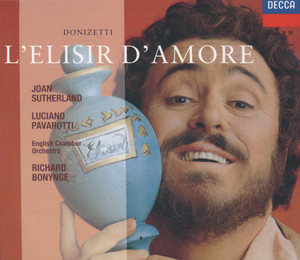 | L'elisir d'amore / Act 2: "Dell'elisir mirabile" - "E bellissima" | Gaetano Donizetti, Luciano Pavarotti, Maria Casula, Dame Joan Sutherland, Spiro Malas, Ambrosian Opera Chorus, English Chamber Orchestra, Richard Bonynge | C Minor | 2 | 5A | 92 BPM | |
 | I Puritani / Act 1: Ah! per sempre io ti perdei | Vincenzo Bellini, Piero Cappuccilli, Renato Cazzaniga, London Symphony Orchestra, Richard Bonynge | G Major | 2 | 9B | 74 BPM | |
 | Cavalleria rusticana: Gli aranci olezzano sui verdi margini | Pietro Mascagni, Orchestra Del Teatro Alla Scala, Milano, Herbert von Karajan, Coro Del Teatro Alla Scala Di Milano | A Major | 1 | 11B | 69 BPM | |
 | Beatrice di Tenda: Act I Scene 1: Ah! non pensar che pieno (Agnese, Filippo, Choir) | Vincenzo Bellini, Camille Capasso, Fabio Luisi, Paolo Gavanelli, Chorus of the German Opera House Berlin, German Opera House Berlin Orchestra | A♭ Major | 1 | 4B | 101 BPM | |
 | Simon Boccanegra: Act I: Cielo di stelle orbato (Gabriele, Amelia) | Giuseppe Verdi, Francesco Meli, Marina Rebeka, Michele Spotti, Orchestra del Teatro San Carlo di Napoli | D Minor | 2 | 7A | 102 BPM | |
 | Le nozze di Figaro, K.492 / Act 3: "Hai già vinta la causa" - "Vedrò mentr'io sospiro" | Wolfgang Amadeus Mozart, Thomas Hampson, Metropolitan Opera Orchestra, James Levine | C Major | 2 | 8B | 123 BPM | |
 | Lecuona: María la O: "Eschucha al ruisenor" | Lisette Oropesa | E♭ Major | 1 | 5B | 93 BPM | |
 | Tosca, Act I: Mia gelosa! | Giacomo Puccini, Eleonora Buratto, Jonathan Tetelman, Orchestra dell'Accademia Nazionale di Santa Cecilia, Daniel Harding | E♭ Minor | 3 | 2A | 135 BPM | |
 | Suor Angelica: O sorelle in pio lavoro | Giacomo Puccini, Isobel Buchanan, Dame Joan Sutherland, Elizabeth Connell, Miriam Bowen, National Philharmonic Orchestra, Richard Bonynge | D♭ Major | 1 | 3B | 91 BPM | |
 | Les Pêcheurs de perles: Act I: Sur la grève en feu (Fishermen, Villagers) | Georges Bizet, Choeurs du Théâtre National De l'Opéra-Comique, Paris, Orchestre Du Theatre National De L'opera-comique, Pierre Dervaux, Orchestre du Theatre National de IOpera-Comique | C Major | 3 | 8B | 178 BPM | |
 | La Sonnambula / Act 1: D'un pensiero e d'un accento | Vincenzo Bellini, Dame Joan Sutherland, Sylvia Stahlman, Margreta Elkins, Nicola Monti, Coro del Maggio Musicale Fiorentino, Orchestra del Maggio Musicale Fiorentino, Richard Bonynge | E♭ Major | 3 | 5B | 82 BPM | |
 | Вертоград | Alexander Dargomyzhsky, Alexander Vedernikov (Sr.), Natalia Gureyeva | G Major | 2 | 9B | 159 BPM | |
 | O Mio Babbini Caro | Sumi Jo | G Major | 2 | 9B | 79 BPM | |
 | Carmen, WD 31, Act II: Gypsy Song. Les tringles des sistres tintaient (Carmen, Fasquita, Zuniga, Mercedes) | Georges Bizet, Graciela Alperyn, Giorgio Lamberti, Alan Titus, Doina Palade, Dalia Schaechter, Ann Liebeck, Danilo Rigosa, Slovak Philharmonic Chorus, Bratislava Children's Choir, Slovak Radio Symphony Orchestra, Ali Rahbari | A Minor | 1 | 8A | 75 BPM | |
 | Eugene Onegin, Op. 24, TH. 5 / Act I: Scene and Quartet. "Mesdames! Ya na sebya vzyal smyelost" | Pyotr Ilyich Tchaikovsky, Mirella Freni, Anne Sofie von Otter, Rosemarie Lang, Neil Shicoff, Thomas Allen, Staatskapelle Dresden, James Levine | E Minor | 2 | 9A | 78 BPM | |
 | Bellini: I puritani: "All’erta!" (Bruno, Coro) | Vincenzo Bellini, Dresdner Philharmonie, Riccardo Frizza | D Major | 5 | 10B | 136 BPM | |
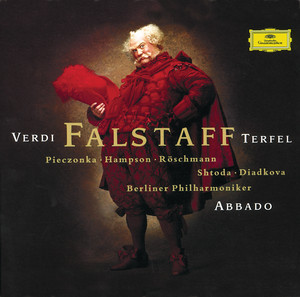 | Falstaff / Act I: "Fulgida Alice! amor t'offro..." / "Quell'otre! quel tino!" | Giuseppe Verdi, Stella Doufexis, Adrianne Pieczonka, Larissa Diadkova, Dorothea Röschmann, Enrico Facini, Anthony Mee, Daniil Shtoda, Anatolij Kotscherga, Thomas Hampson, Berliner Philharmoniker, Claudio Abbado | C Major | 3 | 8B | 68 BPM | |
 | Zwei Scenen für Singstimme und Orchester, Op. 199: No. 2, Die Hirtin | Joachim Raff, Therese Schleiden, Lena-Lisa Wüstendörfer, Marie-Claude Chappuis, Swiss Orchestra | D Minor | 2 | 7A | 102 BPM | |
 | Cavalleria rusticana: Pt. I: Dite, mamma Lucia (Santuzza, Lucia) | Pietro Mascagni, Maria Callas, Giuseppe Di Stefano, Rolando Panerai, Anna Maria Canali, Ebe Ticozzi, Vittore Veneziani, Milan La Scala Chorus, Orchestra Del Teatro Alla Scala, Milano, Tullio Serafin | E Minor | 1 | 9A | 81 BPM | |
 | Rusalka, Op. 114 / Act 2: Jiz tyden dlis po boku | Antonín Dvořák, Ben Heppner, Eva Urbanová, Czech Philharmonic, Sir Charles Mackerras | A♭ Major | 2 | 4B | 167 BPM | |
 | Der fliegende Holländer, Act III: Willst jenen Tag du nicht dich mehr entsinnen "Cavatina" | Richard Wagner, René Kollo, Chicago Symphony Orchestra, Sir Georg Solti | A Major | 3 | 11B | 87 BPM | |
 | Semiramide, Act I Scene 8: Ah dov'e, dov'e il cimento? (Idreno) | Gioachino Rossini, Alex Penda, Marianna Pizzolato, Lorenzo Regazzo, John Osborn, Andrea Mastroni, Marija Jokovic, Vassilis Kavayas, Raffaele Facciola, Poznan Camerata Bach Choir, Virtuosi Brunensis, Antonino Fogliani | C Major | 1 | 8B | 81 BPM | |
 | Offenbach: Les Brigands, Act 1: No. 1bis, Mélodrame - No. 2, Couplets de Fiorella, "Au chapeau, je porte une aigrette" (Fiorella, Choeur) | Jacques Offenbach, John Eliot Gardiner - Choeurs De L'Opéra National De Lyon - Orch Nat Opéra De Lyon - Ghyslaine Raphanel, Orchestre De L'Opéra National De Lyon | A Major | 2 | 11B | 123 BPM | |
 | Eugene Onegin, Op. 24, TH.5 / Act 1: "Skazhi, kotoraya Tatyana" | Pyotr Ilyich Tchaikovsky, Dmitri Hvorostovsky, Nuccia Focile, Neil Shicoff, Olga Borodina, Orchestre de Paris, Semyon Bychkov | F Major | 4 | 7B | 140 BPM |
- ISRC
- FR2X41815622
- Label
- L-M Records/RCA Records