- BPM
- 83
- Key
- B Major
- Camelot
- 1B
Deborah, HWV 51: Part I: Recitative by George Frideric Handel, Natacha Ducret, Elisabeth Scholl, Ewa Wolak, Lawrence Zazzo, Junge Kantorei, Frankfurt Baroque Orchestra, Joachim Carlos Martini Song Details
George Frideric Handel, Natacha Ducret, Elisabeth Scholl, Ewa Wolak, Lawrence Zazzo, Junge Kantorei, Frankfurt Baroque Orchestra, Joachim Carlos Martini's 'Deborah, HWV 51: Part I: Recitative' had a release date set for March 1, 2002. With This song being less than two minutes long, at 1:17, we are fairly confident that this song is not explicit and is safe for all ages. Based on the duration of this song, this song duration is much smaller than the average song duration. The track order of this song in George Frideric Handel's "Handel: Deborah" album is number 23 out of 74. On top of that, Hong Kong appears to be the country where this track was created. Deborah, HWV 51: Part I: Recitative is not that popular right now. In our opinion, the overall tone is not very danceable and projects negative sounds, such as being sad, depressed, or angry.
BPM and Tempo
We consider the tempo marking of Deborah, HWV 51: Part I: Recitative by George Frideric Handel, Natacha Ducret, Elisabeth Scholl, Ewa Wolak, Lawrence Zazzo, Junge Kantorei, Frankfurt Baroque Orchestra, Joachim Carlos Martini to be Andante (at a walking pace) because the track has a tempo of 83 BPM, a half-time of 42BPM, and a double-time of 166 BPM. Based on that, the speed of the song's tempo is slow. The time signature for this track is 3/4.
Music Key
This song is in the music key of B Major. This also means that this song has a camelot key of 1B. So, the perfect camelot match for 1B would be either 1B or 2A. While, 2B can give you a low energy boost. For moderate energy boost, you would use 10B and a high energy boost can either be 3B or 8B. Though, if you want a low energy drop, you should looking for songs with either a camelot key of 1A or 12B will give you a low energy drop, 4B would be a moderate one, and 11B or 6B would be a high energy drop. Lastly, 10A allows you to change the mood.
Want to find the BPM and music key for other songs? Check out our BPM and Key Finder page!
- Popularity
- 1%
- Loudness
- -28.794 dB
- Acousticness
- 94%
- Danceability
- 36%
- Energy
- 6%
- Instrumentalness
- 0%
- Liveness
- 26%
- Loudness
- 52%
- Speechiness
- 6%
- Valence
- 24%
Recommendations
| Track | Artist | Key | Energy | Camelot | BPM | ||
|---|---|---|---|---|---|---|---|
 | Rusalka, Op. 114: Song to the Moon (Arranged for Violin & Orchestra by Joshua Bell) | Antonín Dvořák, Joshua Bell, Michael Stern, Orchestra of St. Luke's | F♯ Major | 1 | 2B | 137 BPM | |
 | Mahler: Symphony No. 5 in C-Sharp Minor: IV. Adagietto. Sehr langsam | Gustav Mahler, Daniel Barenboim, Chicago Symphony Orchestra | F Major | 1 | 7B | 82 BPM | |
 | Nocturne No. 1 in E-Flat Major, H. 24 | John Field, Elizabeth Joy Roe | E♭ Major | 0 | 5B | 75 BPM | |
 | Triumphal March from Tancrede - Instrumental | André Campra, Richard Kapp, Philharmonia Virtuosi of New York | D Major | 3 | 10B | 149 BPM | |
 | The Indian Queen, Z. 630: Trumpet Tune | Henry Purcell, Stephane Beaulac, Vincent Boucher | A Minor | 2 | 8A | 127 BPM | |
 | Oboe Concerto in D Minor, S. Z799: I. Andante | Alessandro Marcello, Musica Bohemica, Jaroslav Krcek, Gabriela Krčková | D Minor | 1 | 7A | 72 BPM | |
 | Miserere in C Minor Psalm 50, ZWV. 57 | Jan Dismas Zelenka, Il Fondamento, Il Fondamento Choir, Paul Dombrecht | B Minor | 2 | 10A | 64 BPM | |
 | Handel: Water Music, Suite No. 2 in D Major, HWV 349: III. Gigue | George Frideric Handel, Yehudi Menuhin, Bath Festival Orchestra | D Major | 1 | 10B | 118 BPM | |
 | Panis Angelicus (Arr. Leopold Stokowski) | César Franck, Matthias Bamert, BBC Philharmonic | A Major | 1 | 11B | 65 BPM | |
 | Adagio in F, H.XVII No. 9 | Joseph Haydn, Alfred Brendel | F Major | 0 | 7B | 71 BPM | |
 | Pergolesi: Sinfonia a tre in F Major: III. Adagio | Giovanni Battista Pergolesi, Il Seminario Musicale | C Minor | 0 | 5A | 111 BPM | |
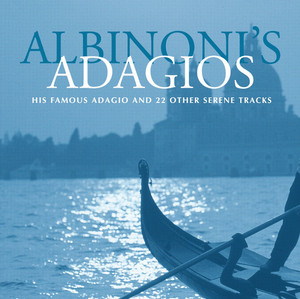 | Albinoni: Concerto a cinque in B-Flat Major, Op. 10 No. 1: II. Adagio | Tomaso Albinoni, Claudio Scimone, I Solisti Veneti | G Minor | 2 | 6A | 63 BPM | |
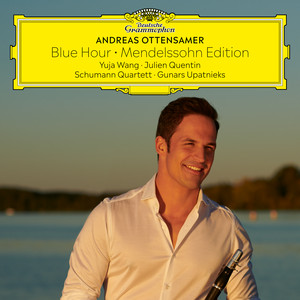 | Lieder ohne Worte, Op. 62: No. 6 Allegretto grazioso "Frühlingslied" (Arr. Ottensamer for Clarinet and Strings) | Felix Mendelssohn, Andreas Ottensamer, Schumann Quartett, Gunars Upatnieks | A Major | 1 | 11B | 99 BPM | |
 | Sonate No.5 (Six Sonates en symphonies op. 3): 2. Aria: Gratioso | Jean-Joseph Cassanéa De Mondonville, Les Musiciens du Louvre, Marc Minkowski | F♯ Minor | 0 | 11A | 106 BPM | |
 | Overture For Viola D'amore & Orchestra in D Minor, GWV 426: VI. Menuets 1 Et 2 (Alternativement) | Christoph Graupner, Les idées heureuses, Hélène Plouffe, Geneviève Soly | D♭ Minor | 1 | 12A | 168 BPM | |
 | Orfeo ed Euridice, Wq. 30, Act II: Danse des champs-elysées "Mélodie" (Arr. for Piano by Ignaz Friedman) | Christoph Willibald Gluck, Joseph Banowetz | A Major | 0 | 11B | 72 BPM | |
 | Handel: Music for the Royal Fireworks, HWV 351: I. Overture (Adagio) | George Frideric Handel, Alison Balsom, Balsom Ensemble, Simon Wright | D♭ Major | 3 | 3B | 87 BPM | |
 | Water Music: Suite No. 1 in F Major, HWV 348, VII. Air | George Frideric Handel, Pierre Boulez, New York Philharmonic | F Major | 1 | 7B | 83 BPM | |
 | Pièces de viole, Livre 3 - Suite No. 7 in G Major: No. 92. Prélude. Lentement | Marin Marais, Mieneke van der Velden, Glen Wilson | E♭ Minor | 0 | 2A | 120 BPM | |
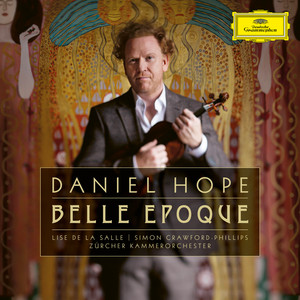 | Notturno for Strings and Harp | Arnold Schoenberg, Daniel Hope, Zürcher Kammerorchester, Jane Berthe | A♭ Major | 1 | 4B | 75 BPM | |
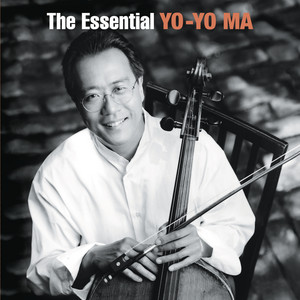 | Matthäus-Passion, BWV 244: Erbarme dich mein Gott | Yo-Yo Ma, Johann Sebastian Bach, Ton Koopman, Amsterdam Baroque Orchestra | B♭ Minor | 1 | 3A | 91 BPM | |
 | Pavane, Op. 50 (Version for Piano) | Gabriel Fauré, Jorge Federico Osorio | F♯ Minor | 0 | 11A | 75 BPM | |
 | Music for the Royal Fireworks: Suite HWV 351: 4. La réjouissance | George Frideric Handel, Academy of Ancient Music, Christopher Hogwood | D♭ Major | 4 | 3B | 102 BPM | |
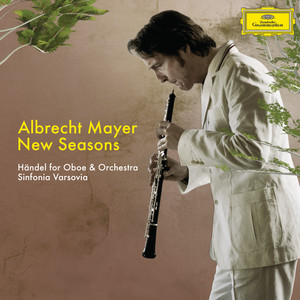 | Concerto for Oboe, Bassoon, Harpsichord and B.c. "Piagge serene": Adagio (from Organconcerto Op. 7,4, HWV 309) | George Frideric Handel, Albrecht Mayer, Sinfonia Varsovia, Guilhaume Santana, Jakub Haufa, Monika Razynska | A♭ Major | 4 | 4B | 114 BPM | |
 | Overture (Suite) In C Major, TWV 55: C6: I. Ouverture: Grave. Allegro. Grave | Cologne Chamber Orchestra, Georg Philipp Telemann | G Major | 3 | 9B | 116 BPM |
- ISRC
- HKI190139223
- Label
- L-M Records/RCA Records