- BPM
- 76
- Key
- G Minor
- Camelot
- 6A
Strauss, R: Ariadne auf Naxos, Op. 60, Opera: "Circe, Circe, kannst du mich hören?" (Bacchus, Ariadne, Najade, Dryade, Echo) by Richard Strauss, Herbert von Karajan, Anny Felbermayer, Elisabeth Schwarzkopf, Grace Hoffman, Lisa Otto, Rudolf Schock, Philharmonia Orchestra Song Details
"Strauss, R: Ariadne auf Naxos, Op. 60, Opera: "Circe, Circe, kannst du mich hören?" (Bacchus, Ariadne, Najade, Dryade, Echo)" by Richard Strauss, Herbert von Karajan, Anny Felbermayer, Elisabeth Schwarzkopf, Grace Hoffman, Lisa Otto, Rudolf Schock, Philharmonia Orchestra had its release date on 1955. Since This song is still less than 10 minute long, it is still considered a pretty long duration song compared to the average song length. This song does not appear to be explicit due to the lack of the "E" tag. There are a total of 27 in the song's album "R. Strauss: Ariadne auf Naxos". In this album, this song's track order is #6. Furthermore, we believe that the track originated from United Kingdom. Strauss, R: Ariadne auf Naxos, Op. 60, Opera: "Circe, Circe, kannst du mich hören?" (Bacchus, Ariadne, Najade, Dryade, Echo) is unknown right now. In our opinion, the overall tone is not very danceable and projects negative sounds, such as being sad, depressed, or angry.
BPM and Tempo
With Strauss, R: Ariadne auf Naxos, Op. 60, Opera: "Circe, Circe, kannst du mich hören?" (Bacchus, Ariadne, Najade, Dryade, Echo) by Richard Strauss, Herbert von Karajan, Anny Felbermayer, Elisabeth Schwarzkopf, Grace Hoffman, Lisa Otto, Rudolf Schock, Philharmonia Orchestra having a BPM of 76 with a half-time of 38 BPM and a double-time of 152 BPM, we would consider this track to have a Adagio (slowly with great expression) tempo marking. Because of this, we believe that the song has an overall slow tempo. The time signature for this track is 5/4.
Music Key
This song has a musical key of G Minor. Which also means that the camelot key for this song is 6A. So, the perfect camelot match for 6A would be either 6A or 5B. While, a low energy boost can consist of either 6B or 7A. For moderate energy boost, you would use 3A and a high energy boost can either be 8A or 1A. However, if you are looking for a low energy drop, finding a song with a camelot key of 5A would be a great choice. Where 9A would give you a moderate drop, and 4A or 11A would be a high energy drop. Lastly, 9B allows you to change the mood.
Want to find the BPM and music key for other songs? Check out our BPM and Key Finder page!
- Popularity
- 0%
- Loudness
- -16.291 dB
- Acousticness
- 84%
- Danceability
- 32%
- Energy
- 29%
- Instrumentalness
- 0%
- Liveness
- 37%
- Loudness
- 73%
- Speechiness
- 34%
- Valence
- 14%
Recommendations
| Track | Artist | Key | Energy | Camelot | BPM | ||
|---|---|---|---|---|---|---|---|
 | Symphony in C Major, Op. 46: II. Sehr langsam - | Hans Pfitzner, Seattle Symphony Orchestra, Gerard Schwarz | F Major | 0 | 7B | 87 BPM | |
 | Les biches Suite, FP 36b: I. Rondeau | Francis Poulenc, RTÉ National Symphony Orchestra, Jean-Luc Tingaud | C Major | 1 | 8B | 79 BPM | |
 | Sibelius : Symphony No.5 in E flat major Op.82 : II Andante mosso, quasi allegretto | Jean Sibelius, Sakari Oramo, City Of Birmingham Symphony Orchestra | G Major | 0 | 9B | 142 BPM | |
 | Eugene Onegin, Op. 24, TH. 5 / Act I: Introduction | Pyotr Ilyich Tchaikovsky, Staatskapelle Dresden, James Levine | G Minor | 1 | 6A | 107 BPM | |
 | Lasst mich allein, Op. 82 No. 1, B. 157/1 (Orch. Leopold) | Antonín Dvořák, Mahler Chamber Orchestra, Daniel Harding | A Major | 2 | 11B | 130 BPM | |
 | Trittico Botticelliano: No. 3, La nascita di Venere | Ottorino Respighi, Bamberg Symphony, Riccardo Frizza | E Minor | 1 | 9A | 106 BPM | |
 | L'Arlésienne Suite No. 1, WD 40: 3. Adagietto | Georges Bizet, Orchestre de Paris, Semyon Bychkov | F Major | 0 | 7B | 92 BPM | |
 | Vier letzte Lieder, TrV 296: 3. Beim Schlafengehen | Richard Strauss, Jessye Norman, Gewandhausorchester, Kurt Masur | D♭ Major | 1 | 3B | 82 BPM | |
 | Piano Concerto No. 2 in A Minor, Op. 85: II. Larghetto | Johann Nepomuk Hummel, Stephen Hough, English Chamber Orchestra, Bryden Thomson | F Major | 1 | 7B | 127 BPM | |
 | Mussorgsky / Orch. Ravel: Pictures at an Exhibition: XI. The Knight's Gate in the Old Capital of Kiev | Modest Mussorgsky, Sir Simon Rattle, Berliner Philharmoniker | E♭ Major | 2 | 5B | 85 BPM | |
 | Le carnaval des animaux, R. 125: Le cygne | Camille Saint-Saëns, Mischa Maisky, Orpheus Chamber Orchestra | C Major | 0 | 8B | 83 BPM | |
 | Poulenc: Concerto for Two Pianos in D Minor, FP 61: I. Allegro ma non troppo | Francis Poulenc, James Conlon, Rotterdam Philharmonic Orchestra | E♭ Major | 1 | 5B | 103 BPM | |
 | Shéhérazade, Op. 35: I. The Sea and Sinbad's Ship | Nikolai Rimsky-Korsakov, Sergej Galaktionov, Gianandrea Noseda, Filarmonica Teatro Regio Torino | E Major | 1 | 12B | 136 BPM | |
 | Notturno for Strings and Harp | Arnold Schoenberg, Daniel Hope, Zürcher Kammerorchester, Jane Berthe | A♭ Major | 1 | 4B | 75 BPM | |
 | Symphony In C Major: IV. Allegro Vivace | New Zealand Symphony Orchestra, Georges Bizet | G Major | 1 | 9B | 146 BPM | |
 | Concerto for Organ, Strings and Percussion in G minor, FP 93: Allegro giocoso | Francis Poulenc, Peter Hurford, Philharmonia Orchestra, Charles Dutoit | D Major | 1 | 10B | 110 BPM | |
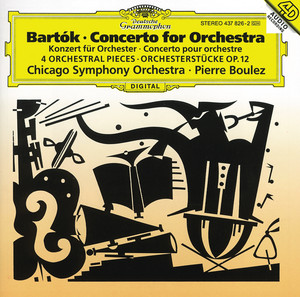 | Concerto for Orchestra, Sz. 116: V. Finale. Pesante – Presto | Béla Bartók, Chicago Symphony Orchestra, Pierre Boulez | A♭ Major | 2 | 4B | 127 BPM | |
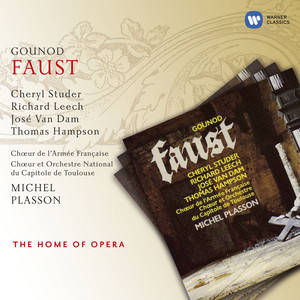 | Gounod: Faust, CG 4, Act 1 Scene 1: No. 1, Introduction | Charles Gounod, Michel Plasson, Orchestre Du Capitole De Toulouse, Orchestre National Du Capitole De Toulouse | A Minor | 1 | 8A | 94 BPM | |
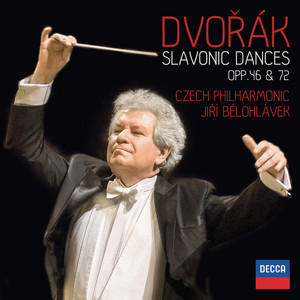 | 8 Slavonic Dances, Op. 72, B. 147: 2. Dumka. Allegretto grazioso | Antonín Dvořák, Czech Philharmonic, Jiří Bělohlávek | C Major | 2 | 8B | 97 BPM | |
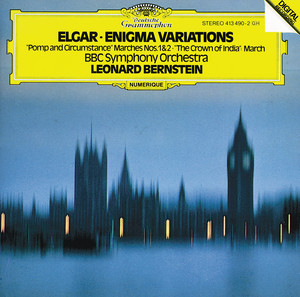 | Enigma Variations, Op. 36: Var. 9. Adagio "Nimrod" | Edward Elgar, BBC Symphony Orchestra, Leonard Bernstein | E♭ Major | 0 | 5B | 79 BPM | |
 | Prelude: Allegro - Meno mosso - Alla breve (Allegro) - Adagio - | Ottorino Respighi, Seattle Symphony Orchestra, Gerard Schwarz | D Major | 1 | 10B | 74 BPM | |
 | Karadec Suite, Op. 34: II. Chanson | Vincent d'Indy, Malmö Symphony Orchestra, Darrell Ang | E♭ Major | 0 | 5B | 71 BPM | |
 | Zdes' khorosho ('How Fair This Spot'), Op. 21, No. 7 | Sergei Rachmaninoff, Pablo Ferrandez, Denis Kozhukhin | A Major | 0 | 11B | 87 BPM | |
 | Symphonie fantastique, H. 48: IV. Marche au supplice | Hector Berlioz, Chicago Symphony Orchestra, Claudio Abbado | G Minor | 2 | 6A | 166 BPM | |
 | Symphony No.3 In C Minor, Op.78 "Organ Symphony": 1b. Poco adagio | Camille Saint-Saëns, Simon Preston, Berliner Philharmoniker, James Levine | D♭ Major | 0 | 3B | 80 BPM |
- ISRC
- GBAYC9900493
- Label
- L-M Records/RCA Records