- BPM
- 130
- Key
- D♭ Major
- Camelot
- 3B
Piano Sonata No. 2 in G Minor, Op. 22: IV. Rondo. Presto by Robert Schumann, Murray Perahia Song Details
"Piano Sonata No. 2 in G Minor, Op. 22: IV. Rondo. Presto" by Robert Schumann, Murray Perahia had its release date on 1973. With this song being about 5 minutes long, at This song is fairly a long song compared to the average song length. This song does not have an "Explicit" tag, making it safe for all ages. The track order of this song in Robert Schumann, Murray Perahia's "Murray Perahia Plays Schumann" album is number 4 out of 110. On top of that, United States appears to be the country where this track was created. Based on our statistics, Piano Sonata No. 2 in G Minor, Op. 22: IV. Rondo. Presto's popularity is not that popular right now. Although the tone can be danceable to some, this track does projects more of a negative sound rather than a postive one.
BPM and Tempo
We consider the tempo marking of Piano Sonata No. 2 in G Minor, Op. 22: IV. Rondo. Presto by Robert Schumann, Murray Perahia to be Allegro (fast, quick, and bright) because the track has a tempo of 130 BPM, a half-time of 65BPM, and a double-time of 260 BPM. Based on that, the speed of the song's tempo is fast. Activities such as, walking, can go well with this song. The time signature for this track is 3/4.
Music Key
This song has a musical key of D♭ Major. This also means that this song has a camelot key of 3B. So, the perfect camelot match for 3B would be either 3B or 4A. While, 4B can give you a low energy boost. For moderate energy boost, you would use 12B and a high energy boost can either be 5B or 10B. Though, if you want a low energy drop, you should looking for songs with either a camelot key of 3A or 2B will give you a low energy drop, 6B would be a moderate one, and 1B or 8B would be a high energy drop. Lastly, 12A allows you to change the mood.
Want to find the BPM and music key for other songs? Check out our BPM and Key Finder page!
- Popularity
- 2%
- Loudness
- -28.872 dB
- Acousticness
- 100%
- Danceability
- 40%
- Energy
- 2%
- Instrumentalness
- 91%
- Liveness
- 12%
- Loudness
- 52%
- Speechiness
- 4%
- Valence
- 4%
Recommendations
| Track | Artist | Key | Energy | Camelot | BPM | ||
|---|---|---|---|---|---|---|---|
 | Suite No. 3, P. 172: I. Italiana: Andantino | Ottorino Respighi, RTÉ National Symphony Orchestra | B♭ Major | 1 | 6B | 94 BPM | |
 | Schubert: Piano Sonata No. 20 in A Major, D. 959: II. Andantino | Franz Schubert, Eric Lu | F♯ Minor | 0 | 11A | 66 BPM | |
 | Mélodie, Op. 20, No. 1 | Alexander Glazunov, Julian Lloyd Webber, Royal Philharmonic Orchestra, James Judd | D Major | 1 | 10B | 84 BPM | |
 | Piano Sonata in G Minor: I. Allegro molto agitato | Fanny Mendelssohn, Heather Schmidt | B Minor | 3 | 10A | 87 BPM | |
 | III. March. Song of the Lark | Pyotr Ilyich Tchaikovsky, Mikhail Pletnev | G Minor | 0 | 6A | 135 BPM | |
 | Ständchen, S. 560 (Trans. from Schwanengesang No. 4, D. 957) | Franz Schubert, Franz Liszt, Khatia Buniatishvili | D Major | 0 | 10B | 67 BPM | |
 | Minuet in G Minor, HWV 434 No. 4 (Transc. W. Kempff) | George Frideric Handel, Roberto Cominati | G Minor | 0 | 6A | 66 BPM | |
 | Pavane pour une infante défunte, M. 19 | Maurice Ravel, Anna Vinnitskaya | E Minor | 0 | 9A | 67 BPM | |
 | Pavane in F-Sharp Minor, Op. 50 | Gabriel Fauré, Lucas Debargue | F♯ Minor | 0 | 11A | 163 BPM | |
 | Orfeo ed Euridice, Wq. 30: Dance of the Blessed Spirits "Melody" (Arr. Sgambati for Piano) | Christoph Willibald Gluck, Yuja Wang | D Minor | 0 | 7A | 70 BPM | |
 | Orfeo ed Euridice, Act II: Dance of the Blessed Spirits, "Melodie" (Arr. I. Friedman) | Christoph Willibald Gluck, Yoonie Han | D Minor | 0 | 7A | 77 BPM | |
 | Chopin - 6 Chants Polonais, S480/R145: No. 2. Fruhling(Wiosna, Spring) | Joseph Banowetz, Franz Liszt | G Major | 1 | 9B | 108 BPM | |
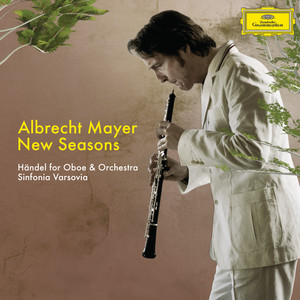 | Trio Sonata for 2 Violins and Continuo in G Minor, HWV 393 "Dresden" No. 2: III. Largo (Arr. for Oboe, Violin, Harpsichord and Orchestra by Andreas Tarkmann) | George Frideric Handel, Albrecht Mayer, Sinfonia Varsovia, Jakub Haufa, Monika Razynska | B♭ Major | 2 | 6B | 143 BPM | |
 | Kinderszenen, Op. 15: VII. No. 7, Träumerei | Robert Schumann, Zhu Xiao-Mei | F Major | 0 | 7B | 65 BPM | |
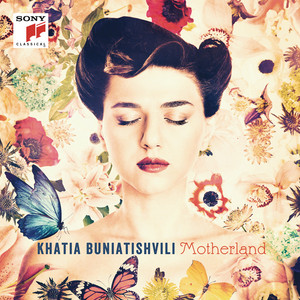 | Lyric Piece in E Minor, Op. 57/6: Homesickness | Edvard Grieg, Khatia Buniatishvili | E Minor | 0 | 9A | 87 BPM | |
 | Mélancolie, FP 105 | Francis Poulenc, Stephen Hough | E♭ Major | 2 | 5B | 104 BPM | |
 | Bach: Adagio (After Violin Concerto No. 2, BWV 1042) | Johann Sebastian Bach, Gabriela Montero | F♯ Minor | 0 | 11A | 73 BPM | |
 | Jeux d'enfants, Op. 22: No. 3, La poupée | Georges Bizet, Katia Labèque, Marielle Labèque | B Major | 0 | 1B | 64 BPM | |
 | Orfeo ed Euridice, Wq. 30, Act II: Danse des champs-elysées "Mélodie" (Arr. for Piano by Ignaz Friedman) | Christoph Willibald Gluck, Joseph Banowetz | A Major | 0 | 11B | 72 BPM | |
 | Chants du Rhin, WD 52: Les rêves | Georges Bizet, Nathanaël Gouin | D♭ Major | 0 | 3B | 65 BPM | |
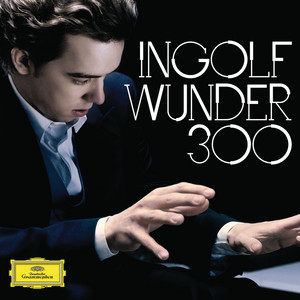 | Valse Fantaisie, Op. 49 | Raoul Koczalski, Ingolf Wunder | B Minor | 0 | 10A | 66 BPM | |
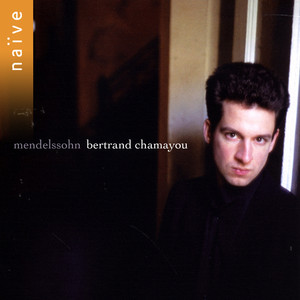 | Songs Without Words, Book VI Opus 67: No. 2 in F-Sharp Minor | Felix Mendelssohn, Bertrand Chamayou | F♯ Minor | 1 | 11A | 69 BPM | |
 | Orfeo ed Euridice: Melody (Arr. G. Sgambati) | Christoph Willibald Gluck, Jura Margulis | D Minor | 0 | 7A | 73 BPM | |
 | Lieder ohne Worte, Op.30: No. 6. Allegretto In F Sharp Minor, MWV U 110 - "Venetian Gondola Song" | Felix Mendelssohn, Daniel Barenboim | F♯ Minor | 0 | 11A | 169 BPM | |
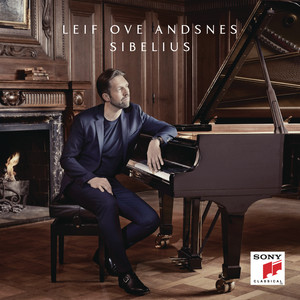 | 13 Pieces for Piano, Op. 76: Elegiaco, No. 10 | Jean Sibelius, Leif Ove Andsnes | E Major | 0 | 12B | 169 BPM |
- ISRC
- USSM18600415
- Label
- L-M Records/RCA Records