- BPM
- 84
- Key
- D Major
- Camelot
- 10B
Tchaikovsky: Variations on a Rococo Theme for Cello and Orchestra, Op. 33: Variation II. Tempo del tema by Pyotr Ilyich Tchaikovsky, Steven Isserlis, John Eliot Gardiner, Chamber Orchestra of Europe Song Details
"Tchaikovsky: Variations on a Rococo Theme for Cello and Orchestra, Op. 33: Variation II. Tempo del tema" by Pyotr Ilyich Tchaikovsky, Steven Isserlis, John Eliot Gardiner, Chamber Orchestra of Europe had its release date on September 15, 1998. The duration of This song is about two minutes long, specifically at 2:46. This song does not appear to have any foul language. Tchaikovsky: Variations on a Rococo Theme for Cello and Orchestra, Op. 33: Variation II. Tempo del tema's duration is considered a little bit shorter than the average duration of a typical track. The song is number 4 out of 34 in Cello Concertos by Steven Isserlis. Going off of the ISRC code of this track, we detected that the origin of this track is from United Kingdom. Tchaikovsky: Variations on a Rococo Theme for Cello and Orchestra, Op. 33: Variation II. Tempo del tema is not that popular right now. In our opinion, the overall tone is not very danceable and projects negative sounds, such as being sad, depressed, or angry.
BPM and Tempo
The tempo marking of Tchaikovsky: Variations on a Rococo Theme for Cello and Orchestra, Op. 33: Variation II. Tempo del tema by Pyotr Ilyich Tchaikovsky, Steven Isserlis, John Eliot Gardiner, Chamber Orchestra of Europe is Andante (at a walking pace), since this song has a tempo of 84 BPM. With that information, we can conclude that the song has a slow tempo. The time signature for this track is 4/4.
Music Key
This song has a musical key of D Major. This also means that this song has a camelot key of 10B. So, the perfect camelot match for 10B would be either 10B or 11A. While, 11B can give you a low energy boost. For moderate energy boost, you would use 7B and a high energy boost can either be 12B or 5B. Though, if you want a low energy drop, you should looking for songs with either a camelot key of 10A or 9B will give you a low energy drop, 1B would be a moderate one, and 8B or 3B would be a high energy drop. Lastly, 7A allows you to change the mood.
Want to find the BPM and music key for other songs? Check out our BPM and Key Finder page!
- Popularity
- 2%
- Loudness
- -34.007 dB
- Acousticness
- 97%
- Danceability
- 8%
- Energy
- 1%
- Instrumentalness
- 9%
- Liveness
- 14%
- Loudness
- 43%
- Speechiness
- 4%
- Valence
- 4%
Recommendations
| Track | Artist | Key | Energy | Camelot | BPM | ||
|---|---|---|---|---|---|---|---|
 | The Planets, Op. 32: 4. Jupiter, the Bringer of Jollity | Gustav Holst, Berliner Philharmoniker, Herbert von Karajan | G Minor | 3 | 6A | 140 BPM | |
 | Consolations, S. 172: No. 3 in D-Flat Major. Lento placido | Franz Liszt, Jean-Yves Thibaudet | D♭ Major | 0 | 3B | 134 BPM | |
 | Serenade for Strings in C major, Op. 48: II. Walzer: Moderato, tempo di valse | Pyotr Ilyich Tchaikovsky, Moscow Soloists, Yuri Bashmet | G Major | 1 | 9B | 66 BPM | |
 | Act I - Boston Waltz | St. Petersburg State Symphony Orchestra, Reinhold Glière | D Major | 2 | 10B | 144 BPM | |
 | Symphony No. 5: IV. Adagietto. Sehr langsam | Gustav Mahler, Wiener Philharmoniker, Pierre Boulez | F Major | 0 | 7B | 87 BPM | |
 | Le roi s'amuse: Pavane | Léo Delibes, Slovak Philharmonic, Ondrej Lenard | B♭ Major | 0 | 6B | 91 BPM | |
 | Passacaglia for Violin and Viola | Johan Halvorsen, Davide Alogna, José Adolfo Alejo | G Minor | 1 | 6A | 176 BPM | |
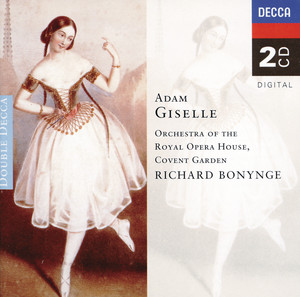 | Giselle / Act 2: Grand pas de deux: Adage | Adolphe Adam, Orchestra of the Royal Opera House, Covent Garden, Richard Bonynge | E♭ Major | 0 | 5B | 73 BPM | |
 | Valse triste, Op. 44 No. 1 | Jean Sibelius, Berliner Philharmoniker, Herbert von Karajan | G Major | 0 | 9B | 78 BPM | |
 | Masquerade Suite: Nocturne | Aram Khachaturian, St. Petersburg State Symphony Orchestra, Andre Anichanov | A Major | 1 | 11B | 105 BPM | |
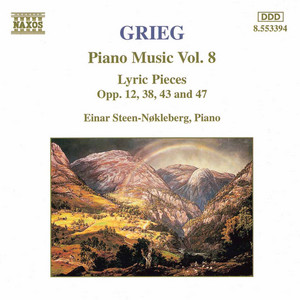 | Lyric Pieces, Book 1, Op. 12: Arietta | Edvard Grieg, Einar Steen-Nøkleberg | E♭ Major | 0 | 5B | 111 BPM | |
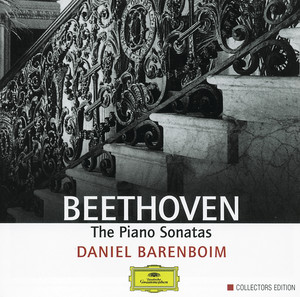 | Piano Sonata No. 14 in C-Sharp Minor, Op. 27 No. 2 "Moonlight Sonata": I. Adagio sostenuto | Ludwig van Beethoven, Daniel Barenboim | D♭ Minor | 0 | 12A | 139 BPM | |
 | The Tale of Tsar Saltan: Flight of the Bumblebee | Nikolai Rimsky-Korsakov, Seattle Symphony Orchestra, Gerard Schwarz | G Major | 1 | 9B | 80 BPM | |
 | Prelude in G Minor, Op. 23, No. 5 - Live at Philharmonie, Berlin / 2018 | Sergei Rachmaninoff, Yuja Wang | G Minor | 2 | 6A | 114 BPM | |
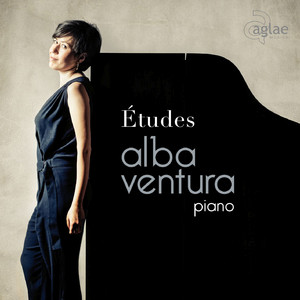 | Étude: Op. 76 No. 2 | Jean Sibelius, Alba Ventura | A Minor | 3 | 8A | 111 BPM | |
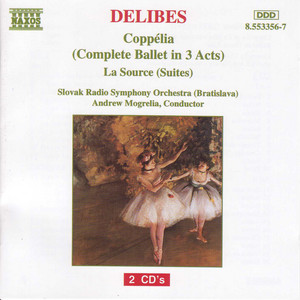 | Coppelia: Act I - Valse | Léo Delibes, Slovak Radio Symphony Orchestra, Andrew Mogrelia | E♭ Major | 0 | 5B | 89 BPM | |
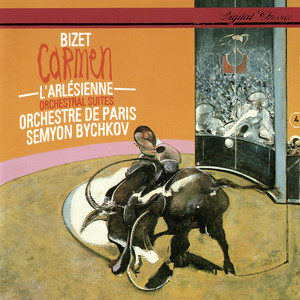 | Carmen Suite No. 1: 2. Aragonaise | Georges Bizet, Orchestre de Paris, Semyon Bychkov | D Minor | 0 | 7A | 120 BPM | |
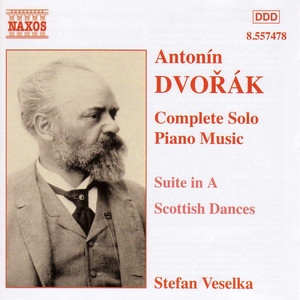 | 2 Pieces, Op. Posth., B. 188: No. 1, Lullaby in G Major | Antonín Dvořák, Stefan Veselka | G Major | 0 | 9B | 66 BPM | |
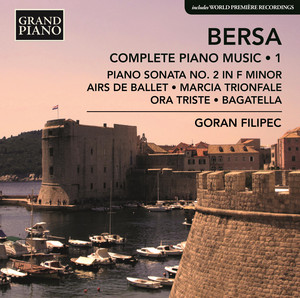 | Ballabile | Blagoje Bersa, Goran Filipec | N/A | N/A | N/A | 0 BPM | |
 | Romeo and Juliet, Op. 64 - Act 1: The Fight | Sergei Prokofiev, Cleveland Orchestra, Lorin Maazel | C Major | 4 | 8B | 108 BPM | |
 | Scheherazade: The voice of Scheherazade | Nikolai Rimsky-Korsakov, Lars Hjalmar Joakim | G Major | 1 | 9B | 132 BPM | |
 | Tales from the Vienna Woods - Waltz Op. 325 | Johann Strauss II, Hallé, Bryden Thomson | F Major | 0 | 7B | 181 BPM | |
 | Gold Und Silber (Gold And Silver), Op. 79 | Slovak Radio Symphony Orchestra, Franz Lehár | C Major | 1 | 8B | 81 BPM | |
 | Peer Gynt Suite No. 1, Op. 46: II. Åse's Death | Edvard Grieg, Wiener Philharmoniker, Zubin Mehta | G Major | 0 | 9B | 99 BPM | |
 | Künstlerleben, Op.316 | Johann Strauss II, Berliner Philharmoniker, Herbert von Karajan | C Major | 0 | 8B | 181 BPM |
- ISRC
- GBAYC8900256
- Label
- L-M Records/RCA Records